‘Kesari Chapter 2’: Who’re ‘Khudiram Singh’ and ‘Barinder Kumar’? Akshay Kumar’s Movie Faces Backlash for Changing Names of Bengali Freedom Fighters Khudiram Bose and Barindra Ghosh
Kesari Chapter 2, now streaming on JioHotstar, has drawn criticism for misrepresenting freedom fighters Khudiram Bose and Barindra Kumar Ghosh. Netizens and filmmaker Srijit Mukherji have slammed the film for distorting historical facts, accusing it of disrespecting Bengal’s revolutionary legacy in India’s independence movement.

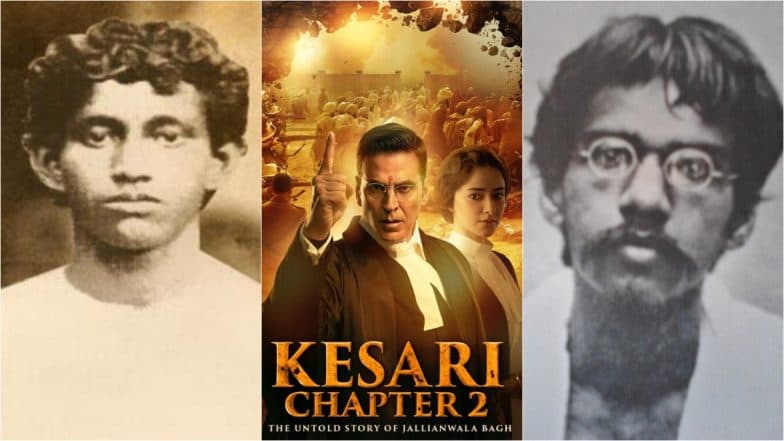
Kesari Chapter 2, which released in theatres on April 18, 2025, dropped on its OTT platform - JioHotstar - on June 13. A spiritual sequel to the 2019 hit Kesari, Kesari Chapter 2 is directed by Karan Singh Tyagi and stars Akshay Kumar, Ananya Panday, and R Madhavan in the lead roles. The film is loosely based on the book The Case That Shook the Empire, with Akshay Kumar portraying C Sankaran Nair, a barrister who waged a legal battle against the British Empire over the Jallianwala Bagh Massacre. ‘Kesari Chapter 2’ Movie Review: Akshay Kumar’s Formulaic Approach Does More Disservice to This Distorted Chapter From History.
While the film received mixed reviews - with praise for Akshay Kumar and R Madhavan’s performances - and underperformed at the box office, its OTT release has sparked fresh controversy. A scene from the film has gone viral, with many netizens criticising it for misnaming two real-life freedom fighters from Bengal.
'Khudiram Singh' and 'Barinder Kumar'
The scene in question appears early in the film, where Akshay Kumar’s Sankaran Nair is shown representing the British Empire in a case against Kirpal Singh (played by Jaipreet Singh), who is accused of inciting rebellion. While arguing in court, Nair references 'Khudiram Singh' and 'Barinder Kumar' - two students from Singh’s college who allegedly threw a bomb at a British officer’s car and killed him.
Netizens believe these characters are thinly veiled references to actual Bengali revolutionaries Khudiram Bose and Barindra Kumar Ghosh. Many are outraged that the film not only fails to get their names right but also appears to fictionalise their identities and revolutionary acts. This fictionalisation has been seen by them as a disrespect to Bengal’s contribution to India’s freedom struggle, with few calling it 'historical vandalism'.
Netizens React to 'Kesari Chapter 2' Viral Scene
'Who Is Khudiram Singh and Barinder Kumar'
"Who is Khudiram Singh and Barinder Kumar who had thrown bomb at the car of Officer Kingsford?"
Asks Akshay Kumar in his new movie Kesari 2
Khudiram Bose from Midnapore becomes Khudiram Singh.
While his mentor Barin Ghosh becomes Barinder Kumar. pic.twitter.com/fsrbJFDj03
— Nabarun Bhattacharya (@Nabarun204) June 18, 2025
'Rewrite History, Serve Propaganda'
Hey @akshaykumar why’d you turn Bengali heroes like Khudiram Bose into "Singh" & Barin Ghosh into "Kumar" in Kesari 2? Scared of Bengal’s fire or just rewriting history for Bollywood masala? Rewrite history, serve propaganda, and still expect applause. #AkshayKumar #Kesari2 pic.twitter.com/T6htW6JK70
— Ayantika Chattopadhyay ( অয়ন্তিকা ) (@honubroto) June 19, 2025
'Anti-Bengali Nexus'
Anti-Bengali nexus of hINDIANs & #Bollywood dared to distort the names of Chad Bengali freedom fighter Khudiram Bose & Chad Bengali revolutionary Prafulla Chaki in "Kesari 2", turning them into two hINDIANs "Khudiram Singh" & "Barindar Kumar". #AntiBengaliBollywood pic.twitter.com/YLEyol6UXe
— পশ্চিমবঙ্গ হিন্দি-উর্দু আগ্রাসন বিরোধী মঞ্চ (@StopHindiInWB) June 18, 2025
'Historical Vandalism'
Hey @akshaykumar, how dare you call Khudiram Bose “Singh” & Barindra Ghosh “Kumar”?
You didn’t just misname - you spit on Bengal’s freedom struggle.
This is not acting, it’s historical vandalism.#KesariChapter2 #BoycottAkshayKumar pic.twitter.com/mi1ZAGoPXr
— Konko Maji (@konkomaji) June 19, 2025
Even Bengali filmmaker Srijit Mukherji criticised Kesari Chapter 2 for altering the names, questioning whether the filmmakers would have dared to do the same with figures like Lala Lajpat Rai, Jawaharlal Nehru or Mahatma Gandhi.
Khudiram Singh? What next? Mohandas Karamchand Mukherjee? Jawaharlal Dastidar? Lala Lajpat Laha? Pathetic research! pic.twitter.com/KbpkWt9h1w
— Srijit Mukherji (@srijitspeaketh) June 18, 2025
Who Were Khudiram Bose and Barin Ghosh?
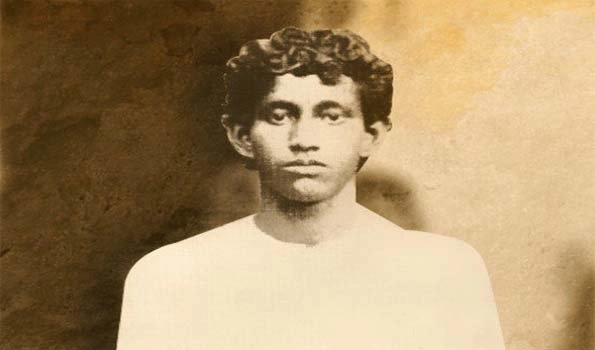
Khudiram Bose (1889–1908) was a Bengali revolutionary who was executed for his involvement in the Muzaffarpur Conspiracy Case of 1908. A member of the Anushilan Samiti, Bose and fellow revolutionary Prafulla Chaki attempted to assassinate British magistrate Douglas Kingsford by bombing his carriage. However, the bomb mistakenly killed two British women instead. While Prafulla Chaki died by suicide to avoid arrest, Khudiram Bose was captured and tried in what became a landmark case, later known as the Alipore Bomb Case. He was hanged on 11 August 1908, aged just 18, making him one of the youngest martyrs of India’s independence movement.
Barindra Kumar Ghosh (1880–1959), or Barin Ghosh, was the younger brother of philosopher Sri Aurobindo Ghosh and a key figure in India’s revolutionary movement. He co-founded the Jugantar group and was associated with several underground revolutionary networks, including the Anushilan Samiti. During the Alipore Bomb Case trial, Barindra and Sri Aurobindo were among several arrested and charged with conspiracy. Initially sentenced to death, Barindra’s punishment was later commuted to life imprisonment, and he was sent to the infamous Cellular Jail in the Andamans.

Barindra Ghosh made a daring escape attempt from the prison - the only Indian revolutionary to have successfully done so - but was eventually recaptured and returned to the Andamans. He was released in 1920 and went on to pursue a career in journalism. When Sri Aurobindo established his ashram in Pondicherry, Barindra joined him there. He later authored a memoir about his time in the Andamans, along with several other books.
Not the Only 'Historical' Changes in 'Kesari Chapter 2'
The ironic part is that Kesari Chapter 2 not only changes the names of real-life revolutionaries in its fictionalised retelling of history, but also takes considerable creative liberties with the film’s main plotline. ‘Kesari Chapter 2’ is a Lie? How Akshay Kumar’s Movie Completely Reimagines C Sankaran Nair’s Legal Battle Over Jallianwala Bagh Massacre.
The actual court case that C Sankaran Nair fought against the British Empire was significantly different from what is portrayed in the movie, which is co-produced by Karan Johar’s Dharma Productions. According to the book that inspired the film, the case revolved around a critical passage written by Sankaran Nair in one of his books, in which he indirectly criticised Michael O'Dwyer, the then Lieutenant Governor of Punjab during the horrific Jallianwala Bagh massacre. O'Dwyer subsequently filed a libel case against Nair - and won.
However, in the movie, it is depicted that Sankaran Nair took the British to court, specifically General Dyer, for orchestrating the massacre of unarmed protestors at Jallianwala Bagh. From the names of the revolutionaries to the actual historical events, almost everything appears to have been fictionalised in the film.
(The above story first appeared on LatestLY on Jun 20, 2025 10:41 PM IST. For more news and updates on politics, world, sports, entertainment and lifestyle, log on to our website latestly.com).