Full Moon February 2026: ‘Snow Moon’ To Peak This Weekend
The lunar event is expected to reach its peak illumination in the early hours of Sunday, February 1, 2026, offering high visibility provided weather conditions remain clear. As the second full moon of the year, it will appear situated in the constellation Leo, rising in the east around sunset and remaining visible until dawn.

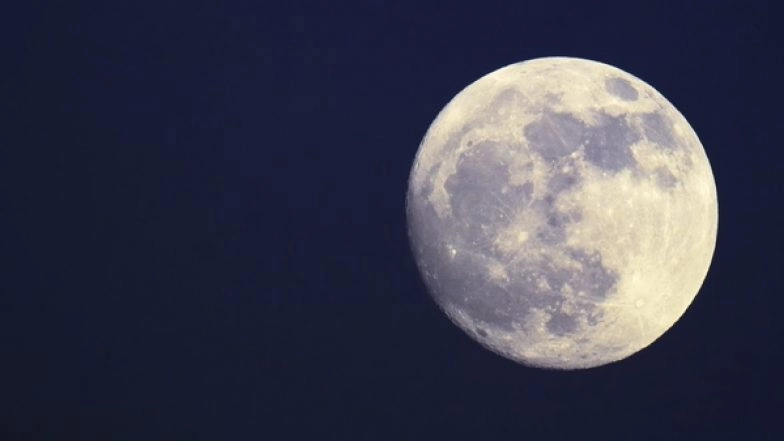
St. Louis, January 31: Stargazers across the Northern Hemisphere are preparing for the arrival of the February full moon, traditionally known as the Snow Moon. The lunar event is expected to reach its peak illumination in the early hours of Sunday, February 1, 2026, offering high visibility provided weather conditions remain clear. As the second full moon of the year, it will appear situated in the constellation Leo, rising in the east around sunset and remaining visible until dawn.
The moon will officially reach its full phase at approximately 10:09 UTC on Sunday. For observers in North America, the moon will appear at its largest and brightest on the evening of Saturday, January 31, and through the early morning of February 1. Wolf Moon 2026: On Paush Purnima, First ‘Full Moon Supermoon’ To Light Up Sky Today.
While the moon technically reaches peak fullness for only a moment, it will appear nearly identical to the naked eye for about 24 hours on either side of the peak. No special equipment is required for viewing, though binoculars can help highlight the contrast of lunar craters and plains.
The 'Snow Moon' Designation
The name "Snow Moon" originates from various Native American tribes and European folklore. Historically, February is the month associated with the heaviest snowfall in the United States. Wolf Moon 2026 Date and Time: When and How To See January’s Giant Full Moon Supermoon.
Other traditional names for this month’s moon include:
-
Hunger Moon: Referencing the scarcity of food sources in mid-winter.
-
Storm Moon: Noting the frequency of late-winter blizzards.
-
Bear Moon: Used by the Ojibwe people to mark the time when bear cubs are born.
Astronomical Context
In 2026, the Snow Moon occurs during a period of relatively high lunar visibility. Unlike a "Supermoon," where the moon is at its closest point to Earth (perigee), this month’s moon is at a standard distance in its elliptical orbit.
Astronomers note that because the moon will be positioned high in the sky during the midnight hours, it will be less affected by "atmospheric shimmer," which can sometimes blur lunar details when the moon is closer to the horizon.
Viewing Tips
To get the best view of the 2026 Snow Moon, experts recommend:
1. Finding an open space: Locations away from tall buildings or dense tree lines will provide a clear view of the horizon at moonrise.
2. Monitoring cloud cover: Local meteorological reports should be checked, as winter storm fronts can quickly obscure the sky.
3. The "Moon Illusion": Watching the moon as it rises or sets can make it appear significantly larger than when it is high overhead, due to a visual trick played by the brain when comparing the moon to terrestrial objects like trees or houses.
(The above story first appeared on LatestLY on Jan 31, 2026 07:18 PM IST. For more news and updates on politics, world, sports, entertainment and lifestyle, log on to our website latestly.com).