‘This Is From Moses’: Researcher Claims To Find Reference to ‘Moses’ in Inscriptions Discovered in Ancient Egyptian Mine
Ancient Egyptian inscriptions from a 3,800-year-old mine in the Sinai Peninsula suggest it might be. Researcher Michael Bar-Ron claims that a Proto-Sinaitic inscription found at Serabit el-Khadim may include the phrase "zot m'Moshe," meaning "This is from Moses" in Hebrew. The markings, found at a mine in Serabit el-Khadim, were etched by Semitic-speaking labourers around 1800 BC.

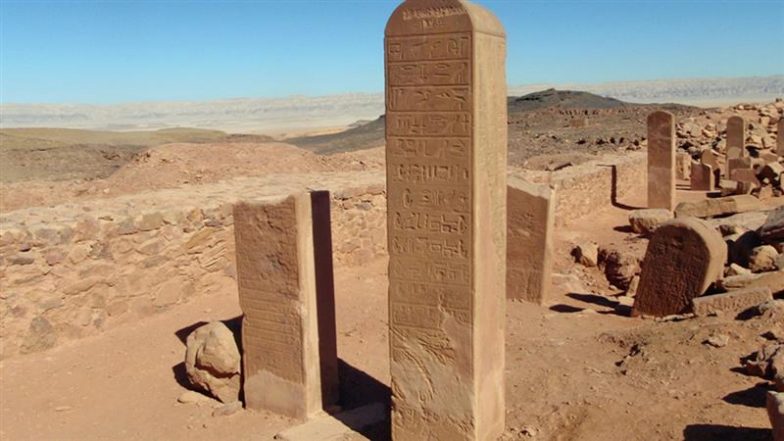
Mumbai, July 29: Was the biblical story of Exodus and Moses true? Ancient Egyptian inscriptions from a 3,800-year-old mine in the Sinai Peninsula suggest it might be. Researcher Michael Bar-Ron claims that a Proto-Sinaitic inscription found at Serabit el-Khadim may include the phrase "zot m'Moshe," meaning "This is from Moses" in Hebrew. This discovery could link the ancient texts directly to the biblical figure of Moses. The markings, found at Serabit el-Khadim, were etched by Semitic-speaking labourers around 1800 BC. If true, the discovery could be one of the earliest written references to the figure of Moses.
The inscriptions at Serabit el-Khadim, located in Egypt’s Sinai Peninsula, are among the earliest known alphabetic writings, believed to be created by Semitic-speaking workers during the reign of Pharaoh Amenemhat III. These miners carved messages related to their daily lives and beliefs, including references to gods like Baʿalat and El, suggesting a complex religious landscape. Michael Bar-Ron’s analysis of high-resolution images and 3D scans highlights the phrase “zot m’Moshe,” which, if accurate, could represent a groundbreaking link between archaeology and biblical history. Was Jesus Christ Called Something Else? Linguistic Studies Suggest His Real Name Might Not Be What We Thought, Here’s Why.
According to a report by the Daily Mail, the inscriptions also reveal signs of religious conflict, with some carvings showing defacement of the goddess Hathor’s name, hinting at tensions between Egyptian and Semitic beliefs. Bar-Ron’s study, however, has yet to be peer-reviewed, and many experts remain sceptical, warning that Proto-Sinaitic script is notoriously difficult to interpret. Egyptologist Dr Thomas Schneider called the claims “completely unproven and misleading,” cautioning against jumping to conclusions based on ambiguous characters. Did Donald Trump Install 200-Foot Jesus Statue at the White House After Becoming US President? Live Webcam Debunks Viral Video As Fake.
Despite the controversy, Bar-Ron’s advisor, Dr Pieter van der Veen, supports the reading of the phrase as referring to Moses, adding weight to the theory. The inscriptions also mention slavery and overseers, which align with themes in the biblical Exodus story. Nevertheless, the discovery adds a fascinating new layer to the ongoing search for historical evidence of the Exodus story.
(The above story first appeared on LatestLY on Jul 29, 2025 03:54 PM IST. For more news and updates on politics, world, sports, entertainment and lifestyle, log on to our website latestly.com).