













 Quickly
 Socially
 Trending
 Crypto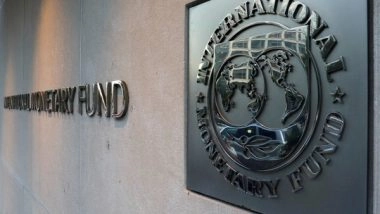
Marrakech [Morocco], October 13 (ANI): The fourth day of the IMF-World Bank Annual Meetings in Marrakech shed light on the pressing need for global cooperation, as outlined by IMF Managing Director Kristalina Georgieva.
In a world marked by severe shocks, slow growth, and economic fragmentation, Georgieva unveiled her Global Policy Agenda, emphasizing that many nations and communities are grappling with the consequences of natural disasters and conflicts, such as the ongoing war in Ukraine and the Middle East.
"We have to stand firm against the forces that divide us," Georgieva stated, underlining the imperative of unity in an increasingly shock-prone world.
The Marrakech Principles for Global Cooperation, jointly released by the IMF, World Bank, and Moroccan authorities, provide a comprehensive framework for harnessing multilateralism for the common good, she added.
Also Read | Earthquake of Magnitude 4.6 on Richter Scale Jolts Afghanistan, No Casualty Reported.
While the global economy has displayed resilience, with macroeconomic policies yielding positive results, declining inflation, and stabilized financial markets, it remains characterized by slow and uneven recovery.
The medium-term growth outlook appears weak, and there is a risk of further divergence among countries.
The IMF's two key policy priorities are to safeguard macroeconomic stability, enhance prosperity through growth-oriented and green reforms, and bolster international cooperation to strengthen the global financial safety net and debt architecture.
The IMF reaffirms its commitment as a trusted advisor, financial support provider, and a platform for cooperation to unite countries in addressing global challenges.
During a seminar, First Deputy Managing Director of the IMF, Gita Gopinath, highlighted the growing challenges facing countries due to record-high debts, elevated interest rates, and sluggish economic growth.
By 2030, emerging markets and developing economies will require approximately USD 3 trillion in additional spending, equivalent to about 5.5 per cent of their gross domestic product, to finance their development goals and the necessary climate transition.
Gopinath stressed the importance of prioritizing spending in areas that enhance productivity. For example, Canada aims to invest in early learning and childcare, as Deputy Prime Minister Chrystia Freeland explained.
Germany is working on reforms in labour and energy markets to address these issues. German Finance Minister Christian Lindner proposed that some developing economies could increase their tax burden by 8-9 per cent of GDP while remaining efficient, a contrast to many advanced economies with already high tax levels.
Efforts to tackle informality, enhance tax efficiency through digitalization, and ensure tax compliance were also deemed crucial.
However, Egyptian Finance Minister Mohamed Maait cautioned that traditional solutions might not always be practical or politically feasible, underscoring the complexities of addressing these economic challenges.
The discussions at the IMF Annual Meetings signify the importance of collective efforts to navigate the evolving global economic landscape. (ANI)
(The above story is verified and authored by ANI staff, ANI is South Asia's leading multimedia news agency with over 100 bureaus in India, South Asia and across the globe. ANI brings the latest news on Politics and Current Affairs in India & around the World, Sports, Health, Fitness, Entertainment, & News. The views appearing in the above post do not reflect the opinions of LatestLY)
 Share Now
 Google Trends



 Live Bot