












 Quickly
 Socially
 Trending
 Crypto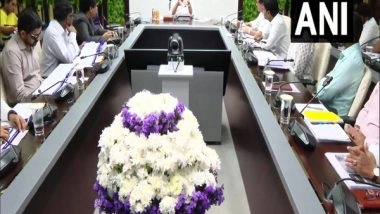
Amaravati (Andhra Pradesh) [India], April 10 (ANI): Andhra Pradesh Chief Minister YS Jagan Mohan Reddy on Monday reviewed work at the School Education Department in the state capital, an official statement said.
YSR Congress Party MP Alla Ayodhya Rami Reddy on April 7, unveiled the posters and a video documentary of 'Jagananne Maa Bhavishyathu', as part of the party's public outreach campaign that commenced last Friday with an aim to explain the government welfare and development initiatives to people.
Addressing the media at the party's central Office, he said that the 'Ma Nammakam Nuvve Jagan' slogan was given by the people after they benefitted from the welfare schemes implemented by the government.
During the 14-day period, a door-to-door campaign will be conducted which will reach out to 1.60 crore households in the state covering the entire five crore population.
Also Read | COVID-19 Vaccine Covovax As Heterologous Booster Dose To Be Available on CoWIN Soon, Check Price Here.
Reddy said the Chief Minister's intention is to bring a visible change in people's lives and political parties should be accountable.
"As part of the campaign, the MLAs and regional coordinators will actively coordinate with Secretariat conveners, and Gruha Saradhulu will also provide a questionnaire to the public and gather their feedback about the welfare after YSRCP came to power, drawing a comparison on the implementation of schemes with the previous TDP regime, he said.
The YSRCP general secretary said that based on the feedback gathered from the public during the 'Gadapa Gadapaku Mana Prabhutvam' (GGMP), around 80-90 per cent of the public stated that they have noticed a real change and expressed their confidence that "Jagan is the state's only future".
In a review of GGMP, the Chief Minister also said that around 92 per cent of people out of 1.6 crore families in rural areas and 84 per cent in urban areas, which means 87 per cent of people on average in the state benefited through Direct Benefit Transfer (DBT) or non Direct Benefit Transfer schemes implemented by the government. (ANI)
(The above story is verified and authored by ANI staff, ANI is South Asia's leading multimedia news agency with over 100 bureaus in India, South Asia and across the globe. ANI brings the latest news on Politics and Current Affairs in India & around the World, Sports, Health, Fitness, Entertainment, & News. The views appearing in the above post do not reflect the opinions of LatestLY)
 Share Now
 Google Trends



 Live Bot