













 Quickly
 Socially
 Trending
 Crypto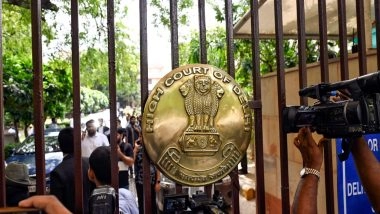
New Delhi [India], September 24 (ANI): The Delhi High Court on Wednesday passed a Judgement and underscored the need for inclusive financial systems, observing that persons with visual impairments continue to face serious barriers in using currency and banking services.
While refraining from directing an immediate redesign of notes, the Court stressed that the Reserve Bank of India (RBI) and the Union Government must factor in accessibility features when printing future series of currency.
The Bench of Chief Justice Devender Kumar Upadhyay and Justice Tushar Rao Gedela was ruling on a batch of petitions filed by individuals and organisations representing the visually impaired.
The petitioners had challenged the post-demonetisation series of notes, pointing out that the reduced size differences between denominations, especially in lower values, made them difficult to distinguish.
The Court took note of the High Powered Committee's recommendations, which urged a phased replacement of inaccessible notes and stronger tactile features, and said these should guide currency design going forward. However, it accepted the RBI's contention that recalling or redesigning current notes would incur "catastrophic costs" and disrupt the financial system.
On digital accessibility, the Court directed the RBI to obtain six-monthly reports from banks to ensure compliance with accessibility standards.
It observed that the Rights of Persons with Disabilities Act, 2016, places a duty on authorities to proactively address the needs of vulnerable groups.
Disposing of the petitions, the Court expressed hope that the Government and RBI will implement the Committee's suggestions in both future currency issues and ongoing digital initiatives.
On the demand for redesign of the Rs 50 note, the Court accepted the RBI's explanation that recalling and reprinting currency would involve "huge costs running into thousands of crores" and major disruption. However, it emphasized that feasible recommendations of the expert panel must be incorporated when the next series of notes is printed, typically every 8-10 years.
The Court also clarified that decisions on currency design and digital currency lie within the policy domain of the RBI and the Union Government. Nonetheless, it expressed hope that the authorities would "positively anticipate and implement" the Committee's workable suggestions in the interest of financial inclusion.
With these directions, the Court disposed of the petitions filed by individuals and organisations, including Rohit Dandriyal, All India Confederation of the Blind, Blind Graduates Forum of India, and George Abraham. (ANI)
(The above story is verified and authored by ANI staff, ANI is South Asia's leading multimedia news agency with over 100 bureaus in India, South Asia and across the globe. ANI brings the latest news on Politics and Current Affairs in India & around the World, Sports, Health, Fitness, Entertainment, & News. The views appearing in the above post do not reflect the opinions of LatestLY)
 Share Now
 Google Trends



 Live Bot