













 Quickly
 Socially
 Trending
 Crypto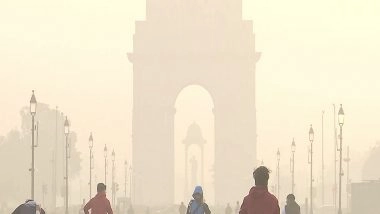
New Delhi [India], December 8 (ANI): The air quality in the national capital remained in the 'very poor' category on Monday morning as Delhi's overall Air Quality Index (AQI) reading stood at 318, as of 7 am, according to the Central Pollution Control Board (CPCB).
A thick layer of smog engulfed several areas across the state, with little to no improvement in the toxic air.
Several areas, including Anand Vihar, India Gate, Dwarka and ITO, reported thick haze early this morning, with visibility remaining significantly reduced. According to CPCB, many regions of the National Capital fell into the 'very poor' category.
The Air Quality Index around the ITO area is 354, categorised as 'Very Poor'.
At the same time, India Gate and Kartavya Path were barely visible this morning, shrouded by a thick layer of smog, as the air quality in the national capital remained hazardous. The toxic air persisted a day after Delhi recorded an AQI of 397, also in the 'very poor' range.
Several other key stations, including Ashok Vihar (338), Bawana (368), Burari (327), Chandani Chowk (321), and Dwarka (325), remained in the "very poor" category, highlighting the widespread nature of pollution across Delhi.
According to AQI categorisation, 0-50 is 'good', 51-100 'satisfactory', 101-200 'moderate', 201-300 'poor', 301-400 'very poor', and 401-500 'severe'.
According to CPCB, the AQI, which ranges from 0 to 500, is divided into six categories, each reflecting the level of pollution and associated health risks.
An AQI between 0 and 50 is classified as "Good", indicating minimal or no health impact. AQI levels from 51 to 100 fall into the "Satisfactory" category, where air quality remains acceptable, though sensitive groups such as children, the elderly, and those with respiratory issues may experience slight discomfort.
The "Moderate" category, ranging from 101 to 200, signals increasing pollution levels that can trigger breathing difficulties among people with asthma, lung conditions, or heart diseases.
An AQI between 201 and 300 is considered "Poor", a range in which prolonged exposure can cause breathing discomfort to most people, not just those with pre-existing health issues.
This level has become increasingly common in several parts of the capital during winter.
Levels between 301 and 400 are marked as "Very Poor", posing a risk of respiratory illnesses even to healthy individuals when exposure continues for long periods. The most hazardous category, "Severe," includes AQI values from 401 to 500. At this stage, air quality becomes dangerous for everyone. (ANI)
(The above story is verified and authored by ANI staff, ANI is South Asia's leading multimedia news agency with over 100 bureaus in India, South Asia and across the globe. ANI brings the latest news on Politics and Current Affairs in India & around the World, Sports, Health, Fitness, Entertainment, & News. The views appearing in the above post do not reflect the opinions of LatestLY)
 Share Now
 Google Trends



 Live Bot