Is Netflix Making Us Stupid?
Netflix is increasingly designing films and series for distracted, second-screen viewers.

Netflix is increasingly designing films and series for distracted, second-screen viewers. DW's Scott Roxborough asks what it means for storytelling, visual language and the future of cinema as an art form.Is Netflix really making us less intelligent? I don't mean in the old school, "TV rots your brain" sense; that hours spent binging episodes of "Bridgerton" or "Squid Game" could be better spent dusting up on your Dostoevsky. I mean: is Netflix dumbing down the dialogue and storytelling in its films and TV shows to suit an audience it knows is barely paying attention?
Also Read | World News | Ageing Karachi Hospitals Face Serious Fire Safety Risks Amid Gaps.
'Stranger Things' and the rise of exposition-dump drama
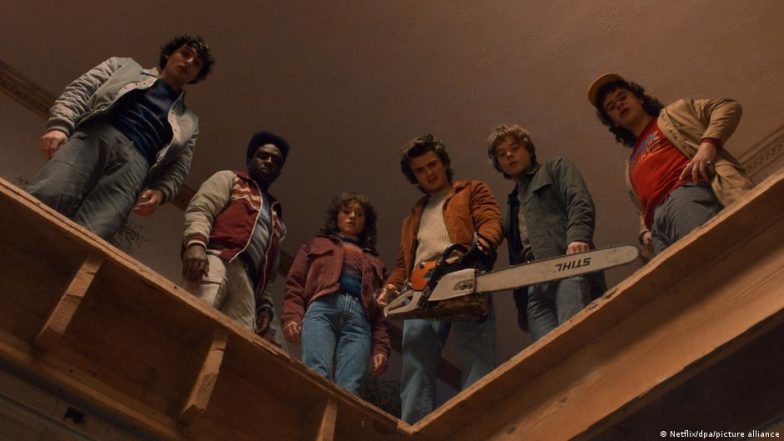
It's a thought that came to me watching the final season of "Stranger Things." The Duffer Brothers' Netflixseries began back in 2016 as a nostalgic tribute to all things 80s, particularly Stephen King novels and Steven Spielberg movies — "Firestarter" meets "E.T." by way of Dungeons and Dragons. But a victim of its own world-conquering success, over nine years and five seasons, the show has become bloated and sluggish.
Much of "Stranger Things'" early appeal was visual: the clothes, the sets, the cheesy-but-cool special effects, the epic fight sequences. By its final season, much of that had given way to characters sitting around explaining what they're about to do, while rehashing plot points the audience has already seen. The world is supposedly coming to an end, yet Mike, Will, Nancy and Eleven always seem to have time for one more round of exposition.
Say everything, show nothing
"Stranger Things" isn't alone. Spend any time zapping through Netflix originals and a pattern quickly emerges. Characters describe what they are doing or feeling. They remind you of what happened moments earlier. They spell out their goals and motivations, just in case you missed anything the first — or second — time around.
In "Irish Wish," a disposable Netflix body-swap fantasy, Maddie Kelly (Lindsay Lohan) delivers an exposition dump so naked it's almost impressive.
"We spent a day together. I admit it was a beautiful day filled with dramatic vistas and romantic rain," she says, "But that doesn't give you the right to question my life choices. Tomorrow I'm marrying Paul Kennedy."
"Fine," her lover James (Ed Speleers) responds, in a line that feels less written than generated. "That will be the last you see of me because after this job is over I'm off to Bolivia to photograph an endangered tree lizard." The idea is no longer show, don't tell, but rather tell — and tell again — for distracted viewers.
Designing stories for distracted viewers
And this avalanche of "tell, don't show" isn't accidental. It's by design.
When Matt Damon was making "The Rip," his new Netflix cop thriller co-starring Ben Affleck, Netflix suggested they simplify the dialogue. In an interview on "The Joe Rogan Experience," Damon said Netflix executives floated the idea that "It wouldn't be terrible if you reiterated the plot three or four times in the dialogue, because people are on their phones while they're watching."
The phenomenon is known as "second-screen" viewing, and Netflix' algorithms — capable of tracking, down to the second, when viewers tune out or drop off — have drawn a blunt conclusion: their audience is distracted, and the content should accommodate that distraction. Shows are written to survive being watched while shopping online, scrolling TikTok, or half-listening from another room.
Actress and producer Justine Bateman has called it "visual muzak" — television as elevator music.
None of this is entirely new. We've always had "ironing TV" — soap operas, reruns, reality shows designed to hum along in the background while viewers do something else. What's different now is that Netflixhas applied that logic to prestige drama, blockbuster films and tentpole series.
It shouldn't be surprising. This is, after all, the platform that built its brand on the couch-potato mantra "Netflix and chill." Easily digestible, instantly comprehensible, and instantly forgettable storytelling isn't a bug, it's the product.
Why Netflix originals look and sound the same
And it isn't just the dialogue. Attentive Netflix viewers — now something of an endangered species — may have noticed that many of the streamer's films and series are starting to look and sound eerily alike. Bright but low-contrast digital lighting. Flattened images that survive being washed out by daylight. Compressed sound mixes that keep everything at the same mid-level, ensuring whispers are audible but robbing scenes of texture or silence.
These choices make sense if you assume your audience isn't in a dark cinema with a large screen and surround sound, but on a phone on the subway, or a laptop outdoors, half-watching as the sun bleaches the image.
What's lost when attention disappears
Slowly, this pushes us away from the idea of film or television as an immersive, visual art form. It takes us away from framing, lighting and the expressive power of silence — the tools of cinema.
Still, the slide toward algorithmically programmed slop isn't inevitable. Netflix' biggest series hit last year was "Adolescence," a one-shot British social-realist drama that formally refused to be second-screened. Its top original film was "K-Pop Demon Hunters," an animated feature that fused Eastern and Western storytelling traditions and demanded attention — not least by encouraging viewers to sing along to its chart-topping songs.
Both worked precisely because they asked more of their audience, not less. If viewers just want background noise, Netflix is happy to supply it. The real question is whether audiences will notice — or care — when the platform stops asking them to pay attention at all.
(The above story first appeared on LatestLY on Feb 10, 2026 05:30 PM IST. For more news and updates on politics, world, sports, entertainment and lifestyle, log on to our website latestly.com).