Nature Reconsidered: Why It's Making Us Anxious
As contact with the outdoors declines, discomfort with wild spaces is growing.

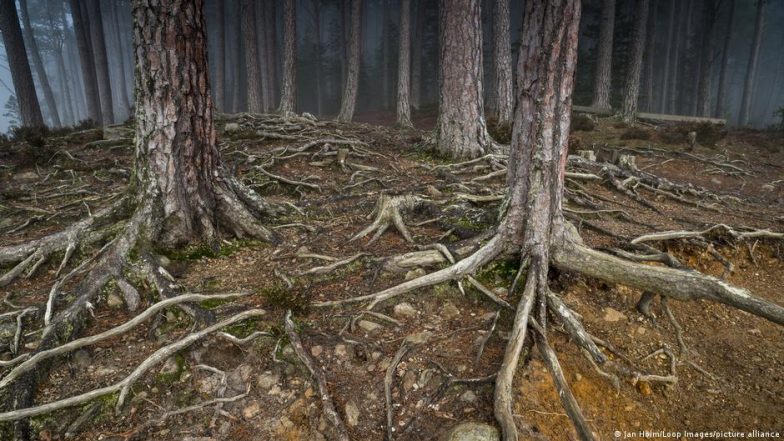
As contact with the outdoors declines, discomfort with wild spaces is growing. Scientists tracking the rise of nature anxiety have some ideas on how to reconnect without feeling overwhelmed.Strolling in a forest, nurturing a garden or even just looking at rolling green hills are interactions with nature that are often seen as a balm for the soul.
Also Read | Sports News | Pakistan’s 18-over Spin Blitz Vs India Enters T20 WC Record Books.
There is even a word for the love of nature: biophilia. At the other end of the spectrum is biophobia — the fear of nature.
It might traditionally be used to describe fear of large predators or phobias of spiders, snakes and other poisonous or dangerous creatures.
But in recent years, researchers have been observing biophobia of entirely different proportions.
A team at Sweden's Lund University analyzed almost 200 studies on the relationship between humans and nature.
The result: our relationship with nature seems to be deteriorating.
Many humans no longer have everyday contact with nature
Johan Kjellberg Jensen from Lund University, who led the overview study, said it reveals a clear link between a negative relationship with nature and a growing trend toward urban living.
And that could have impacts down the line, according to Jensen.
"Today, the majority of the world's population lives in cities, which means that future generations could be at increased risk of biophobia," he told DW.
Science has been observing people's alienation from nature since the late 1970s. That's according to Berlin psychologist Dirk Stemper, whose research interests include anxiety management and personal development.
This applies mainly to industrialized nations.
"Children are increasingly growing up in highly sealed, non-natural environments and spend most of their time indoors and in digital environments," he said. "There is a lack of physical and sensory experiences, such as climbing, getting dirty or observing animals."
What happens when nature becomes unfamiliar?
But it is precisely these kinds of experiences that build familiarity with nature — familiarity that psychologist Lea Dohm says is important in terms of planetary stewardship.
"The willingness to stand up for environmental, nature and climate protection is greater when we experience ourselves as connected to nature," said Dohm, who is a member of the German Alliance for Climate Change and Health (KLUG).
Jensen added that the idea of soil being "dirty" and earthworms being "disgusting" can be passed down from one generation to the next.
"If parents have negative attitudes towards nature, that can influence their children, which can then lead to a downward spiral of [less and less] closeness to nature," he said.
Stemper adds that when children are repeatedly told to "be careful of ticks" or not to touch certain things, they are likely to view nature as a place of danger.
Helping people to reconnect with nature
Environmental educator Susanne Sigl has also experienced this.
She works at Querwaldein, a non-profit organization in the German city of Cologne aimed at instilling a positive relationship with nature in people, especially children.
"When we ask children to collect long branches in the forest, some only touch them reluctantly, others even use a handkerchief and some don't touch them at all and don't bring any," she says.
According to Sigl, many children won't touch pinecones or chestnuts, prefering to just look at them. They are even less likely to touch earthworms or harmless insects such as small beetles.
The Lund University team also found that a fear of nature can even turn into hostility. There is research to back up the connection between biophobia and calls for the killing of certain predators such as bears, wolves or sharks.
How stories shape our view of the natural world
Our relationship with nature is also strongly determined by our culture and the stories we have heard about it.
"In Central Europe, the forest used to be seen as a place of danger, wild animals, starvation, predators and magical threats," the psychologist Stemper pointed out.
It was only with the cultural movement of Romanticism in the early 19th century that woodlands became places of longing in Germany.
In the Romantic period — in the late 18th century to mid-19th century — many artists and writers focused on the individual's search for magical, supernatural or miraculous phenomena as a reaction to the rapid technological progress of the time.
"Today, we are experiencing a kind of return of the fear of nature: not due to predators and wild animals, but to alienation, media frames and digital distraction," Stemper said.
He added that digital media often portrays a distorted image of nature, a kind of "hyperreality" that blurs the boundaries between the original and the — mostly filtered — copy.
As a result, "virtual nature experiences such as Instagram feeds or computer games have a more intense and 'real' effect than actual encounters with forests, meadows or animals," he explained.
Too little contact with nature harms our health
So why go into the real woods when the "safe" forest on Instagram looks so much nicer?
Because it's good for us. "When we spend time in nature, it promotes our mental health," Dohm said.
"Studies show that forests and nature alleviate ADHD symptoms, improve attention and concentration, reduce sensory problems and promote emotional regulation," Stemper added.
But because biophobic people avoid nature, they miss out on all these health benefits. So what to do?
Jensen says knowledge can help: the more people know about plants and animals and understand how nature works, the more they can appreciate them. And if the fear of natural hazards is actually justified, it helps to avoid risks, for example by protecting livestock from predators.
Susanne Sigl says the best way to help children reestablish contact with nature is through play: "If children fall down while playing tag in the forest, hide behind a tree or crouch in the bushes, then touching branches is usually no longer a problem."
This article was adapted from German.
(The above story first appeared on LatestLY on Feb 15, 2026 09:30 PM IST. For more news and updates on politics, world, sports, entertainment and lifestyle, log on to our website latestly.com).