How To Choose the Best Window Dressing Options For Your Home
What you choose for your home depends on your style, the weather where you live, and the kind of home you live in. Take some time to go through the options and choose the correct style for your life.

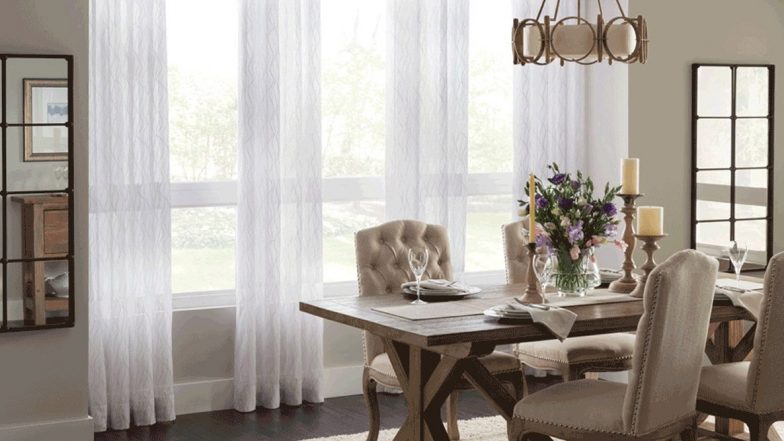
There are a huge range of styles of window coverings, not to mention an ever-increasing range of fabrics and materials they are available in. Even the technology is changing, if you have a smart home.
What you choose for your home depends on your style, the weather where you live, and the kind of home you live in. Take some time to go through the options and choose the correct style for your life.
Curtains and drapes
The difference between curtains and drapes is that drapes are floor length, and curtains drop to the window sill. However, there’s no big distinction between the two terms, and they are used interchangeably by many.
Curtains come in a range of styles and fabrics. You can choose how long they hang, the style of rod/ rail, and the type of pleat.
You can choose a curtain rod, which is threaded through large loops in the curtain or drapery hooks. Or, you can have large ‘grommet top’ drapes, that have holes through the fabric itself, finished with eyelets that the rod runs through. There are a range of curtain rod styles, colours and materials, with brushed steel, timber-look, or painted timber being common. There are also ‘finial’ options at the end of the rods, where you can choose elaborate designs to finish the rod, rather than just end caps or rounded ends.
Curtain tracks can either be recessed into the door or window frame or installed above the door. This depends on the depth of the frame and also the style of drapes. These tracks use hooks inserted into the back of the curtain to hang.
The curtains themselves can have a variety of pleat styles:
• The most common is pencil pleat, a simple tight back and forth in a pencil shape
• Pinch pleat/ French pleat is where three folds of fabric are ‘pinched’ together
• Inverted pleat is where the fold is at the back, so the top looks solid from the front
The fabrics themselves can be almost anything you want, from sheer, gauzy privacy filters through to linens and more hard-wearing fabrics.
In cooler climates, thermal-backed curtains are a must, to add an extra layer of insulation to your windows. These can be difficult to clean, so some people opt for removable thermal linings, which can be removed when you need to clean the drapes. These can be attached to the drapes themselves or run on separate curtain tracks behind the curtains.
Natural fabrics such as cotton and linen will fade quickly in the sun. Where possible, choose a hardier fabric that has some man-made fibres in them, so they will stay looking good for longer.
Blinds
There are so many different styles of blinds, from ones designed for office settings, through to luxe Roman blinds. The big drawback about blinds is that generally, there will be a crack around the edges of the blinds, which does allow airflow and light. This means they aren’t perfect for rooms you want completely dark, such as children’s bedrooms.
Roman blinds: These run from a single track in the top of a window or door frame. They run vertically the window. They can be made in almost any fabric you like, matching your existing drapes and your house décor. These generally use string pulleys on one side to let down and retract. They are very elegant and look great in a range of different homes. However, they do take up window space, even when retracted fully.
Honeycomb blinds: These are blinds designed to be thermal insulators. They have a honeycomb shape, which traps air in between the layers. These will usually come in a small range of fabric/ colour styles. They can either run from a single track in the window frame, or with two side tracks if the window is a dormer/ angled window.
Venetian blinds: These timber or metal blinds can look great in the right space. Wide timber-look blinds are a beautiful, airy, modern addition to any home. Metal blinds are more utilitarian, great for bathrooms, kitchens and laundries. These come in a range of finishes, and can be metallic or rich, vibrant colours.
Vertical blinds: A relic of 1980’s home décor, these blinds are strips of fabric that hang vertically from the top of the window/ door, to the bottom. They are generally found in offices now, but some people do like them as they offer a vertical angle system that allows good control of sunlight.
Sun and privacy control
There are many options for privacy and sun control too, depending on your house. You can have filmy, sheer curtains that run in a sperate track behind the main curtain. These can be for privacy, sun, or just to look pretty.
There are also plenty of beautiful glare-filtering and privacy shades. These generally are roller blinds and come in a range of neutrals and textures.
Home automation for blinds and curtains
Modern technology means that you can open and close your drapes and blinds without even having to leave your seat. If you are building new or retrofitting an old home, consider home automation systems that include curtain control. It can be automated to happen at a certain time. In summer, you can keep the sun out, and in winter, have the drapes close before you get home to trap the heat of the day.
It’s also a good security measure, so you can open and close your drapes even when you’re not there, giving the impression that you are home. This is an excellent strategy to put off potential burglars, keeping your home and contents safe. (Of course you should still have home and contents insurance, but it’s important to be proactive and sensible about home safety).
Choose the best window dressing option for your home
What you choose depends on so many factors, and what works for others won’t always work for you. Decide what’s important, whether it’s insulation, appearance or sun control, and make decisions from there.
DISCLAIMER: This article is strictly for informational and educational purposes to raise awareness about the said topic. LatestLY DO NOT host, distribute, or provide links to sexually explicit content, leaked videos, or pirated material. Any search terms or keywords mentioned are solely for the purpose of explaining the viral trend and its associated dangers. We strongly condemn the circulation of non-consensual intimate imagery (NCII) and advise all readers to refrain from searching for or sharing such content, as doing so may lead to severe legal consequences.