What Is the ‘Doomsday Missile’? US Tests Nuclear-Capable Minuteman III ICBM As Iran War Escalates
The US Air Force tested an unarmed Minuteman III ICBM, also known as 'doomsday' missile, on March 3, 2026, from California to the Marshall Islands. Despite global tensions, officials termed the launch a routine 'Glory Trip' to verify the aging fleet's reliability. As the sole land-based nuclear deterrent, this 1970s-era missile remains vital while its successor faces delays.

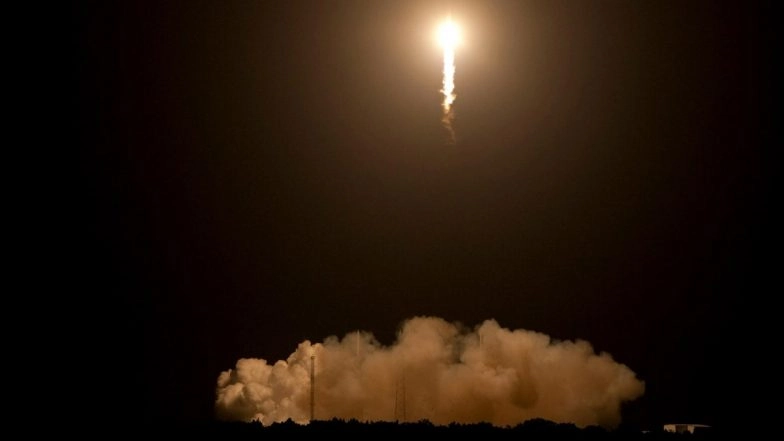
The US Air Force successfully conducted an operational test launch of an unarmed Minuteman III intercontinental ballistic missile (ICBM) late Tuesday night. The missile, often referred to in defense circles as a "doomsday" weapon due to its role in nuclear deterrence, launched at 11:01 pm Pacific Time on March 3, 2026. This latest test comes during a period of heightened tensions in the Middle East after a war broke out between Iran and the US and its allies, though military officials emphasised the launch was a routine operation scheduled years in advance.
The "doomsday" missile test, designated Glory Trip 255 (GT 255), involved a missile equipped with two test reentry vehicles. According to Air Force Global Strike Command (AFGSC), the vehicles traveled approximately 4,200 miles across the Pacific Ocean before reaching a predetermined target at the Kwajalein Atoll in the Marshall Islands. Iran Launches New Wave of Attacks on Israeli and US Bases.
'Doomsday' Missile Test for World War 3?
While the launch occurred against the backdrop of an ongoing conflict in the Middle East and the recent expiration of the New START arms control treaty, General SL Davis, commander of AFGSC, stated the mission was not a response to current world events. Instead, it was intended to validate the "readiness, reliability, and accuracy" of the nation’s aging land-based nuclear deterrent. Iran War Disrupts Oil and Gas Flows, Highlighting Energy Security Risks.
The Role of the 'Doomsday' Missile
The LGM-30G Minuteman III is the sole land-based component of the United States’ nuclear triad, which also includes submarine-launched ballistic missiles and strategic bombers. First deployed in 1970, the Minuteman III was designed to deliver nuclear warheads across intercontinental distances within minutes.
Key technical specifications of the system include:
- Speed: Capable of exceeding 15,000 mph (Mach 23) at burnout.
- Range: Over 6,000 miles, allowing it to strike targets globally.
- Payload: While currently limited by past treaties, the missile can carry multiple independently targetable reentry vehicles (MIRVs).
The Minuteman III was originally intended to have a 10-year service life, but it has remained operational for over five decades through continuous "life-extension" programs. The US currently maintains a fleet of 400 such missiles housed in hardened underground silos across Montana, North Dakota, Wyoming, Nebraska, and Colorado.
The Pentagon is currently working on a multi-billion dollar replacement programme known as the LGM-35A Sentinel. However, the Sentinel program has faced significant delays and cost overruns. Recent reports suggest that while the Sentinel is expected to become operational in the early 2030s, the Air Force is now evaluating the feasibility of keeping the Minuteman III in service through 2050 to ensure no gap in the nation's defensive capabilities.
The use of two test reentry vehicles in the March 3 launch is notable. For years, the US typically tested missiles with only a single warhead to comply with the New START treaty. With that treaty now expired, the demonstration of multiple reentry vehicle synchronization signals a shift in testing priorities as the military assesses its ability to overcome modern enemy missile defenses.
(The above story first appeared on LatestLY on Mar 05, 2026 11:44 AM IST. For more news and updates on politics, world, sports, entertainment and lifestyle, log on to our website latestly.com).