Monkey Menace at Delhi Assembly: Govt to Hire Langur Sound Mimics to Chase Monkeys; Staff to Work 8-Hour Shifts, Poor Performance May Lead to Fines or Removal
The Delhi Vidhan Sabha is turning to a specialized human solution to address a long-standing security and maintenance challenge: a troop of monkeys that has increasingly disrupted official proceedings. The PWD has officially invited tenders to hire individuals skilled in mimicking the sounds of langurs to deter the smaller rhesus macaques from the Assembly premises

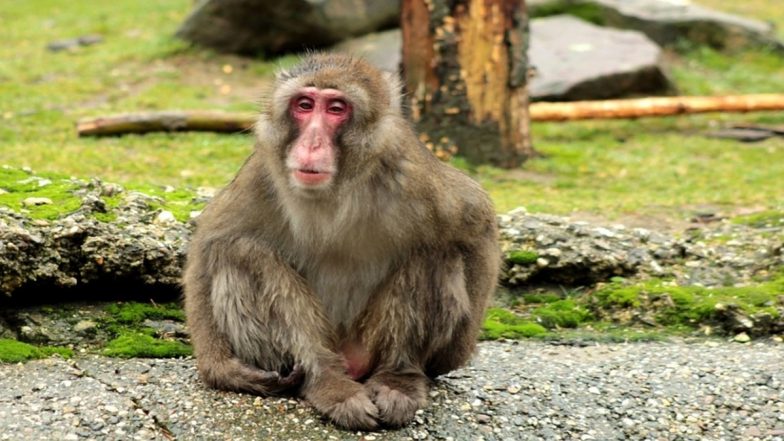
New Delhi, January 3: The Delhi Vidhan Sabha is turning to a specialized human solution to address a long-standing security and maintenance challenge: a troop of monkeys that has increasingly disrupted official proceedings. The Public Works Department (PWD) has officially invited tenders to hire individuals skilled in mimicking the sounds of langurs to deter the smaller rhesus macaques from the Assembly premises. The decision follows years of property damage and safety concerns at the Vidhan Sabha complex. According to officials, dozens of monkeys have been seen damaging essential infrastructure, including electrical wiring and dish antennas, while posing a biting risk to legislators, staff, and visitors.
A Specialized Tender for 'Langur Experts'
The PWD issued a tender this week for "monkey control services" at an estimated cost of ₹17.5 lakh. The plan involves deploying five trained personnel on working days and two on Saturdays, with each expert serving an eight-hour shift. Under the terms of the contract, the agency must ensure that the personnel are genuinely capable of imitating langur calls—a sound that naturally frightens rhesus monkeys. The contract includes strict performance-based monitoring; if a handler is unable to effectively mimic the sounds or fails to show up, they face immediate removal or a daily penalty of ₹1,000. Monkey Menace in Bijnor: Farmers Don Bear Costumes To Drive Away Monkeys, Protect Crops in Uttar Pradesh (Watch Video).
The Failure of Passive Deterrents
This move comes after previous attempts to manage the simian population proved unsuccessful. Authorities had initially installed life-sized cardboard cutouts of langurs at various vantage points, a strategy also used during the 2023 G20 Summit. However, officials noted that the monkeys quickly adapted to the static figures. "We have seen that monkeys no longer get scared of them," one official stated. "Instead, they have been seen sitting atop those very cutouts."
Humane Control and Legal Constraints
The use of live langurs for monkey control was a common practice in Delhi until 2012, when the Union Environment Ministry banned the use of captive langurs for such purposes. Since then, government bodies have relied on human "mimics" who use vocalizations to convince macaques that a predator is nearby. The current initiative is described by the PWD as a "humane and non-harmful" method of animal control. To bolster the strategy, the expert handlers are expected to bring along equipment and potentially use techniques that simulate the presence of a real langur without violating animal welfare laws. Monkey Menace Turns Fatal: Man Falls From House Terrace While Trying To Rescue Wife From Monkey Attack in UP's Bareilly, Dies.
A Longstanding Security Issue
The "monkey menace" at the Delhi Assembly is not a new phenomenon. In 2017, a monkey famously entered the House chamber during a session, leading then-Speaker Ram Niwas Goel to highlight the physical risks faced by MLAs. While several agencies, including the Delhi Metro and the New Delhi Municipal Council (NDMC), have employed similar mimicry tactics in the past, the persistent return of the animals to the high-security Lutyens' Delhi zone continues to challenge city administrators. The new contract aims to provide a more consistent, disciplined presence to ensure the Assembly remains free of simian interference.
(The above story first appeared on LatestLY on Jan 03, 2026 03:19 PM IST. For more news and updates on politics, world, sports, entertainment and lifestyle, log on to our website latestly.com).