Lucky New Year's Eve 2025 Traditions: From Twelve Grapes of Luck, Wearing Red Underwear to Polka Dots; Know Global NYE Rituals
On New Year's Eve 2025, as the world prepares to welcome 2026, diverse cultures embrace unique rituals to invite prosperity and ward off bad luck. Discover the history and meaning behind traditions like Spain’s Twelve Grapes of Luck challenge, the Philippines' love for polka dots, and Denmark’s plate smashing.

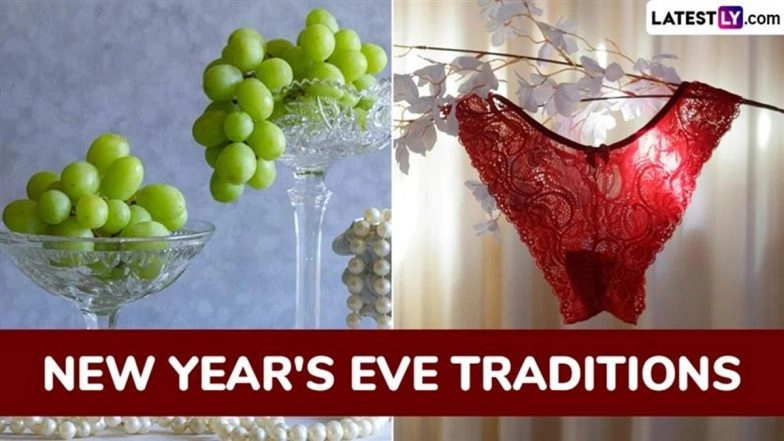
On New Year's Eve 2025, as the world prepares to welcome 2026, diverse cultures embrace unique rituals to invite prosperity and ward off bad luck. From the vibrant streets of Madrid to the coastal shores of Rio de Janeiro, New Year’s Eve is steeped in centuries-old folklore designed to ward off misfortune and invite abundance for the coming year. While fireworks and countdowns are universal, the specific rituals performed at the stroke of midnight offer a fascinating glimpse into the hopes and superstitions of different cultures.
For the New Year 2026, these enduring customs remain a vital part of the festivities, blending historical heritage with modern celebration. Whether it involves specific foods, patterned clothing, or kinetic physical acts, each tradition shares a common goal: ensuring the next 365 days are better than the last. New Year’s Eve 2025 or 2026? What Is the Correct Way to Refer to December 31, 2025.
New Year’s Eve: Lucky Food Traditions
Food plays a central role in New Year’s superstitions, with specific items believed to embody wealth and luck.
Spain: Twelve Grapes of Luck (Las Doce Uvas)
In Spanish households, the countdown to midnight is a frantic culinary challenge. Tradition dictates that revellers must eat one grape for each chime of the clock, totalling 12 grapes in the first 12 seconds of the New Year. Originating in the late 19th or early 20th century, possibly popularised by vine growers in Alicante to sell a surplus harvest, each grape represents good luck for one month of the coming year. Failing to finish them in time is said to invite misfortune. Twelve Grapes of Luck on New Year's Eve 2025: Know Origin, Rules and Practical Tips to Complete '12 Grapes Under the Table' NYE Tradition.
The Philippines: Round Fruits for Prosperity
Filipino families often adorn their dining tables with a collection of round fruits. The shape is significant, resembling coins and symbolising wealth. The custom typically calls for 12 different round fruits, such as oranges, melons, and grapes, to ensure financial success for each month of 2026.
Italy: Lentils at Midnight
In Italy, a dish of Cotechino con Lenticchie (sausage and lentils) is a staple for New Year’s Eve, known as La Notte di San Silvestro. The small, coin-shaped lentils symbolise money and abundance. Eating them as the bells ring is believed to bring financial prosperity in the new year.
New Year’s Eve: Patterns, Colour, and Clothing Tradition
What you wear when the clock strikes 12 is believed by many to influence your fate, particularly in the Philippines, Latin America, and Europe.
The Philippines: Polka Dots for Wealth
In the Philippines, fashion choices on New Year's Eve are often guided by the desire for financial gain. Locals wear clothing covered in polka dots, as the round shape is associated with coins and money. This tradition is frequently combined with keeping coins in one's pocket and jingling them at midnight to attract wealth. It is not uncommon to see families dressed entirely in dotted patterns to maximise their luck for the coming year.
Latin America and Italy: Red Underwear
In countries like Spain, Italy, and Mexico, the colour of one’s undergarments is a serious matter. Wearing red underwear is widely believed to attract love and passion in the new year. For those prioritising wealth over romance, yellow underwear is the preferred choice in countries like Colombia and Venezuela. The catch? In many traditions, the underwear must be a gift to be truly effective.
Brazil: White for Peace
On the beaches of Copacabana and beyond, Brazilians traditionally dress in all white. This custom, rooted in Candomblé and African rituals, is meant to scare away evil spirits and invite peace and spiritual purification. It is often combined with offerings of white flowers to Iemanjá, the goddess of the sea.
New Year’s Eve: Kinetic Rituals
Some traditions require a bit more physical effort than simply eating or dressing up.
Denmark: Smashing Plates
While most people try to protect their china, Danes have a different approach. It is customary to smash unused plates and crockery against the doors of friends and family. A pile of broken shards on your doorstep on New Year’s Day is not an act of vandalism, but a sign of popularity and affection; the bigger the pile, the more friends you have to wish you luck.
Ecuador: Burning the "Old Year"
In Ecuador, neighbourhoods fill with the smoke of burning effigies known as años viejos. These life-sized dolls, often made of papier-mâché and old clothes, represent the hardships and negativity of the past year. Setting them ablaze at midnight symbolises a cleansing fire, destroying the bad vibes of 2025 to make room for a fresh start in 2026.
Colombia: The Suitcase Run
For those with a case of wanderlust, the Colombian tradition is a must-try. At midnight, people run around their block carrying an empty suitcase. This act is a manifestation of travel, performed with the hope that the new year will be filled with adventures and journeys to new destinations.
Scotland: First Footing
In Scotland, the celebration of Hogmanay includes the tradition of "First Footing." The superstition holds that the first person to cross the threshold of a home after midnight decides the family's luck for the year. Ideally, this "first-footer" should be a dark-haired male bearing gifts such as coal, salt, shortbread, or whisky items symbolising warmth, flavour, and good cheer. Fair-haired guests were historically viewed with suspicion, a superstition dating back to the Viking invasions.
As the world steps into 2026, these diverse traditions from around the world highlight a shared human desire for control over the future. Whether through the sweetness of a grape or the wearing of polka dots, the underlying message remains the same: hope for a happy, prosperous New Year.
(The above story first appeared on LatestLY on Dec 31, 2025 11:45 AM IST. For more news and updates on politics, world, sports, entertainment and lifestyle, log on to our website latestly.com).