Bitcoin and Gold: Where Investors Are Putting Money Now
Throughout 2025, gold has been climbing almost nonstop, repeatedly setting new all-time highs.

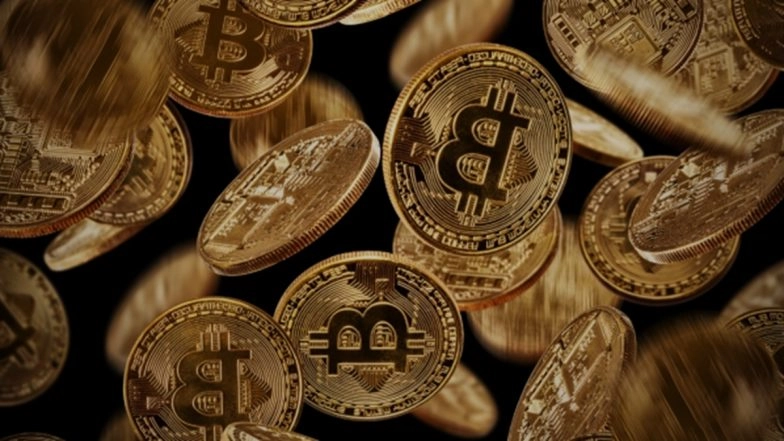
Throughout 2025, gold has been climbing almost nonstop, repeatedly setting new all-time highs. Against a backdrop of rising debt, geopolitical tension, and uncertainty, capital is flowing into assets viewed as safe harbors. While some investors continue to buy the traditional metal, others are increasingly turning to its digital alternative.
Gold in The Spotlight
Gold’s rapid ascent is noticeable even to those who rarely follow markets. At the start of the year, an ounce traded near $2,600, whereas since October, the gold price has pushed beyond the psychological $4,000 level. What is driving gold so sharply? In periods of heightened anxiety, investors tend to favor what appears most reliable. Trade tensions, concerns about economic risks, and expectations of Federal Reserve rate cuts are all channeling demand into defensive assets. Gold sits squarely in that category, offering a way to navigate turbulence without relying on counterparties.
Large-scale capital is another key factor. Central banks have been active buyers of gold, while private investors gain exposure through funds backed by physical metal. The dollar also plays a role. When the U.S. currency weakens, gold becomes more attractive to buyers in other countries, and that additional demand can accelerate the price move.
Gold as an “Eternal” Safe-Haven Asset
Investors do not value gold because it pays interest or distributes dividends. Its strength lies elsewhere. It is a rare metal that has been accepted as a universal store of value for centuries. It is easy to recognize, difficult to counterfeit, and can be held independently of banks and governments. While currencies have appeared and disappeared and empires have risen and fallen, gold has remained a clear language of wealth in almost any country.
For a long time, gold was not just a symbol but the foundation of the monetary system. Currencies were either minted from it or directly pegged to a country’s gold reserves. Later, the world abandoned the gold standard and money became fiat, meaning its value now rests on confidence in the state and its economy. It might have seemed that gold would lose its importance, but the opposite occurred. Once currencies were no longer rigidly tied to metal, gold became a convenient hedge, a form of insurance against inflation, devaluation, and crises of confidence.
In essence, gold has been cemented as insurance against system errors. When people doubt currencies, debt instruments, or the ability of authorities to keep conditions under control, they return to the simplest tool for preserving value.
From Gold to Bitcoin
When people buy gold, they usually do it not for major profits, but for peace of mind. In today’s world, however, not everyone wants to store physical bars. That is why, in recent years, Bitcoin has been increasingly mentioned alongside gold. For many, it has become a similar form of insurance, only in digital form.
This idea is voiced more and more often by well-known investors. Billionaire Ray Dalio, for example, has openly said that he does not trust debt-based money and prefers to keep part of his capital in hard assets such as gold and Bitcoin. BlackRock CEO Larry Fink has described gold and cryptocurrencies as “assets of fear.” In his view, people buy them when they worry about financial security and fear devaluation.
The difference between gold and Bitcoin is obvious: gold is tangible, while Bitcoin exists only on the network. However, the logic behind the purchase often overlaps. When debt levels rise, uncertainty grows, and investors start looking for something independent of banks and governments, demand tends to form in two directions at once: for the old, time-tested hedge and for the newer one that part of the market already views as digital gold.
A Safe Harbor in an Unstable World
The modern world is becoming less predictable. The rules of the game keep shifting, and confidence in the future is increasingly in doubt. In this environment, many people look for a safe harbor in one form or another. For some, that harbor is still gold, a time-tested asset that is familiar, tangible, and not dependent on technology. Central banks, large funds, and private investors buy it when they want to reduce risk and ride out difficult periods.
For others, Bitcoin is increasingly taking on the role of a defensive asset. It cannot be printed, is not tied to any single country, and can be transferred easily across the globe. As a result, more investors are no longer choosing between gold and Bitcoin, but instead view them as two expressions of the same idea: preserving value in a world where stability has become rare.