Korean Lover Game vs Blue Whale Challenge: Protect Your Kids Online
Exploring chilling parallels between the recent "Korean Love Game" (or "Korean Lover Game") tragedy in Ghaziabad and the infamous Blue Whale Challenge. Here are the details of how three minor sisters became so psychologically immersed in a 50-task online game that they adopted Korean identities and ultimately believed they could not live without their digital fantasy world.

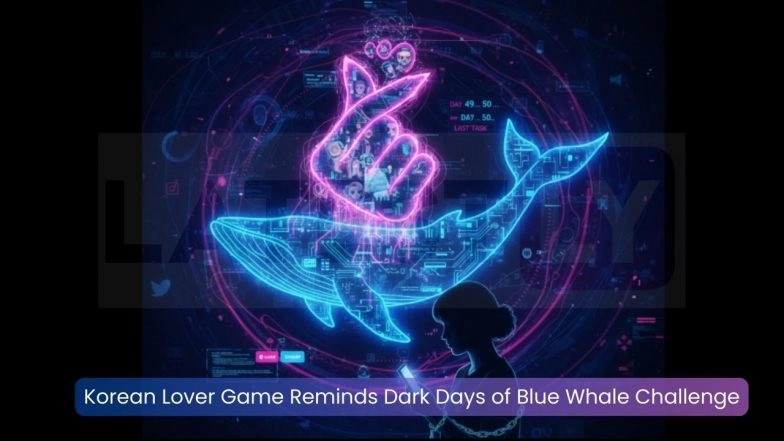
The recent news reports claim three sisters, aged 12, 14, and 16, jumped to their deaths from their ninth-floor apartment in Ghaziabad, India. Their suicide note revealed a chilling obsession: "We can't leave Korea. Korean was our life." Police investigations uncovered their involvement with an online game called "Korean Lover," which they had been playing for five years, beginning during the COVID-19 pandemic. What Is Korean Love Game? 3 Minor Sisters Die by Suicide in Ghaziabad Over Alleged Gaming Addiction.
This tragedy is not an isolated incident. It echoes a pattern first established by the "Blue Whale Challenge" in Russia nearly a decade earlier, a deadly template that continues to resurface in new forms, exploiting vulnerable teenagers through psychological manipulation masked as a game.
The Original Blueprint: Blue Whale Challenge
Origins and Creator
The Blue Whale Challenge originated in Russia in 2013 on the social media platform VKontakte (VK). Its creator, Philipp Budeikin, was a 21-year-old former psychology student who had been expelled from his university. In 2016, Budeikin was arrested and subsequently confessed to creating the game with a disturbing motive. He claimed his purpose was to eliminate what he called "biological waste" from society, referring to vulnerable teenagers he deemed to have no value. What Is Blue Whale Challenge? How To Protect Kids? As Pune Schoolboy Dies After Jumping off 14th Floor To Complete Task, Here’s Everything You Must Know About the Online ‘Suicide Game’.
In May 2017, Budeikin pleaded guilty to inciting at least 16 teenage girls to commit suicide. He was convicted and sentenced to just three years and four months in prison—a punishment many considered shockingly lenient given the gravity of his actions. During police interrogations, Budeikin demonstrated a chilling lack of remorse, stating that his young victims were "happy to die."
How the Game Operates
The Blue Whale Challenge follows a methodical, 50-day progression designed to psychologically groom participants toward suicide:
The Structure:
- Participants connect with anonymous administrators called "curators" through social media platforms
- Tasks are assigned daily over a 50-day period
- Players must provide photographic evidence of completed tasks
- The final task, on day 50, is suicide
Task Progression: The challenges follow a deliberate escalation pattern:
- Days 1-10: Seemingly harmless activities designed to establish control
- Wake at 4:20 AM to watch psychedelic or horror videos
- Draw a blue whale on paper
- Carve "F57" (one of the game's alternate names) into skin
- Days 11-40: Escalating self-harm and isolation
- Cut along veins (with specific instructions on depth)
- Stand on building ledges
- Avoid social contact with family and friends
- Listen to music sent by curators at specific times
- Days 41-49: Final psychological preparation
- Visit bridges or tall buildings
- Intense isolation from support systems
- Constant communication with the curator
- Day 50: Commit suicide by jumping from a height
Psychological Manipulation Tactics
The Blue Whale Challenge employs sophisticated psychological warfare:
Initial Grooming:
- Tasks begin as curiosity-driven challenges, appearing harmless or even fun
- Early compliance builds a pattern of obedience
- Sleep deprivation (4:20 AM wake-ups) impairs judgment and increases vulnerability
Control and Coercion:
- Curators collect personal information from participants early in the process
- Threats of harm to the victim or their family if they attempt to quit
- Cyberbullying and online shaming tactics
- Exploitation of the sunk cost fallacy—having invested weeks, participants feel unable to stop
Target Demographics: The game specifically preys on teenagers aged 10-16 who exhibit:
- Depression or anxiety
- Low self-esteem
- Social isolation or loneliness
- Academic stress
- Family dysfunction
- Recent loss or trauma
Global Impact and Controversy
Disputed Death Toll: The actual number of deaths linked to Blue Whale remains contested. A 2016 report by Russian newspaper Novaya Gazeta claimed 130 teenagers died between November 2015 and April 2016 due to the challenge. However, this figure was heavily criticised by investigative journalists for lacking credible evidence. The number originated from Sergey Pestov, father of one victim, who compiled media reports of child suicides he believed were connected to online groups.
Despite the disputed statistics, confirmed cases emerged globally:
- Russia: Multiple documented cases, though fewer than initially reported
- India: Several confirmed deaths in 2017-2018, leading to government warnings
- United States: At least two deaths in July 2017 (Georgia and Texas)
- Kenya: 2018 death of a 16-year-old Nairobi student
- South Africa: Multiple self-harm and suicide cases between 2017-2019
- Argentina: A 14-year-old boy was hospitalised in intensive care
Hoax or Reality? Some experts, including journalist Evgeny Berg, who investigated for Meduza, suggested the Blue Whale Challenge may have started as a hoax or attention-seeking scheme. Friends of Budeikin claimed he initially created shock content online to gain followers for his music career. However, whether genuine or fabricated at its inception, the widespread media coverage created a phenomenon that became real through copycat groups and imitative behaviour.
Research by Professor Alexandra Arkhipova at Russian State University for the Humanities found that many administrators of "death groups" were actually children aged 12-14, drawn to the story as it gained notoriety, rather than predatory adults as initially feared.
Government Responses:
- India: The government requested Google, Facebook, and Yahoo to remove all links to the game. Several internet providers temporarily blocked VKontakte.
- Multiple countries: Police issued warnings in Armenia, Brazil, France, India, New Zealand, and the United Kingdom.
- Russia: Extensive police warnings and investigation of death groups on social media.
Why The Name "Blue Whale"?
The name references the natural phenomenon of whales beaching themselves, appearing to choose death. This metaphor resonated with the game's dark purpose and was reinforced by participants being asked to carve whale images into their skin or draw whales as part of the challenge tasks.
The New Mutation: Korean Lover Game
Emergence and Recent Tragedy
The Korean Lover game represents an evolution of the Blue Whale template, specifically tailored to exploit the global popularity of Korean culture among young people. The February 2026 Ghaziabad tragedy brought this variation into the international spotlight.
The Victims:
- Pakhi (12 years old)
- Prachi (14 years old)
- Vishika (16 years old)
The sisters had been playing the game for five years, starting during the COVID-19 pandemic when they were even younger and more vulnerable. They became so immersed in Korean culture that they:
- Adopted Korean names for themselves
- Stopped attending school
- Believed they were "Korean princesses"
- Isolated themselves from family and friends
Their suicide note read: "Mummy, Papa, sorry. The game you wanted us to quit, now you will realise how much we loved it. Korean was our life."
How Korean Lover Differs from Blue Whale
While following the same basic 50-day, 50-task structure ending in suicide, Korean Lover adds new dimensions of manipulation:
Cultural Exploitation:
- Leverages fascination with K-pop, K-dramas, and Korean fashion
- Features highly stylized fictional characters inspired by K-pop culture
- Uses Otome (romance simulation) game elements
- Creates parasocial relationships between players and AI-driven or scripted Korean characters
Enhanced Immersion:
- Players interact with characters through visual novel-style storylines
- Emotional manipulation framed as "proving loyalty" to virtual Korean partners
- Tasks scheduled at odd hours to maintain constant engagement
- Identity transformation—players adopt Korean personas
Distribution:
- Not available on mainstream app stores (Google Play, Apple App Store)
- Spread through social media platforms and messaging apps
- Someone posing as a Korean friend initiates contact
- Difficult to detect or monitor by parents
Behavioural Warning Signs
Mental health experts identify specific changes in children playing these games:
Identity Changes:
- Subconsciously adopting new identities or personas
- Using foreign names
- Extreme identification with a particular culture or online world
- Loss of connection to their actual life and family
Behavioural Red Flags:
- Extreme secrecy about online activities
- Compulsive group behaviour
- Tasks completed at unusual hours (4-5 AM)
- Unexplained marks or cuts on the skin
- Social withdrawal and isolation
- Academic decline
- Sleep deprivation
- Loss of interest in previously enjoyed activities
Striking Similarities Between the Korean Lover Game and the Blue Whale Challenge: A Dangerous Pattern
The similarities between the "Korean Love Game" and the Blue Whale Challenge are not merely coincidental; they point to a dangerous, recurring pattern of online manipulation:
| Feature | Blue Whale Challenge | Korean Love Game |
| Task Structure | 50 daily tasks | Reportedly 50 daily tasks |
| Escalation of Harm | Gradual increase from benign to self-harm to suicide | Gradual increase from initial engagement to self-harm to suicide (implied) |
| Psychological Ploy | Exploits isolation, fear, and desire for belonging | Exploits fascination with K-culture, identity, and isolation |
| Target Audience | Vulnerable youth, often isolated or seeking identity | Vulnerable youth, especially those immersed in K-culture |
| Secrecy & Isolation | Administrators enforce secrecy; alienation from family | Users become deeply immersed, adopting new identities, leading to isolation |
| Ultimate Demand | Suicide as the final task | Suicide as the "last task" (as per initial reports) |
Psychological Mechanisms
Both Blue Whale and Korean Lover exploit the same psychological vulnerabilities:
Gradual Escalation (Foot-in-the-Door Technique): Small, harmless initial requests build to increasingly dangerous demands. Once a person has invested time and energy, they're more likely to continue despite escalating danger.
Sleep Deprivation: Tasks at 4-5 AM disrupt sleep patterns, impairing judgment, increasing emotional vulnerability, and making participants more susceptible to manipulation.
Isolation: Deliberate severing of support networks leaves victims dependent on their curator for validation and connection.
Sunk Cost Fallacy: After weeks of participation, quitting feels like wasting previous effort, even when tasks become life-threatening.
Shame and Blackmail: Personal information collected early becomes ammunition for threats: "If you quit, I'll share your secrets" or "I'll hurt your family."
Pseudo-Community: The illusion of belonging to something exclusive makes vulnerable teens feel special and understood.
Target Demographics
These challenges consistently target the same vulnerable populations:
Age Range: Primarily 10-16 years old, with peak vulnerability at 12-14.
Psychological Vulnerabilities:
- Clinical depression or anxiety
- Recent trauma or loss
- Family dysfunction or abuse
- Academic failure or pressure
- Social isolation or bullying
- Low self-esteem
- History of self-harm
Situational Factors:
- Extended time online unsupervised
- COVID-19 pandemic isolation (in recent cases)
- Transitional life periods (changing schools, moving, puberty)
- Lack of strong adult connections
The Role of Media and Technology
Media Amplification
Paradoxically, media coverage warning about these challenges can increase their spread:
Contagion Effect: Detailed reporting provides:
- Free advertising to potential participants
- Step-by-step instructions that didn't exist before
- Notoriety that appeals to attention-seeking individuals
- Copycat incentive
Social Media Algorithms: Platforms inadvertently promote dangerous content through:
- Engagement-based recommendation systems
- Group formation around shared interests
- Direct messaging enables curator-participant relationships
- Difficulty moderating private communications
Technology as Enabler
Modern technology creates perfect conditions for these challenges:
Anonymity: Curators hide behind fake profiles, making them difficult to identify and prosecute.
Accessibility: 24/7 access means constant contact and reinforcement of manipulation.
Private Channels: Direct messaging, encrypted apps, and private groups operate beyond parental oversight.
Global Reach: Challenges cross borders instantly, making a coordinated response difficult.
Prevention and Protection
For Parents and Guardians
Digital Safety Measures:
- Block Installation from Unknown Sources:
- Android: Settings > Security > Install Unknown Apps (set all to "Not Allowed")
- iOS: Settings > Screen Time > Content & Privacy Restrictions
- Monitor Without Invading:
- Regular, casual conversations about online activities
- Awareness of which apps and games children use
- Understanding of online friends and communities
- Periodic device checks (with child's awareness)
- Reduce Access to Lethal Means:
- Secure firearms and ammunition separately
- Lock medications in containers
- Install barriers on high balconies or windows if concerns exist
Building Protective Relationships:
- Open Communication:
- Create judgment-free zones for discussion
- Ask directly about suicide if concerned: "Are you thinking about suicide?"
- Listen without immediately problem-solving
- Validate emotions without minimising experiences
- Regular Connection:
- Quality one-on-one time
- Family meals without devices
- Shared activities
- Low-pressure conversation opportunities
- Mental Health Support:
- Normalise therapy and counselling
- Address depression or anxiety early
- Model healthy coping mechanisms
- Maintain relationships with paediatricians and counsellors
Warning Signs Requiring Immediate Action
Direct Indicators:
- Talking about wanting to die or suicide
- Searching online for suicide methods
- Saying goodbye or giving away possessions
- Writing notes about death or suicide
- Making final arrangements
Behavioural Changes:
- Sudden calmness after a period of depression (may indicate a decision made)
- Reckless behaviour or self-harm
- Withdrawing from everyone
- Sleeping too much or too little
- Dramatic mood swings
- Increased substance use
If Crisis Occurs:
Immediate Actions:
- Don't leave the person alone
- Remove access to lethal means
- Call emergency services
Don't:
- Promise to keep suicidal thoughts secret
- Minimise or dismiss concerns
- Debate whether suicide is right or wrong
- Leave the person alone to "cool off"
For Educators and Schools
School-Based Prevention:
- Universal Screening:
- Regular mental health check-ins
- Depression and anxiety screening programs
- Anonymous reporting systems for students
- Education Programs:
- Teach warning signs and help-seeking behaviours
- Implement evidence-based programs like "SOS Signs of Suicide"
- Train students to ACT (Acknowledge, Care, Tell)
- Staff Training:
- Recognize warning signs
- Proper response protocols
- Suicide risk assessment procedures
- Connection to mental health resources
- Climate and Culture:
- Promote belonging and connection
- Anti-bullying initiatives
- Peer support programs
- Adult mentorship opportunities
For Policy Makers and Tech Companies
Regulatory Approaches:
- Platform Accountability:
- Mandatory content moderation for self-harm and suicide content
- Age verification systems
- Reporting mechanisms for dangerous challenges
- Cooperation with law enforcement
- International Coordination:
- Cross-border law enforcement cooperation
- Shared databases of known dangerous content
- Coordinated takedown procedures
- Information sharing between countries
- Research and Monitoring:
- Track emerging challenges and trends
- Study the effectiveness of prevention programs
- Understand evolving tactics of manipulators
- Develop AI-based detection systems
The Broader Context: Youth Mental Health Crisis
These deadly challenges don't exist in a vacuum. They exploit an existing youth mental health crisis characterised by:
Rising Suicide Rates:
- Suicide is the second leading cause of death for ages 10-24 in many countries
- Rates have increased significantly in recent decades
- COVID-19 pandemic worsened mental health for many youth
Contributing Factors:
- Social media pressure and cyberbullying
- Academic stress and competition
- Economic uncertainty
- Climate anxiety
- Social isolation
- Family instability
- Reduced face-to-face social interaction
Protective Factors: Strong evidence shows these elements reduce suicide risk:
- Connected relationships with family and friends
- Access to mental health care
- Sense of purpose and belonging
- Problem-solving skills
- Cultural or religious beliefs against suicide
- Limited access to lethal means
A Call to Collective Action
The Blue Whale Challenge and its variants, like Korean Lover, represent a disturbing evolution in how the internet can be weaponised against vulnerable young people. These are not simply "games"; they are systematic programs of psychological manipulation designed to end in death.
Key Takeaways from The Recent Ghaziabad Incident:
- These challenges are real: While initial reporting may have been sensationalised, confirmed deaths have occurred globally, and copycat challenges continue emerging.
- The blueprint is adaptable: The basic 50-day, task-based structure can be repackaged with different cultural hooks—today it's Korean culture, tomorrow it could be something else.
- Vulnerability, not weakness: Victims aren't "weak" or "stupid"—they're vulnerable young people in pain, exploited by sophisticated psychological manipulation during a critical developmental period.
- Prevention is possible: Suicide is preventable. Strong relationships, open communication, mental health support, and vigilant awareness can save lives.
- Collective responsibility: Protecting young people requires coordinated action from parents, schools, tech companies, mental health professionals, and policymakers.
The tragic deaths of three sisters in Ghaziabad should serve as an urgent wake-up call. As Korean culture continues to gain global popularity and as new online trends emerge, we must:
- Remain vigilant to new variations of deadly challenges
- Prioritise youth mental health infrastructure
- Demand accountability from social media platforms
- Foster open conversations about online dangers
- Build strong, connected communities for young people
- Never dismiss warning signs or cries for help
These challenges thrive in secrecy, isolation, and silence. Our most powerful weapons against them are connection, communication, and compassion.
Crisis Support:
- International Association for Suicide Prevention: https://www.iasp.info/resources/Crisis_Centres/
If you or someone you know is experiencing suicidal thoughts, please reach out immediately. You are not alone, and help is available 24/7.
This article is intended for educational and awareness purposes. If you have immediate concerns about a young person's safety, contact emergency services or mental health professionals immediately.
Suicide Prevention and Mental Health Helpline Numbers:
Tele Manas (Ministry of Health) – 14416 or 1800 891 4416; NIMHANS – + 91 80 26995000 /5100 /5200 /5300 /5400; Peak Mind – 080-456 87786; Vandrevala Foundation – 9999 666 555; Arpita Suicide Prevention Helpline – 080-23655557; iCALL – 022-25521111 and 9152987821; COOJ Mental Health Foundation (COOJ) – 0832-2252525.
(The above story first appeared on LatestLY on Feb 04, 2026 03:06 PM IST. For more news and updates on politics, world, sports, entertainment and lifestyle, log on to our website latestly.com).