











 Quickly
 Socially
 Trending
 Crypto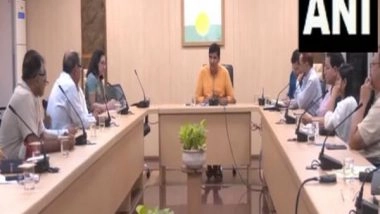
New Delhi [India], July 8 (ANI): Delhi Health Minister Saurabh Bharadwaj on Monday held a meeting with all the Delhi Hospital's chiefs over preparations to combat Dengue and other vector-borne diseases.
The meeting was attended by the Medical Director (MD) and Medical Superintendent (MS) of all Delhi government hospitals.
On Friday, Saurabh Bharadwaj on Friday chaired a meeting, which was attended by the concerned departments of the Secretariat over preparedness to deal with Dengue.
"When the rainy season starts, the risk of dengue, chikungunya, and malaria increases. In such a situation, discussions are held with all the departments. We have sent instructions to DDA, MCD, PWD, NDMC, and the Health Department to ensure that water does not accumulate in their respective jurisdictions so that breeding does not occur. Hospitals have also been alerted to keep all the information related to dengue," he said.
Recently, the Delhi government held an emergency meeting in view of heavy rains and waterlogging in the national capital on Friday. The meeting was held at the Delhi Secretariat.
Following the meeting, Delhi Minister Atishi said that an emergency meeting was attended by all senior officials of the government and several important decisions were taken.
Atishi said that the Delhi government has identified 200 hotspots that are prone to waterlogging. She said that the reason behind waterlogging is excessive rainfall which is more than the capacity of drains.
The Union Health Ministry has urged the states to maintain a constant state of vigilance through screening of pregnant women for Zika virus infection and monitoring the growth of the foetus of expecting mothers who have tested positive.
The health facilities and hospitals have been assigned a nodal officer to monitor and act to keep the premises Aedes mosquito-free.
Additionally, states have been instructed to strengthen their entomological surveillance and intensify their vector control activities in residential areas, workplaces, schools, construction sites, institutions and health facilities. (ANI)
(The above story is verified and authored by ANI staff, ANI is South Asia's leading multimedia news agency with over 100 bureaus in India, South Asia and across the globe. ANI brings the latest news on Politics and Current Affairs in India & around the World, Sports, Health, Fitness, Entertainment, & News. The views appearing in the above post do not reflect the opinions of LatestLY)
 Share Now
 Google Trends



 Live Bot