












 Quickly
 Socially
 Trending
 Crypto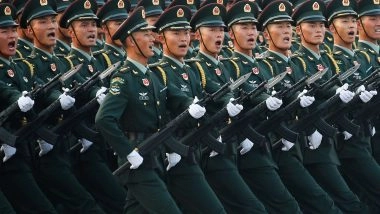
Beijing [China], March 10 (ANI): Amid the chaos of global volatility and security tensions, China is increasing its 2026 defence budget by 7%, according to a March 5 announcement. This is a slightly lower proportional increase than the annual 7.2% rises that China has maintained over the past three years.
As war rages in the Middle East, the announcement of China's defence budget did not receive the fanfare and international attention it normally does. Furthermore, China's security calculus is affected by Chairman Xi Jinping losing political friends in Venezuela and Iran in recent months, and the free flow of oil into China's refineries has also been affected.
Also Read | Iran Launches New Attacks at Gulf Arab Countries As It Keeps Up Pressure on Region.
Regarding the defence budget, official state media organ Xinhua cited officials as saying, "China maintains that adjusting defence budgets to meet national security demands is a sovereign right, and is keeping steady and moderate growth in military expenditures to safeguard its sovereignty, security and development interests in a fast-changing world."
With the 7% hike in military expenditure, the budget will reach RMB 1.91 trillion - the equivalent of approximately USD 277 billion - in the coming year. The government claimed its defence spending "remains comparatively modest across key relative indicators, including its share of gross domestic product, per capita defence expenditure, and defence expenditure per military personnel."
Also Read | Doja Cat Slams Timothee Chalamet Over Controversial Remarks on Ballet and Opera.
The budget was unveiled at the 14th National People's Congress in Beijing, one of two meetings that comprise what is known as the Two Sessions. The other meeting relates to the Chinese People's Political Consultative Conference comprising 2,000+ members. The Two Sessions are the biggest meeting of the Chinese Communist Party this year.
At one of the meetings held the same day, on March 5, members of the People's Liberation Army (PLA) and People's Armed Police (PAP) received instruction from the top body, the Central Military Commission (CMC). Of note, only two people were seated at the large table in the room - Xi and vice-chairman General Zhang Shengmin.
When Xi became chairman of the CMC in 2012, the CMC had eleven members. Now there are just two - Xi and a lonely-looking Zhang.
This is because Xi has overseen a turbulent purge of the highest ranks of the PLA in what he calls an anti-corruption campaign. The ferocious culling recently netted two CMC members, General Zhang Youxia and General He Weidong, both detained for nebulous wrongdoings. With just two members left, it is hard to conceive of the CMC functioning as it was originally intended, since Xi has hollowed it out and now dominates it entirely.
To illustrate just how severe Xi's winnowing of the PLA has been, the US-based Center for Strategic and International Studies (CSIS) calculated that Xi has purged 101 senior PLA leaders since 2022. In fact, of 47 leaders who were PLA generals in 2022 or who were promoted to three-star ranks since then, an astonishing 41 of the 47 have been confirmed as being or likely to have been purged.
At the March 5 meeting, Zhang therefore ordered the PLA and PAP to "thoroughly implement the system of ultimate responsibility resting with the CMC chairman, improve political rectification, and advance campaigns to improve conduct and combat corruption."
China has now reported single-digit increases in its defence budget for the past eleven years. As economic realities began to bite, China no longer splurges on double-digit increases as it did earlier this century. In fact, this is the lowest percentage rise since the 6.8% recorded in FY2021 in the wake of the COVID-19 pandemic.
Its defence spending levels are still impressive, however. For example, the London-based International Institute of Strategic Studies (IISS) calculated that last year China's share alone of total military expenditure in Asia grew to almost 44%. Beijing is also investing nearly five times what Japan does, and approximately nine times more than Taiwan, in terms of military upkeep and modernisation.
Of course, a caveat needs to be attached to the publicly announced figure of CNY 1.9 trillion. It is extremely likely that Chinese defence spending is far greater than this.
For instance, the Pentagon's most recent report on China's military development, published in December 2025, warned, "There is broad consensus among academic, think-tank and industry experts that China's publicly announced defence budget does not contain the totality of China's defence spending."
The Pentagon then gave the example of the country's 2024 budget, suggesting it was anywhere from 32% to 63% higher than the declared figure. China does not provide a detailed - or even vague - breakdown of where all the money goes, but it is known that the overall budget does not cover defence-related research and development, some capital spending, internal security and mobilisation activities, for example.
When the budget was revealed, the government stated the money would be used to "continue to advance combat training, accelerate the development of advanced capabilities and enhance the strategic capacity to safeguard national sovereignty, security and development interests. It will also push forward the formulation of the military's 15th Five-Year Plan (2026-30), implement major defence projects and modernise military theories."
The authorities added, "The government will deepen reforms in military and civilian sectors related to national defence, optimise defence industries and consolidate and enhance integrated strategies and strategic capabilities. The national defence mobilisation and education systems will also be improved."
Another point of interest is that 2027 represents the centenary of the PLA. The budget will help the military achieve the goals set for this 100th anniversary. In its own words, the PLA will "accelerate the integrated development of mechanisation, informatization and intelligentisation" by 2027, while boosting the speed of modernisation in military theories, organisations, personnel and weapons and equipment.
The Pentagon remarked in its recent annual report on the PLA that "China obfuscates information surrounding these goals, and it has not publicly revealed significant requirements of its 2027 goals". This is despite Beijing first publicly unveiling the 2027 milestone back in October 2020. Nonetheless, as the US Department of War observed, "Chinese media connected the PLA's 2027 goals to developing the capabilities to counter the US military in the Asia-Pacific region, and coerce Taiwan's leadership to the negotiation table on Beijing's terms."
The PLA itself has linked the achievement of its 2027 goals to the development of "three major strategic capabilities". The first is "strategic decisive victory", which requires the national military to be credibly able to prevail in a conflict at acceptable cost.
Secondly is "strategic counterbalance", which presumably requires the PLA to build up strategic deterrence - including nuclear deterrence - to deter or restrain US military involvement in any Taiwan invasion.
The final goal is "strategic deterrence and control", which can be described as having the force capacity to limit horizontal escalation or to dissuade other states from taking opportunistic actions.
Taiwan remains the primary concern, a "core issue", for China. Indeed, Xi has encouraged the PLA to act more aggressively against its island neighbour. Last year there was a record 5,709 PLA aircraft sorties in the Taiwan Strait and into Taiwan's air defence identification zone.
China's primary concern with the Taiwan theatre helps explain why it has done nothing overtly to help Iran after the Israeli and US onslaught that commenced on February 28.
The Pentagon had already said in its December 2025 report on the PLA that "Beijing probably is reluctant to deepen its modest defence relationship with Iran for fear of diplomatic blowback and sanctions. As of August 2024, China-based commercial satellite companies participated in business exchanges with Iran's Islamic Revolutionary Guard Corps. China does not have extensive relations with Iranian proxies and partners such as Hezbollah in Lebanon, the Houthis in Yemen or Iranian-backed militia groups in Iraq."
Nonetheless, Beijing privately communicated with the Houthis "to secure the safety of Chinese commercial shipping in the Red Sea and Gulf of Aden. Since November 2023, China-based companies have sold dual-use components that the Houthis have used in attacks in the Red Sea, while China's officials have denied responsibility. China probably avoids publicly criticising these groups to maintain an image of neutrality and avoid regional entanglement."
The US believes that China has had "limited bilateral military training" with Iran, though Chinese companies also sold "dual-use components for Iran's ballistic missile and unmanned aerial vehicle programmes."
Illustrating how international tensions are affecting the world, and Beijing, Germany replaced China as the fourth-largest exporter of defence equipment in the 2021-25 period. Some 24% of German arms went to Ukraine, according to Stockholm International Peace Research Institute (SIPRI) data released this week.
SIPRI calculated that China accounted for 5.6% of global arms sales in 2021-25, just behind Germany's 5.7%. This compared with China selling 5.5% of global arms in the 2016-20 period, so this is quite a minor increase overall in the past decade.
Incidentally, Russian arms exports dropped a stunning 64% between the same two periods, as the country's defence industry focused on fighting Ukraine.
SIPRI listed Pakistan (61%), Serbia (6.8%) and Thailand (4.7%) as China's main arms customers in 2021-25. It also commented, "Most Chinese arms exports (77%) went to states in Asia and Oceania in 2021-25, followed by states in Africa (13%). Although China supplied major arms to 47 states in the period, 61% of its arms exports went to just one state, Pakistan."
Turning to arms imports, SIPRI had this to say about China, "In 2021-25, China was the 21st largest recipient of major arms globally, dropping out of the world's top-ten largest recipients for the first time since 1991-95. Its arms imports fell by 72% between 2016-20 and 2021-25 as it continued to expand production of its own major arms."
These figures illustrate the almost complete independence that China has achieved in terms of military equipment.
China, although watching the Israel-US war against Iran with great interest, has pledged to continue with the summit between Xi and President Donald Trump in Beijing that starts at the end of March.
Of course, Beijing will be consternated by losing both the Venezuelan and Iranian leaders to US interventions. China is the world's largest importer of oil and liquefied natural gas, and Venezuela and Iran together account for approximately 17% of its oil imports.
It could be easily argued that the relationship is more important for the sellers, however, as 87.2% of Iranian oil goes to China and 55.1% of Venezuelan oil goes to China, according to the Kpler trade intelligence company.
Any Iranian blockade on the Strait of Hormuz shipping will badly affect China. In fact, some 45% of the country's oil imports pass through this strategic chokepoint. Last year, some five million barrels of crude oil transited the Strait of Hormuz to China per day.
China promised to send Zhai Jun, its special envoy for the Middle East, to the region, although it was initially unclear which countries he would visit.
This war has doubtlessly made China feel vulnerable due to its dependence on energy imports, and while it will not feel impotent in the face of American military might, Beijing has decided not to get involved in ways other than diplomatic ones. Instead, it has just quietly pumped a lot more money into its defence budget for 2026. (ANI)
(The above story is verified and authored by ANI staff, ANI is South Asia's leading multimedia news agency with over 100 bureaus in India, South Asia and across the globe. ANI brings the latest news on Politics and Current Affairs in India & around the World, Sports, Health, Fitness, Entertainment, & News. The views appearing in the above post do not reflect the opinions of LatestLY)
 Share Now
 Google Trends



 Live Bot