










 Quickly
 Socially
 Trending
 Crypto
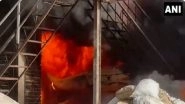
Karachi [Pakistan], February 19 (ANI): New disclosures before the judicial commission investigating the Gul Plaza inferno have exposed alarming lapses in emergency preparedness and coordination, raising serious questions about institutional accountability.
The inquiry, led by Justice Agha Faisal, is examining the conduct of rescue services, firefighting units and municipal authorities during the catastrophe, as reported by The Express Tribune.
According to The Express Tribune, Chief Fire Officer Muhammad Humayun Khan testified that the commercial building lacked basic safety mechanisms, including functional emergency lighting and clearly marked exit routes.
Blocked passageways and the absence of illuminated signs left occupants stranded in darkness and panic.
He stated that if on-duty guards had unlocked key access points in time, a significant number of victims might have escaped.
The commission was further informed that the routine disconnection of electricity during fire emergencies, though standard procedure, proved disastrous because the structure had no operational backup lighting.
Survivors were left navigating smoke-filled corridors without visibility, compounding the tragedy.
Testimony also highlighted severe operational setbacks.
Fire engines were delayed due to intense traffic congestion, and once they arrived, access to upper floors was limited.
Khan told the commission that the blaze intensified rapidly, with temperatures reaching approximately 1,200°C, so extreme that the sprayed water evaporated almost instantly.
Structural weaknesses, including false ceilings made of combustible material, enabled the flames to spread with devastating speed, as cited by The Express Tribune.
A lack of coordinated response among agencies also came under scrutiny.
While Karachi Metropolitan Corporation (KMC) teams reportedly reached the site early, insufficient firefighting vehicles and poor inter-agency planning undermined rescue efforts.
Only a handful of operational fire tenders were available at the time, severely restricting containment operations.
The commission is now probing whether systemic negligence, from flawed building approvals to inadequate emergency infrastructure, contributed to the scale of loss, as reported by The Express Tribune. (ANI)
(The above story is verified and authored by ANI staff, ANI is South Asia's leading multimedia news agency with over 100 bureaus in India, South Asia and across the globe. ANI brings the latest news on Politics and Current Affairs in India & around the World, Sports, Health, Fitness, Entertainment, & News. The views appearing in the above post do not reflect the opinions of LatestLY)
 Share Now
 Google Trends



 Live Bot