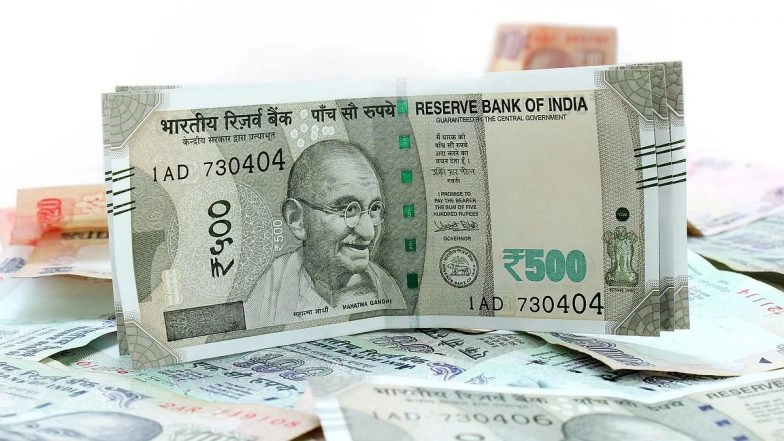
8th Pay Commission: How the Fitment Factor Will Decide New Salary and Pension for Central Government Employees and Pensioners
Central government employees and pensioners may soon see a major pay and pension hike, with the Union Cabinet approving the Terms of Reference for the 8th Central Pay Commission. The panel has 18 months to submit its report, and the revised pay structure is likely to take effect from January 1, 2026.

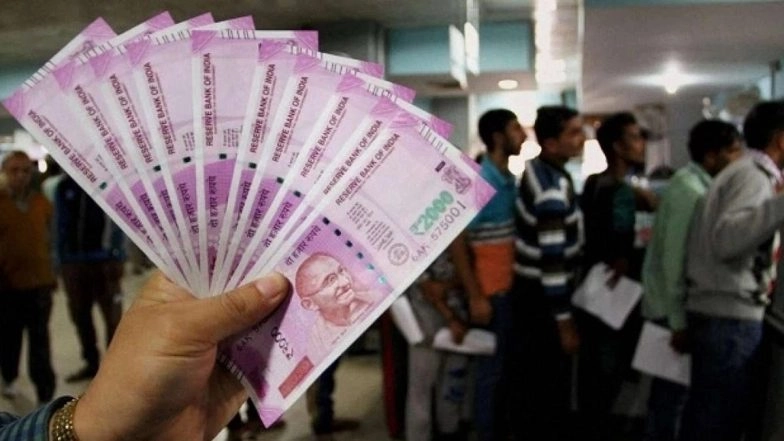
New Delhi, October 30: Central government employees and pensioners can look forward to a significant salary and pension revision soon, with the Union Cabinet reportedly approving the Terms of Reference for the 8th Central Pay Commission (CPC). The commission has been given 18 months to submit its report, and the new pay structure - once cleared by the government - is expected to take effect retrospectively from January 1, 2026.
The 8th CPC will determine revised pay scales, allowances, and pensions for millions of central government staff and retirees. A crucial part of this revision lies in the fitment factor, which directly influences the calculation of new basic pay and overall salary increases. 8th Pay Commission: Know How Much Salary and Pension Are Likely To Increase for Central Government Employees and Pensioners From January 1, 2026.
What Is the Fitment Factor?
The fitment factor, also known as the multiplier factor, is used to calculate the new basic pay by multiplying the existing basic salary with the factor recommended by the pay commission. For instance, during the 7th Pay Commission, the government applied a uniform fitment factor of 2.57 across all employee levels. 8th Pay Commission: Government Approves Terms of Reference, 8th CPC To Make Recommendations Within 18 Months.
Experts expect the 8th CPC’s fitment factor to be announced after the report’s submission and approval. According to Manjeet Singh Patel, National President of the All India NPS Employees Federation, the formula is simple: if an employee’s current basic pay is INR 35,000 and the fitment factor is 2.11, the revised basic pay becomes INR 73,850.
How Allowances Will Change
Nexdigm’s Director of Payroll Services, Ramachandran Krishnamoorthy, explained that percentage-based allowances like House Rent Allowance (HRA) will automatically rise in proportion to the new basic pay. However, fixed allowances such as transport benefits are usually reviewed separately, often a few months after pay revisions are implemented.
Dearness Allowance (DA), while not directly part of the fitment factor calculation, remains a major consideration. The DA rate - currently at 58% and expected to rise to around 70% by 2026 - helps the commission estimate the overall inflation-adjusted growth needed for fair compensation.
Expected Impact on Salaries and Pensions
According to Patel, the overall salary increase for central government employees could range between 20% and 25%, as DA resets to zero with each new pay commission. The government may also consider introducing slightly higher multipliers for lower pay levels to address income disparities.
If the 8th CPC adopts a 2.0 fitment factor, an employee currently earning a basic pay of INR 50,000 would see it double to INR 1,00,000. Similarly, a pensioner receiving INR 30,000 could expect their pension to rise to around INR 60,000, pending government approval and adjustments.
The final recommendations are likely to reshape India’s public sector pay landscape, balancing inflation, fiscal prudence and employee welfare.
(The above story first appeared on LatestLY on Oct 30, 2025 09:03 PM IST. For more news and updates on politics, world, sports, entertainment and lifestyle, log on to our website latestly.com).