Donald Trump Claims Credit for Averting India-Pakistan Conflict at Davos ‘Board of Peace’ Launch
US President Donald Trump, speaking at the World Economic Forum during ‘Board of Peace’ address in Davos on Thursday, repeated his claim that his personal intervention prevented a catastrophic military escalation between India and Pakistan last year.

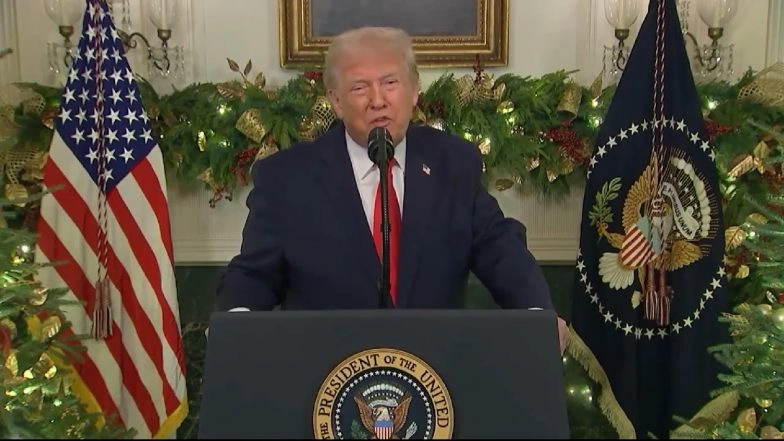
Davos, January 22: US President Donald Trump on Thursday used his "Board of Peace" address at the World Economic Forum to once again claim credit for de-escalating a major military standoff between India and Pakistan. The assertion, which Trump has repeated dozens of times over the past year, remains at sharp odds with New Delhi’s official stance that the conflict was resolved through direct, bilateral communication. Speaking before a global audience on the sidelines of the summit, the President described the world as "richer, safer, and more peaceful" than a year ago. He cited South Asia as a primary example of his administration’s success in preventing nuclear conflict.
The 'Board of Peace' Address
During the launch of his new peace initiative, President Trump highlighted the May 2025 escalation as a moment where American intervention was "decisive." ‘I’ve Saved Tens of Millions of Lives’: US President Donald Trump Reiterates Claim on Nobel Peace Prize for Stopping Multiple Major Wars, Including India-Pakistan Conflict (Watch Video).
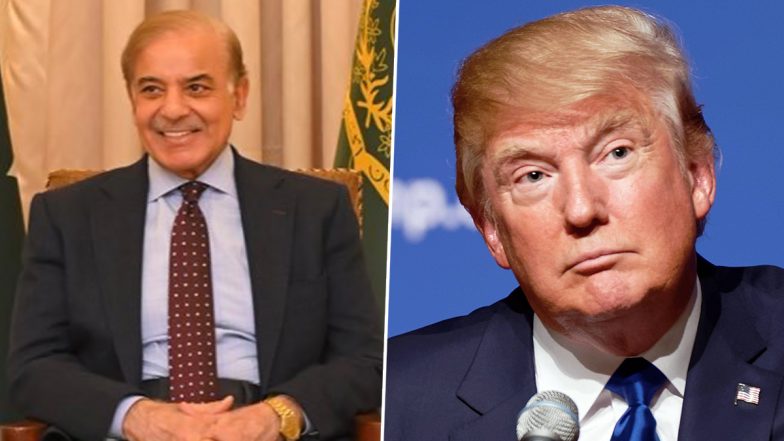
"We were very happy to stop the war that had started between India and Pakistan, two nuclear nations," Trump told the forum. He claimed that the Prime Minister of Pakistan had personally thanked him, stating the U.S. intervention had "saved 10 to 20 million lives" by halting the conflict just before it reached a point of no return. The President suggested that the United States utilized its trade and tariff leverage as a diplomatic tool to bring both nations to the negotiating table.
Origins of the 2025 Escalation
The remarks refer to the intense five-day military flare-up in May 2025, which followed a terror attack in Pahalgam on April 22. That attack, which killed 26 civilians, prompted India to launch Operation Sindoor, a series of precision strikes targeting terrorist infrastructure within Pakistan and Pakistan-occupied Jammu and Kashmir. ‘Pakistan PM Thanked Me for Saving Minimum 10 Million Lives’: US President Donald Trump Repeats Claims of Settling India-Pakistan Conflict (Watch Video).
The ensuing conflict saw high-intensity drone and missile exchanges and significant aerial engagements. According to Indian military assessments, the operation was a measured response aimed strictly at terror camps, while Pakistan characterized the strikes as an act of aggression.
India Rejects Third-Party Narrative
New Delhi has consistently pushed back against the U.S. President’s narrative of mediation. Indian officials maintain that the ceasefire, which took effect on May 10, 2025, was achieved through direct contact between the Directors General of Military Operations (DGMOs) of both countries.
Prime Minister Narendra Modi, addressing the Lok Sabha in July last year, dismissed claims of foreign pressure. He informed Parliament that no world leader had asked India to stop its military operations. Instead, Modi stated that the cessation of hostilities came at Pakistan's request after they realized they could not sustain further losses.
Long-Standing Bilateral Policy
The disagreement underscores a fundamental difference in diplomatic outlook. While the Trump administration views the event as a victory for "transactional diplomacy," India adheres to its "Simla Agreement" stance: that all issues with Pakistan must be resolved bilaterally without third-party interference.
The President’s latest remarks come as several nations, including Pakistan, formally joined his "Board of Peace" at Davos. India, however, has so far abstained from signing onto the initiative, maintaining its policy of strategic autonomy.
(The above story first appeared on LatestLY on Jan 22, 2026 08:38 PM IST. For more news and updates on politics, world, sports, entertainment and lifestyle, log on to our website latestly.com).