The Biggest Crocodile Ever? Why the 20-Foot-Long River Nile Giant Gustave Still Haunts Africa
Believed to be the biggest crocodile ever, Gustave is a 20-foot-long Nile crocodile linked to Africa’s River Nile ecosystem who vanished after 2015. Feared for decades and never captured, his fate remains unknown, fueling one of wildlife’s greatest unsolved mysteries.

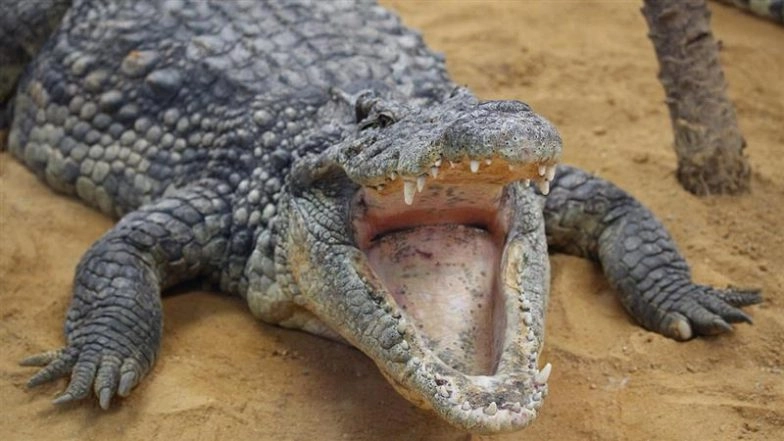
Mumbai, December 25: Burundi's legendary Nile crocodile, Gustave, a creature estimated to be over 70 years old and potentially reaching 20 feet in length, continues to captivate and mystify. Known for his immense size and a reputation for unparalleled elusiveness, Gustave's current status remains unconfirmed since his last documented sighting in 2015. The absence of definitive information fuels ongoing speculation about whether the apex predator, believed to be one of the largest crocodiles ever observed, is still alive in the waters of the Ruzizi River and Lake Tanganyika.
The Legend of a Giant
Gustave first gained widespread notoriety in the early 2000s, primarily through the work of French herpetologist Patrice Faye. Faye has dedicated years to studying and attempting to capture the massive reptile. Estimates place Gustave's weight at over 2,000 pounds, making him an exceptionally large specimen even for a Nile crocodile. He is also recognisable by unique scars, including bullet wounds and an alleged missing eye, believed to be the result of encounters with hunters and poachers over his long life. Meet Henry the Crocodile: From World's Oldest Living to Fathering 10,000 Offspring – Everything You Need To Know About 16ft Giant Crocodile.
Local lore attributes an extraordinary number of human fatalities to Gustave, with some unconfirmed reports claiming up to 300 victims along the Ruzizi River banks and shores of Lake Tanganyika. While these figures are impossible to verify, they underscore the profound fear and respect the crocodile commands among local communities. Saltwater Crocodiles in Indonesia Are Fake Drowning to Lure Humans Into Water? Viral Video Claiming the Reptile’s ‘Hunting Strategy’ Sparks Reactions Online (Watch).
Decades of Elusiveness
Despite numerous attempts to track and capture him, Gustave has consistently evaded human efforts. Patrice Faye and his team mounted several expeditions, utilizing elaborate traps, including a 20-foot-long cage weighing a ton, equipped with live bait and infrared cameras. Each attempt proved unsuccessful, highlighting Gustave's exceptional intelligence and wariness. His ability to avoid capture further cemented his legendary status as an almost mythical figure in the region.
The crocodile's vast habitat, encompassing parts of the Ruzizi River and the northern reaches of Lake Tanganyika, provides ample space for him to remain hidden. His advanced age also suggests a profound understanding of his environment and the dangers it presents.
Last Sighting and Current Mystery
The last confirmed sighting of Gustave occurred in 2015, near Lake Tanganyika. Since then, no definitive visual confirmation or photographic evidence of the giant crocodile has emerged. This lack of recent activity has led to various theories regarding his fate.
Some experts suggest that, given his extreme age, Gustave may have succumbed to natural causes. Nile crocodiles can live for a significant number of years, but even the oldest eventually perish. However, without a carcass or further sightings, his death cannot be officially confirmed. Alternatively, he may simply be continuing his pattern of extreme elusiveness, remaining hidden in the vast and often inaccessible wilderness of his territory.
Ecological and Cultural Significance
Regardless of his current status, Gustave's story continues to resonate. He represents a rare example of a truly ancient and enormous apex predator thriving in a world increasingly encroached upon by human activity. His legend serves as a powerful reminder of the wildness that still persists in parts of Africa and the intricate, often dangerous, relationship between humans and the natural world. For the people of Burundi, Gustave is more than just a crocodile; he is a living legend, a symbol of the untamed power of nature.
(The above story first appeared on LatestLY on Dec 25, 2025 07:35 PM IST. For more news and updates on politics, world, sports, entertainment and lifestyle, log on to our website latestly.com).