










 Quickly
 Socially
 Trending
 Crypto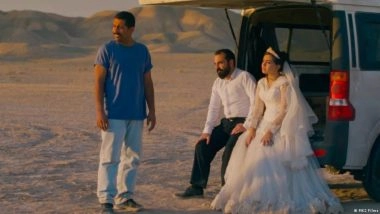
As Hollywood doubles down on sequels, the contenders for the European Film Awards feature bold, political works that are challenging audiences and creating buzz far beyond the continent.European cinema is having a moment — and not the kind engineered by marketing departments or toy companies.
As much of Hollywood doubles down on sequels, superheroes and slasher movies, the most vital films of the past year have been coming out of Europe. Not as escapist fantasy adapted from comic books, toys or video games, but as demanding, politically engaged stories aimed squarely at adults. These are films that assume viewers are willing to sit with ambiguity, moral discomfort and unresolved questions. They don't flatter their audiences; they challenge them.
Also Read | Nepal Names Former Australian International Ian Harvey As Bowling Consultant For ICC T20 World Cup 2026.
Movies for grown-ups
That sensibility is on full display at this year's European Film Awards(EFA), Europe's top cinema prize, which takes place in Berlin on January 17.
The films competing for the EFA's top honors — from France, Germany, Spain, Scandinavia and beyond — share a seriousness of purpose that feels increasingly rare in mainstream US cinema. They are formally adventurous, often unsettling, and unashamedly political. And, for the first time in years, several of them are also central players in the wider awards-season conversation, including the Oscars.
Jafar Panahi's urgent political thriller
A top contender is Jafar Panahi's Iranian-French drama "It Was Just an Accident," a film that manages to combine dark comedy and political satire with moral ferocity and the pace of a Hitchcockian thriller.
The premise is deceptively simple: Vahid, a former political prisoner, believes he recognizes the man who once tortured him. Acting on impulse, he kidnaps the man and takes him to the desert to bury him alive. But in prison, Vahid was always blindfolded. He cannot be sure he has the right man. So, with the man bound and gagged in the back of his van, he travels the city, picking up other former prisoners to debate whether to take revenge or show mercy.
What follows is a grimly funny, increasingly unsettling road movie. Made after Panahi himself served seven months in prison for "anti-government propaganda," the film is both furious and darkly playful, a full-throated attack on authoritarianism that is never didactic or simplistic.
With protests in Iran and state violence escalating, "It Was Just an Accident" feels painfully urgent.
Panahi has since been sentenced in absentia to another year in prison and a two-year work ban, and has said he intends to return to Iran after the film's awards run, whatever the consequences.
Cinema at the end of the world
If Panahi's film is a political thriller disguised as a moral puzzle, Oliver Laxe's "Sirat" is something stranger and more elemental.
The film begins as a search story: a father looking for his missing daughter, who has disappeared into Morocco's underground rave scene. Then the ground shifts. The military arrives. Some kind of global conflict — perhaps World War III — seems to be underway, though the film never explains exactly what has happened. The father, his young son, and a group of ravers flee into the desert in their camper vans.
What follows is a nerve-shredding hybrid of genres: part post-apocalyptic chase movie, part existential thriller, all driven by a relentless techno score from Berlin-based electronic artist Kangding Ray. Think "The Wages of Fear" filtered through "Mad Max: Fury Road," but stripped of cynicism and with a strangely spiritual, psychedelic undertow.
This year's EFA lineup also includes films that operate in a quieter, more intimate register. Joachim Trier's Norwegian melodrama "Sentimental Value" and Mascha Schilinski's German period epic "Sound of Falling" privilege character and emotion over plot and action.
Trier's film centers on Gustav Borg, a once-celebrated film director (played by Stellan Skarsgard, who just won a Golden Globe award for the role) in a personal and creative crisis, who attempts to reconnect with his estranged adult daughter (Renate Reinsve), now a famous actress. His solution is predictably misguided: He writes a film for her, hoping to both revive his career and repair their relationship. When she refuses, Borg ponders replacing her with an American star (Elle Fanning) and rewriting the project in English.
The film flirts with industry satire — there are echoes of Bergman and Fellini here — but its emotional core is raw and personal. Winner of the Grand Jury Prize at the Cannes Film Festival, "Sentimental Value" is quietly devastating, a film about how art can sometimes express what people cannot say to each other directly.
History seen through women's lives
"Sound of Falling" works on a broader historical canvas. Set on the same rural German farm, the film follows four generations of women across a century of German history. Its visual austerity recalls Michael Haneke's "The White Ribbon," and the generational storyline is reminiscent of Edgar Reitz's "Heimat" movies, but by focusing on women's stories, on the ignored and forgotten figures of history, Schilinski breaks new ground. "Sound of Falling" is a film that feels simultaneously old-fashioned and radical.
What unites these works — and many EFA nominees — is an unapologetic engagement with politics.
Petra Volpe's Swiss drama "Late Shift" turns the care crisis into a real-time ordeal, following a single nurse (Leonie Benesch, extraordinary) through one exhausting night on duty.
Kaouther Ben Hania's "The Voice of Hind Rajab" confronts viewers with the harrowing, true-life story of the killing of a young girl in Gaza, refusing the comfort of abstraction or distance.
Even Yorgos Lanthimos' "Bugonia," the oddball out, uses its story of conspiracy theories and alien paranoia as tools for social satire rather than escapism.
From Europe to the Oscars
That these kinds of movies — intelligent, radical, and challenging — are getting recognition from the European Film Academy is nothing new. This kind of cinema has always been central to the EFA's identity. What feels different this year is how far these films are reaching beyond Europe.
"It Was Just an Accident," "Sirat" and "Sentimental Value" are all serious Oscar contenders — not only in the international feature category, but in races for best director and even best picture. Two EFA-nominated animated features, the hand-drawn French films "Arco" and "Little Amelie or the Character of Rain," are also among the Academy's favorites.
Once dismissed as too austere, too political or too niche, European cinema is suddenly shaping the global conversation again. As Hollywood continues to bet on endless franchises, on recycled stories, sequels and spin-offs, audiences who still believe cinema can be something more than spectacle are starting to look elsewhere. Not for comfort, maybe, but for meaning.
DW, The Hollywood Reporter and the European Film Academy are hosting a live, exclusive roundtable conversation with directors Jafar Panahi, Oliver Laxe, Mascha Schilinski and Joachim Trier on Friday, January 16 at 3:45 pm CET, streaming live on DW's History and Culture channel on YouTube.
Edited by: Tanya Ott
(The above story first appeared on LatestLY on Jan 16, 2026 01:00 PM IST. For more news and updates on politics, world, sports, entertainment and lifestyle, log on to our website latestly.com).
 Share Now
 Google Trends



 Live Bot