













 Quickly
 Socially
 Trending
 Crypto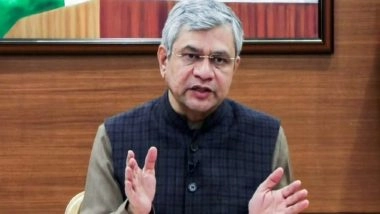
Srinagar (Jammu and Kashmir) [India], February 3 (ANI): The Centre's allocation of Rs 1,086 crore for railway infrastructure in Jammu and Kashmir in the latest Union Budget, announced by Union Railway Minister Ashwini Vaishnaw, underlines the government's push to strengthen connectivity in the Union Territory in the years following the abrogation of Article 370 on August 5, 2019.
At a time when infrastructure is increasingly seen as a driver of stability and growth, railways have emerged as a key pillar of the region's development strategy.
For decades, development in Kashmir was discussed more as a promise than a lived reality. Political instability, difficult terrain, and prolonged security challenges meant that infrastructure, especially transport, lagged behind the rest of the country.
Seasonal road closures, weather disruptions and fragile supply chains shaped everyday life. Over the past several years, however, that narrative has begun to change. Steel tracks cutting through mountains and tunnels piercing some of the world's toughest geology have become visible markers of a broader transformation underway in Jammu and Kashmir.
Railway infrastructure, in particular, has emerged as a cornerstone of this shift. Sustained central investments reflect not just financial commitment, but strategic intent. Connectivity in Kashmir is no longer viewed as optional development. It is increasingly seen as essential to economic integration and long-term nation-building.
The most consequential project reshaping the Valley is the Udhampur-Srinagar-Baramulla Rail Link (USBRL). Conceived decades ago and long delayed, the 272-kilometre project has evolved into an engineering landmark.
It includes more than 900 bridges and dozens of tunnels, among them the Chenab Rail Bridge, the world's highest railway arch bridge.
Beyond its technical achievement, the USBRL is transformative because it provides all-weather connectivity, reducing Kashmir's long-standing dependence on vulnerable road links such as the Srinagar-Jammu highway.
The impact is already visible on the ground. Rail services from Baramulla to Sangaldan have brought remote north Kashmir towns closer to economic activity. Farmers, traders, students and daily wage earners now have access to faster, more reliable and affordable transport.
Reduced travel uncertainty represents a significant psychological shift in a region where road closures were once routine.
Another milestone has been the introduction of the Vande Bharat Express between Jammu and Srinagar. While often viewed as symbolic elsewhere, the train plays a practical role in Kashmir. During harsh winters, when snow frequently disrupts road connectivity, the semi-high-speed service ensures continuity of movement.
The inclusion of Dogri cuisine on the Jammu leg and Kashmiri cuisine on the return journey also reflects a growing sensitivity towards regional identity.
Rail expansion plans further point to a more inclusive approach. Proposed projects such as the Baramulla-Uri rail line and the Jammu-Rajouri rail corridor, currently at survey and DPR stages, aim to connect border and hill districts that have long remained geographically isolated.
For these regions, railways are not merely transport links but potential development corridors, improving access to healthcare, education, tourism and employment.
Significantly, the decision to pause additional rail lines along the Baramulla-Srinagar stretch due to concerns over apple orchards indicates a maturing policy approach--one that seeks to balance infrastructure growth with environmental and livelihood protection.
Beyond mobility, railway-led infrastructure has had wider ripple effects, including a revival of tourism, faster movement of goods, job creation during construction, and long-term logistics efficiency.
An all-weather rail system, railway officials say, has the potential to become the economic lifeline of the Valley.
Kashmir's development journey remains complex and unfinished. Yet the steady expansion of rail infrastructure signals a clear shift from ad-hoc measures to long-term planning. In a region where distance once deepened disconnection, railways are now narrowing both physical and psychological gaps--tracks that may ultimately determine how firmly Kashmir is anchored to prosperity. (ANI)
(The above story is verified and authored by ANI staff, ANI is South Asia's leading multimedia news agency with over 100 bureaus in India, South Asia and across the globe. ANI brings the latest news on Politics and Current Affairs in India & around the World, Sports, Health, Fitness, Entertainment, & News. The views appearing in the above post do not reflect the opinions of LatestLY)
 Share Now
 Google Trends



 Live Bot