













 Quickly
 Socially
 Trending
 Crypto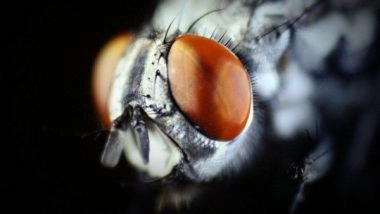
Washington [US], January 30 (ANI): An innovative technique from Cornell University researchers finds seminal fluid protein transferred from male to female fruit flies during mating changes the expression of genes related to the fly's circadian clock.
The finding, published in the Proceedings of the National Academy of Sciences, could help explain how this protein, called sex peptide, alters the female's behaviour.
Post-mating, sex peptide has been shown to elicit increased egg-laying, aggression, activity and feeding, while reducing sleep and interest in mating in previously unmated females.
"Flies like to eat at certain times of day," said Mariana Wolfner, professor of molecular biology and genetics and one of the paper's senior authors. "They sleep at certain times, and the circadian clock machinery controls when flies are likely to do these things.
Also Read | Barbarella: Jane Fonda Raises Concerns Over Upcoming Remake Of The 1968 Sci-Fi Film.
"What we're seeing," she said, "is that these very same behaviours - such as sleeping and eating - are changed after mating by the sex peptide. One way it might do that is by basically shifting the whole clock of the fly."
The surprising findings were made possible by examining transcriptomes - RNA sequencing that reveals gene expression, or which genes are turned on and off - at many different time points, providing high-resolution data that illuminates the order in which changes occur.
In the first four hours after mating, researchers found changes in the expression of genes involved in the female fly's metabolism and the circadian clock. It is unknown what triggered these initial changes, but pheromones or seminal fluid proteins other than sex peptides are possible candidates. The initial effects were short-term; they didn't last without sex peptide and seemed to prime the system.
In a second phase, four hours after mating, the researchers discovered that sex peptide caused changes to genes that regulate circadian rhythms and genes that are regulated by circadian clock pathways.
The study opens the door for future work that explores such questions as: how long the effect lasts and whether these effects occur in other organisms, given that circadian clock gene are highly conserved in many life forms. (ANI)
(The above story is verified and authored by ANI staff, ANI is South Asia's leading multimedia news agency with over 100 bureaus in India, South Asia and across the globe. ANI brings the latest news on Politics and Current Affairs in India & around the World, Sports, Health, Fitness, Entertainment, & News. The views appearing in the above post do not reflect the opinions of LatestLY)
 Share Now
 Google Trends



 Live Bot