Tackling PFAS Could Save Big Bucks and Our Health
The UK has unveiled a plan to tackle 'forever chemical' contamination that falls behind proposed EU measures.

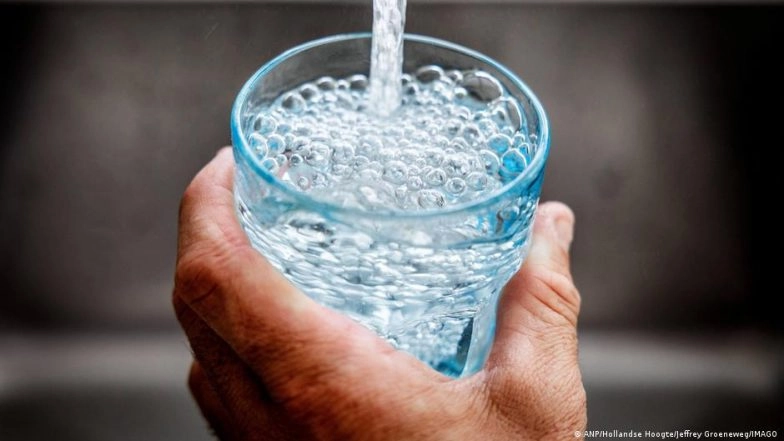
The UK has unveiled a plan to tackle 'forever chemical' contamination that falls behind proposed EU measures. As Europe seeks to deal with the growing PFAS pollution, cleaning it up could cost up to €1.7 trillion.The United Kingdom announced Tuesday that it would tackle PFAS pollution, introducing an action planto "understand where these chemicals are coming from, how they spread and how to reduce public and environmental exposure."
Also Read | Sports News | India Thrash Bhutan to Book SAFF U19 Championship Final Date with Bangladesh.
The plan includes montitoring of rivers, lakes and seas, supporting a transition away from PFAS and consulting on a limit for drinking water.
While some have called the plan "encouraging", others have said it doesn't go far enough.
"This plan is a roadmap to nowhere for one of the most serious pollution threats facing nature and public health," Chloe Alexander, chemicals policy lead at Wildlife and Countryside Link, said in a statement, calling it a "crushingly disappointing framework."
The plan comes amid increasing efforts in a number of countries to limit the damaging effects of forever chemicals. Earlier in January, European Union limits for PFAS in drinking water came into force, making it mandatory for member states to systematically monitor and report to the Commission.
The EU is also looking into a broad ban on PFASas proposed by Germany, the Netherlands, Denmark, Norway and Sweden.
"There are no binding phase-outs, no timetable for ending everyday uses for which affordable alternatives are already available," Alexander said about the UK plan, "no commitment to match the EU's proposed broad ban on the use and manufacture of all PFAS."
What exactly are PFAS?
The forever chemicals are a group of more than 10,000 synthetic chemical substances known as Per- and Polyfluoroalkyl Substances (PFAS). Most are produced in the automotive, paper, metal, chemical and plastics industries and are found in virtually all everyday items — from plastic surfaces and pizza box coatings to outdoor clothing.
PFAS residues are now found almost everywhere in nature and can't be broken down naturally, and thus permanently pollute water, soil, air and food.
Almost everyone has PFAS in their blood. Research links exposure to some PFAS to immune system effects, developmental harm, reduced fertility and increased risks of certain cancers, though the strength of evidence varies by chemical.
Expensive fallout of PFAS pollution
PFAS-related damage will cost the European Union hundreds of billions of euros in the coming years, a report by the EU-commission found.
Under a business-as-usual scenario, if production and use remain high, the pollution caused by four PFAS substances alone will cost EU citizens around €40 billion ($47 billion) annually in health care costs. That doesn't include additional financial damage caused by destroyed ecosystems or declining biodiversity.
Cleaning up contaminated soil and water from these four main PFAS compounds only would cost EU countries a total of €1.7 trillion ($2 trillion).
The most cost-effective way would be to gradually phase out the use and production of PFAS from 2030 onwards and discontinue them completely by 2040. This would reduce the costs for the healthcare system to zero in the long term.
Alternatives already exist for a number of PFAS but by far not for all of them.
A phase-out and finally a total stop of production and use of these substances could bring down total costs to €330 billion.
EU-wide grain products contaminated
Grain products across Europe were found to be contaminated with a potentially harmful forever chemical, according to a recent report by Pesticide Action Network (PAN)Europe, a group of NGOs campaigning for stricter pesticide regulation.
Having tested 66 grain products including breakfast cereals, sweets, pasta, croissants, bread and flour from 16 European countries, PAN found 54 contained high levels of the forever chemical trifluoroacetic acid (TFA).
The substance is believed to be entering food through agricultural pesticides and has been linked to potential health risks, including possible effects on fetal development. TFA is particularly water-soluble and therefore spreads easily through rain into food and wastewater.
The number of chemical substances that degrade to TFA is steadily increasing, says the German Environment Agency (UBA).
The PAN results show that the overall concentration of the substance in grain products was on average more than 100 times higher than in tap water. TFA contamination was particularly evident in conventionally grown grain, where it was more than twice as high as in organic products.
Germany's environment agency calls for PFAS reduction
TFA has been detected in German waters for years. The UBA confirms that, in addition to originating in industrial plants that operate with forever chemicals, the substance it is a byproduct of various degraded pesticides.
Coolants used in air conditioning or cooling systems break down into this harmful chemical too.
"In Germany, 27 PFAS active ingredients that can release TFA are still approved for use in pesticides," noted Peter Clausing, a toxicologist at PAN Germany.
"Our study underscores the urgency of an immediate ban on PFAS pesticides in Germany and across the EU in order to stop this relevant source of contamination."
Edited by: Sarah Steffen
(The above story first appeared on LatestLY on Feb 04, 2026 06:00 PM IST. For more news and updates on politics, world, sports, entertainment and lifestyle, log on to our website latestly.com).