
World News | Iran Warns of Attack on Ports in West Asia if Its Ports Are Targeted by US-Israel Forces: State Media
Get latest articles and stories on World at LatestLY. IRIB Quoted the official as saying, "If any attack is carried out against Iran's economic ports, all docks, ports, and economic zones across West Asia will be destroyed."

Tehran [Iran], March 12 (ANI): Iran's state news agency IRIB has reported that a Senior spokesperson for Iran's armed forces has warned that Iran would attack ports across the region if its ports are targeted
IRIB quoted the official as saying, "If any attack is carried out against Iran's economic ports, all docks, ports, and economic zones across the Middle East will be destroyed."
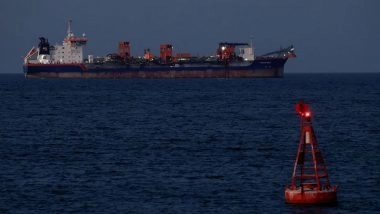
Meanwhile, the Iranian Revolutionary Guard Corps (IRGC) has intensified its maritime blockade in the Persian Gulf, claiming to have already targeted numerous international vessels while enforcing a strict "no-move" zone in the strategic waterway.
In a post on X, state broadcaster Press TV shared a field documentary from the "heart of the Persian Gulf and the Strait of Hormuz", which shows vessels that "remain silent--yet are targeted by the IRGC if they shift even a few meters."
Also Read | Did Israel Strike North Korea's Embassy in Tehran? Here's a Fact Check of Viral Social Media Claim.
The footage highlights the activities of "Basij guys from Bandar Abbas" operating speedboats known as the "Defenders of the Persian Gulf." Within the documentary, the narrator reveals the scale of the ongoing maritime aggression, mentioning that the "IRGC has claimed to hit 14 oil tankers, including two American tankers."
This aggressive stance was further confirmed by Rear Admiral Alireza Tangsiri, Commander of the IRGC Naval Force, who stated that any vessel seeking to sail through the Strait of Hormuz must obtain Iran's approval; otherwise, it could become a target of Iranian attacks.
Tangsiri noted that two ships, the Express Rome and Mayuree Naree, were targeted on Wednesday after ignoring warnings. "Any vessel intending to pass must obtain permission from Iran," the Iranian general said in a post on X.
According to Iranian state media, these restrictions have been intensified amid ongoing US-Israeli strikes. The IRGC has designated a specific "space in the sea where IRGC will hit any ships that move a few meters," warning that "moving a few dozen meters results in an attack from the IRGC," specifically via "drones."
The impact of this blockade is immense, as more than 20 million barrels of crude oil--roughly a fifth of global consumption--pass daily through this narrow channel. Iranian retaliatory measures, involving drones and missiles, have effectively paralysed shipping since 28 February, when US and Israeli forces initiated air strikes against Iran.
In response to the resulting volatility in oil prices, the United States Department of Energy announced a plan to offload 172 million barrels from the strategic petroleum reserve "beginning next week."
The department indicated on X that the distribution process would "take approximately 120 days to deliver based on planned discharge rates."Global leaders are struggling to mitigate the economic consequences as oil prices climb steadily.
Earlier, the International Energy Agency (IEA) announced the release of 400 million barrels of oil from the emergency reserves of its 32 member countries to address supply disruptions triggered by the conflict.
Despite these measures, the IRGC maintains firm control over the passage, where foreign ships remain "parked and not allowed to turn on their engines" under the threat of immediate aerial strikes. (ANI)
(The above story is verified and authored by ANI staff, ANI is South Asia's leading multimedia news agency with over 100 bureaus in India, South Asia and across the globe. ANI brings the latest news on Politics and Current Affairs in India & around the World, Sports, Health, Fitness, Entertainment, & News. The views appearing in the above post do not reflect the opinions of LatestLY)