













 Quickly
 Socially
 Trending
 Crypto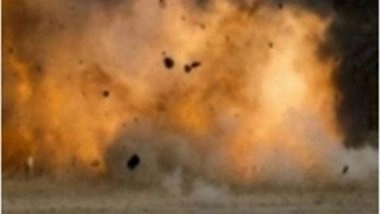
Mardan [Pakistan], July 5 (ANI): As many as three people were killed and seven others sustained injuries after a deadly blast from a remote-controlled explosive device occurred in Mardan, Pakistan, damaging a police van and a rickshaw, Dawn reported.
The incident occurred when a remote-controlled explosive device planted on the Jalala bridge in Takhtbhai was detonated.
Among the casualties were two injured police officers, highlighting once again the persistent threat of terrorism in the region.
The escalation of explosions and security incidents in Khyber Pakhtunkhwa following Kabul's fall has raised serious concerns, as per Dawn.
A recent report by Pakistan's Centre for Research and Security Studies has highlighted the impact of violence in the country during the second quarter of 2024.
The report reveals that Pakistan experienced 380 deaths and 220 injuries from 240 incidents, encompassing both terrorist attacks and counter-terror operations. Khyber Pakhtunkhwa and Balochistan emerged as the epicentres of violence, accounting for 92 per cent of fatalities and 87 per cent of attacks during this period.
The report further indicates that Punjab and Khyber Pakhtunkhwa saw increases in violence, with fatalities rising by 13 per cent and 31 per cent respectively. Civilian casualties constituted 62 per cent of the total fatalities, with incidents targeting ethnic groups in Balochistan and Khyber Pakhtunkhwa, alongside sectarian violence.
Security personnel, including police and military officials, were also frequent targets. The findings underscore the multifaceted security challenges across different regions of Pakistan during the specified timeframe.
Pakistan's historical use of terror groups as proxies to advance strategic interests, particularly in its rivalry with India and involvement in Afghanistan, has exacerbated internal instability.
This strategy dates back to the 1980s Soviet-Afghan War, when Pakistan supported mujahideen fighters against the Soviet Union.
In the context of Kashmir, Pakistan has provided financial and logistical support to terrorist groups operating in the region, which have targeted Indian security forces and civilians.
However, these once-supported terror groups have now turned against the state, resulting in widespread violence, attacks on civilians and security forces, and a challenging security landscape.
The presence of such groups on Pakistani soil has compromised state sovereignty, especially in tribal and border areas with Afghanistan, which have occasionally become safe havens for terrorists, posing threats to both Pakistan and regional stability.
The ramifications of terrorism extend beyond security concerns, adversely impacting Pakistan's economy. The country has experienced reduced foreign investment, decreased tourism, and diverted resources that could have otherwise been allocated to development towards security and counter-terrorism efforts. (ANI)
(The above story is verified and authored by ANI staff, ANI is South Asia's leading multimedia news agency with over 100 bureaus in India, South Asia and across the globe. ANI brings the latest news on Politics and Current Affairs in India & around the World, Sports, Health, Fitness, Entertainment, & News. The views appearing in the above post do not reflect the opinions of LatestLY)
 Share Now
 Google Trends



 Live Bot