
World News | US Launches Trade Probe into 16 Economies over Manufacturing Practices
Get latest articles and stories on World at LatestLY. Announcing the move on a White House press call, Jamieson Greer said the probe would be conducted under Section 301 of the Trade Act of 1974, one of Washington's most powerful trade enforcement tools.

By Reena Bhardwaj
Washington DC [US], March 12 (ANI): The United States Trade Representative (USTR) office on Wednesday (local time) launched a sweeping investigation into manufacturing and industrial practices in 16 economies, including India, citing concerns over what it calls "structural excess capacity" that could distort global trade.
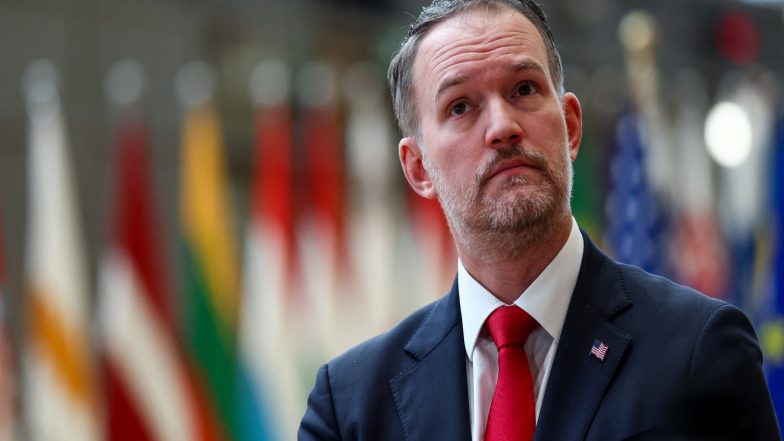
Announcing the move on a White House press call, Jamieson Greer said the probe would be conducted under Section 301 of the Trade Act of 1974, one of Washington's most powerful trade enforcement tools.
Greer said the investigation would examine "acts, policies and practices" in manufacturing sectors that may be leading to excessive production capacity disconnected from market demand.
Also Read | Cannes Film Festival 2026: Barbra Streisand to Receive Honorary Palme d'Or at Awards Ceremony on May 23.
"We expect that this investigation will uncover a variety of unfair trading practices related to excess capacity and production in manufacturing. Our view is that key trading partners have developed production capacity that is really untethered from the market incentives of domestic and global demand," Greer said.
According to the USTR, the investigation will cover China, the European Union, Japan, South Korea, Vietnam, Mexico, Taiwan, Singapore, Switzerland, Norway, Indonesia, Malaysia, Cambodia, Thailand, Bangladesh, and India.
The US administration argues that certain trading partners have developed manufacturing capacity "untethered from the market incentives of domestic and global demand", leading to persistent trade surpluses, overproduction and unused capacity in key sectors.
Officials say such practices may stem from subsidies, state-directed industrial policies, market access barriers, subsidised lending, currency practices or labour and environmental standards that lower production costs.
"This excess capacity leads to, among other factors, overproduction and larger persistent trade surpluses, as well as underutilised and unused capacity, particularly in manufacturing sectors," Greer said.
The USTR outlined a multi-stage process before any action is taken. Around March 17, a public docket will open for written submissions and requests to appear at hearings. April 15 will be the deadline for written comments and hearing requests. Around May 5, public hearings will begin, and after the hearings, a rebuttal period will open, followed by consultations with the affected trading partners.
After completing the process, the USTR will publish its findings and determine whether to recommend action to the US President Donald Trump.
Possible responses could include tariffs on goods, restrictions on services or negotiated commitments with partner countries.
Greer stressed that the investigation is at an early stage and no final decision has been made on punitive measures.
He said, "After USTR has received written comments, had a hearing and received rebuttal comments, and of course, during that time, we'll also be consulting with our trading partners who are subject to this investigation. After all of that, the USTR, we will have our findings and our analysis, and we will propose, if necessary, a responsive action. A responsive action can take a number of forms. It can be tariffs. It can be seized on services. It can be other things."
Greer pointed to an earlier investigation into China during President Donald Trump's first term, which led to tariffs, strengthened investment screening mechanisms and export controls.
Greer said, "If you look back to the section 301 investigation of China in the first Trump term, the responsive action included not only tariffs. It included Treasury working to strengthen CFIUS. It included the Commerce Department working to strengthen export controls. It included initiating a WTO case on intellectual property. So we don't want to prejudge the outcome of these investigations."
In addition to the manufacturing probe, the USTR also indicated it plans to launch a separate Section 301 investigation into whether countries effectively ban imports of goods made with forced labour.
Greer said, "I also want to talk about a second section, 301, investigation, which we expect to initiate probably no earlier than tomorrow afternoon, and that will be related to a ban on imports of goods made with forced labor, and effective implementation of such bans or prohibitions in the United States, we have had for about 100 years a law on the book to prohibit the import of goods that are the product of forced labor." (ANI)
(The above story is verified and authored by ANI staff, ANI is South Asia's leading multimedia news agency with over 100 bureaus in India, South Asia and across the globe. ANI brings the latest news on Politics and Current Affairs in India & around the World, Sports, Health, Fitness, Entertainment, & News. The views appearing in the above post do not reflect the opinions of LatestLY)