India’s Energy Sovereignty: Why New Delhi Doesn’t Need ‘Permission’ To Buy Russian Oil
A debate has emerged over claims that India needs US approval to buy Russian oil. However, import data and policy statements show India’s energy decisions are guided by national interest and market conditions. With Russia supplying a major share of crude, New Delhi continues to prioritise energy security and strategic autonomy.

New Delhi, March 6: A narrative suggesting that India requires “permission” from the United States to purchase Russian crude oil has recently surfaced in parts of the political discourse. However, the data and India’s long-standing energy policy clearly show that this claim does not reflect reality.
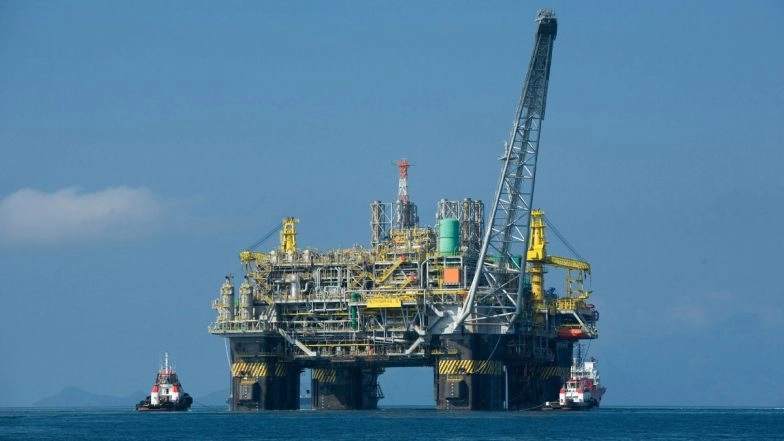
Russia remained India’s largest crude oil supplier in February 2026, with Indian refiners importing between 1.0 and 1.7 million barrels per day. This accounted for nearly 25 to 30 percent of India’s total oil imports, translating to roughly 28 to 48 million barrels of Russian crude during the month. In simpler terms, India has been buying about 10 lakh barrels of Russian oil every day.
These figures alone undermine the argument that India’s energy choices are dictated by external approval. If India truly required American permission to purchase Russian oil, such imports would not exist at this scale. ‘Do We Need Permission From US?’: Congress MP Manish Tewari Questions Centre After Washington Allows 30-Day Waiver for India to Buy Russian Oil.
India imports more than 85 percent of its crude oil needs, making energy security a top strategic priority for the country. For a nation of over 1.4 billion people, maintaining stable and affordable energy supplies is essential for economic growth, transport, manufacturing and household expenses. US Permits 30-Day Waiver for India to Purchase Russian Oil, As Conflict Puts Stress on Straits of Hormuz Supply Route.
Following the Ukraine conflict in 2022, India diversified its energy sourcing strategy. Russian crude became attractive due to competitive pricing and reliable supply, prompting Indian refiners to increase purchases. This decision helped shield domestic consumers from global price volatility and rising inflation.
India continues to engage diplomatically with the United States, Russia, Gulf countries and other global energy suppliers. However, such discussions are part of normal international trade and diplomacy. They do not translate into foreign approval for India’s energy decisions.
New Delhi has consistently maintained that its oil purchases are determined by market conditions and national interest. Even when Washington introduced tariffs linked to Russian oil trade, India did not halt imports. Instead, it continued diversifying supply sources while maintaining strategic dialogue with multiple partners.
The current geopolitical tensions in West Asia further highlight the importance of a diversified energy strategy. With global energy markets facing uncertainty, expanding procurement channels remains essential for ensuring supply stability.
India’s oil policy is therefore driven by pragmatism and economic necessity. It reflects strategic autonomy rather than external dependence. As one of the world’s largest energy consumers, India negotiates with multiple partners to secure the best possible deals for its citizens.
Ultimately, countries the size of India do not outsource critical decisions like energy procurement. They balance diplomacy, market realities and national interest.
And that is exactly what India is doing.
(The above story first appeared on LatestLY on Mar 06, 2026 06:01 PM IST. For more news and updates on politics, world, sports, entertainment and lifestyle, log on to our website latestly.com).