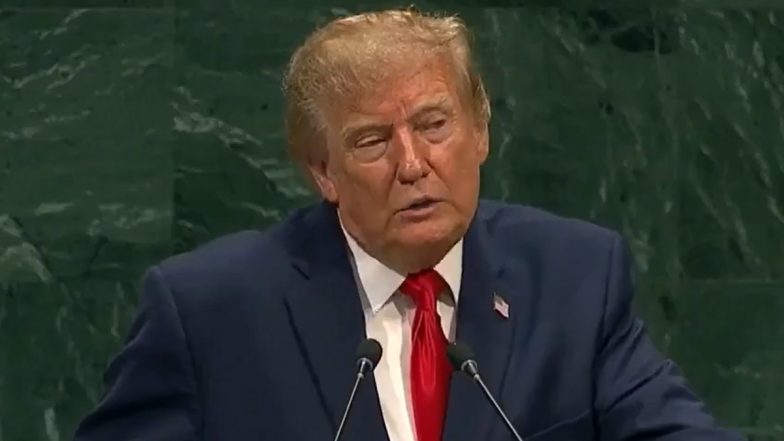
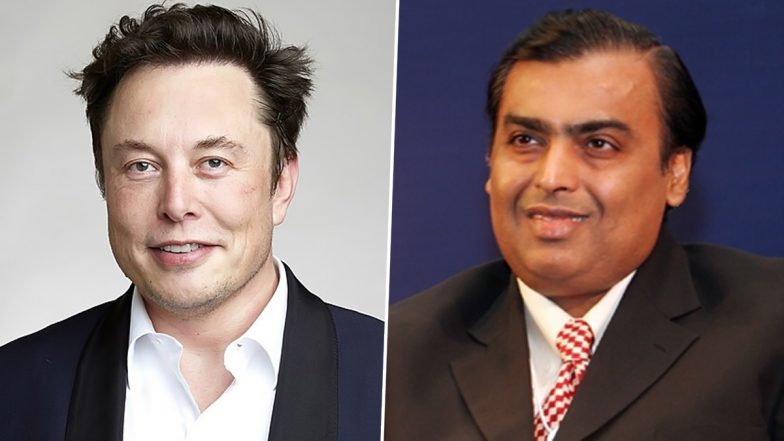
Starlink Offering Free Service in Iran as Elon Musk and Donald Trump Coordinate To Bypass Internet Blackout and Support Protesters
Starlink has launched free satellite internet services in Iran to bypass a nationwide blackout following a deadly protest crackdown. While the move follows coordination between Elon Musk and US President Donald Trump, Tehran has reportedly deployed Russian military-grade technology to jam signals, disrupting up to 80% of traffic in major cities.


Tehran, January 14: Tehran has reportedly deployed advanced Russian military technology to disrupt Elon Musk’s Starlink satellite network as nationwide protests continue to intensify across Iran. The move follows a decision by SpaceX to waive service fees for Iranian users, effectively making the internet service free for those with smuggled terminals. Digital rights activists and technical experts have raised alarms over the sophistication of the interference, which has successfully blocked up to 80 per cent of Starlink’s traffic in certain areas.
The Iranian government, led by Ayatollah Ali Khamenei, has maintained a nationwide internet blackout for over 120 hours to disconnect demonstrators from the international community. In response to the crackdown, SpaceX moved to enable free access on Tuesday, a development that followed a direct conversation between US President Donald Trump and Elon Musk. Despite a domestic ban on the hardware, an estimated 50,000 Starlink receivers have been smuggled into the country to bypass state-controlled telecommunications. Iran Internet Blackout: Government Jams Elon Musk’s Starlink To Stop Protest Videos; Security Forces Hunting Down Users.
However, the Iranian response has been technically aggressive. According to reports from Forbes and digital monitor NetBlocks, Tehran is using Russian-supplied jamming equipment to target GPS signals. These signals are critical for Starlink terminals to locate and connect with overhead satellites. Experts note that while the interference was initially limited, it has escalated to disrupt the vast majority of uplink and downlink traffic, rendering the service "patchy" in most regions.
Iran Starlink Jamming Technology
The scale and nature of the interference have surprised seasoned observers of digital censorship. Amir Rashidi of the Miaan Group, a digital rights non-profit, stated that in 20 years of researching internet access, he had "never seen such a thing." The technology appears to be a novel or highly advanced application of military electronic warfare designed specifically to neutralise low-earth orbit satellite constellations.
The deployment of this Russian technology highlights the deepening military cooperation between Tehran and Moscow. While SpaceX has not officially commented on the technical specifics of the jamming, sources familiar with the matter confirmed that the company is attempting to counter the blackout. President Trump, who has been vocally supportive of the protesters, pushed for the Starlink activation to ensure that the "courageous people of Iran" could communicate their message to the world.
Iran Protest Internet Blackout
The digital battle comes at a time of extreme civil unrest. Protests erupted on 28 December 2025, triggered by a collapse in the national currency, and have since spread to at least 180 towns and cities. The human cost of the government crackdown has been severe, with the US-based Human Rights Activists News Agency reporting that the death toll has risen to over 2,000, including 1,850 protesters. How Iran’s Protests Unfolded and Grew: A Timeline of Economic Anger, Arrests, Crackdowns and Nationwide Unrest.
The use of Starlink was seen as a vital lifeline for activists to share footage of the demonstrations and coordinate efforts. However, with 80 per cent of traffic now being suppressed by Russian-made jammers, the effectiveness of the satellite network remains under threat. Digital rights organisations continue to monitor the situation, describing the current environment as the most sophisticated state-led effort to date to completely isolate a population from the global internet.
(The above story first appeared on LatestLY on Jan 14, 2026 08:50 AM IST. For more news and updates on politics, world, sports, entertainment and lifestyle, log on to our website latestly.com).