Archaeologists Unearth 200,000-Year-Old Evidence at Leang Bulu Bettue of Ancient Human-Like Species Living Alongside Early Humans
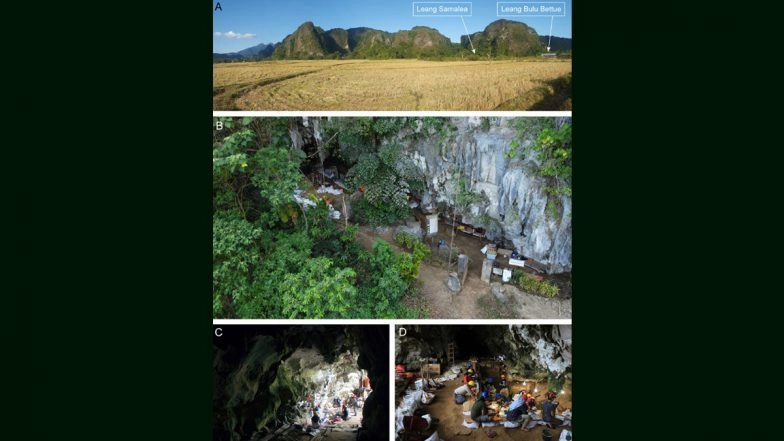
A major archaeological find at Leang Bulu Bettue in Sulawesi, Indonesia, reveals early human occupation and interaction between archaic hominins and Homo sapiens. Published in PLoS ONE, the discovery offers one of the most detailed records of prehistoric human activity in the region, reshaping views of human evolution in Southeast Asia.

New Delhi, January 16: Recent archaeological discoveries from Indonesia and other parts of Asia are transforming scientists’ understanding of human evolution, pointing to a far more complex and crowded prehistoric world than previously believed. Fresh evidence indicates that early Homo sapiens may have lived alongside several now-extinct human-like species for tens of thousands of years, rather than rapidly replacing them.
Breakthrough Findings from Indonesia
Excavations in Indonesia’s Soa Basin on the island of Flores have uncovered stone tools and fossil remains that are significantly older than earlier estimates of human presence in the region. The findings include traces linked to Homo floresiensis, the small-bodied hominin often nicknamed the “Hobbit,” as well as indications of other unidentified hominin groups. Major Gold Discovery in Saudi Arabia: Maaden Discovers New Gold Reserves in 4 Key Sites.
Researchers say the overlapping dates suggest these species shared landscapes and resources, challenging the long-held “replacement” theory that modern humans quickly displaced earlier populations upon arrival. Historic Treasure Discovery Off Florida’s Treasure Coast: Divers Recover USD 1 Million in Spanish Gold and Silver Coins from 1715 Fleet Shipwreck (Watch Video).
A 200,000-Year Timeline of Coexistence
Data from multiple sites across Southeast Asia shows that ancient hominin species survived until at least 200,000 years ago—placing them in Asia at the same time early modern humans were beginning to spread beyond Africa. Advanced stone tools discovered at these sites reveal sophisticated cognitive abilities, with striking similarities across different groups hinting at shared knowledge, interaction, or parallel technological development.
Rethinking Human Evolution
Scientists now believe human evolution followed a branching, interconnected path rather than a simple linear progression. Genetic studies have already confirmed that modern humans carry DNA from Neanderthals and Denisovans. These new archaeological insights suggest that additional, still-unknown “ghost lineages” may also have played a role in shaping modern humanity.
What Comes Next
The discoveries have triggered renewed examination of fossil collections in Asian museums, where some remains previously labeled as Homo erectus or early Homo sapiens may belong to distinct, long-surviving species. Future excavations in remote parts of Indonesia and the Philippines aim to recover better-preserved fossils and, ideally, ancient DNA, evidence that could finally clarify how these ancient human relatives are connected to us today.
(The above story first appeared on LatestLY on Jan 16, 2026 04:00 PM IST. For more news and updates on politics, world, sports, entertainment and lifestyle, log on to our website latestly.com).