













 Quickly
 Socially
 Trending
 Crypto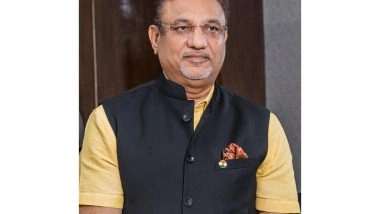
New Delhi [India], September 25 (ANI): National President of the Indian Exporters Federation (IREF) on Thursday welcomed the government's "landmark decision" that brings non-basmati rice under the same framework as basmati rice by adding a condition that all contracts for non-basmati rice exports must be registered with the Agricultural and Processed Food Products Export Development Authority (APEDA).
Through a notification on September 24, 2025, issued by the Directorate General of Foreign Trade under the Ministry of Commerce and Industry, the government amended the export policy for non-Basmati rice, changing it from "Free" to "Allowed subject to registration of contracts with the APEDA, Ministry of Commerce."
Prem Garg, National President of IREF and Chairman of Shri Lal Mahal Group said that the decision brings non-basmati rice under the same framework as basmati rice, which for years has required registration of export contracts, thereby introducing uniformity, transparency, and accountability in India's rice export policy.
Garg, also thanked the Government of India for introducing this forward-looking measure.
He emphasised that the registration requirement will not only protect exporters from unexpected disruptions but will also generate vital resources for innovation and export promotion.
He reiterated that the Federation stands committed to working with the government to strengthen India's agricultural export ecosystem and to ensure that Indian rice continues to command global recognition as a symbol of quality, trust, and reliability.
Non-basmati rice has historically been a politically sensitive commodity, subject to frequent restrictions and sudden policy changes. In the past, these abrupt interventions disrupted trade and caused major losses for exporters who had already signed contracts with overseas buyers, as transitional relaxations were seldom sufficient to cover the entire industry. By introducing mandatory registration of contracts with APEDA, the government will now have better visibility into export commitments, enabling more transparent monitoring and allowing for equitable transitional measures if new restrictions are imposed in the future. This is expected to protect the interests of exporters while simultaneously safeguarding domestic priorities.
A nominal fee of ₹8 per metric ton has also been introduced for contract registration. Given that India exports nearly 16 to 17 million metric tons of non-Basmati rice every year, this system is projected to generate revenues of more than ₹100 crore annually. The government has clarified that this money will not be diverted but will instead be utilised for research and development of value-added rice-based products and for strengthening export promotion activities. This ensures that the revenue collected from the industry will be reinvested directly into its growth and long-term competitiveness, fostering innovation and global expansion.
The move has also been appreciated for the consultative process followed prior to its notification. The Ministry of Commerce and the Directorate General of Foreign Trade engaged with stakeholders, including the Indian Exporters Federation, before finalising the policy. Such engagement is viewed as a progressive step towards inclusive policymaking, balancing the interests of the government and industry while ensuring practical and sustainable outcomes.
This announcement comes against the backdrop of India's increasing focus on export promotion. A key initiative in this direction is the Bharat International Rice Conference, scheduled to be held at Bharat Mandapam, New Delhi, on October 30-31. Jointly organised by the Ministry of Commerce and the Indian Exporters Federation, it will be the largest rice-focused event in the world, bringing together global buyers, policymakers, scientists, and industry leaders to deliberate on opportunities, challenges, and the future of rice trade. (ANI)
(The above story is verified and authored by ANI staff, ANI is South Asia's leading multimedia news agency with over 100 bureaus in India, South Asia and across the globe. ANI brings the latest news on Politics and Current Affairs in India & around the World, Sports, Health, Fitness, Entertainment, & News. The views appearing in the above post do not reflect the opinions of LatestLY)
 Share Now
 Google Trends



 Live Bot