












 Quickly
 Socially
 Trending
 Crypto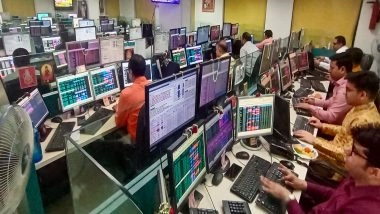
New Delhi [India], February 2 (ANI): Indian stock indices recovered on Monday, though not entirely, after the Budget day nosedive, partly due to value buying and weakening global crude oil prices.
Sensex closed the session at 81,666.46 points, up 943.52 points or 1.17 per cent, while Nifty closed at 25,088.40 points, up 262.95 points or 1.06 per cent.
On Budget day, Sensex closed at 80,722.94 points, down 1,843.43 points or 2.23 per cent, while Nifty closed at 24,825.45 points, down 593.45 points or 2.33 per cent. Market sentiment turned sharply negative during Finance Minister Nirmala Sitharaman's Budget speech, particularly after the proposal to increase the Securities Transaction Tax (STT) on Futures and Options, which triggered aggressive selling across the market yesterday.
Vinod Nair, Head of Research, Geojit Investments Limited, said, "...the Budget's policy continuity with a clear emphasis on growth and fiscal prudence has helped reinforce confidence in the medium- to long-term earnings outlook. A sharp decline in global crude oil prices has also offered some relief, reflecting signs of easing geopolitical tensions between the US and Iran."
"Nevertheless, in the near term, market mood is expected to stay cautious due to below-estimate Q3 earnings and ongoing global tensions," he added.
Ponmudi R, CEO of Enrich Money, a SEBI - registered online trading and wealth tech firm, said Indian equity markets opened the week with a measured rebound after the sharp Budget Day sell-off, as participants continued to recalibrate positions following the over 2 per cent decline witnessed during the Union Budget 2026-27 session.
"While selective value buying in large-cap names offered some near-term stability, overall sentiment remained guarded amid elevated volatility...Near-term market direction remains dependent on global macro cues, clarity on Budget execution, and a revival in institutional risk appetite," Ponmudi R added.
In an effort to discourage futures and options (F&O) trading, Finance Minister Nirmala Sitharaman has proposed to raise Securities Transaction Tax (STT) on such derivative trades. STT has been raised only on options and futures, and not on other assets. Other STT rates remain the same.
The Government gave rationale that the total volume of options and futures transactions is more than 500 times the Indian GDP and the STT hike was to discourage investors in such speculative assets. Securities Transaction Tax is a small levy charged by the government on every buy or sell transaction in the stock market, including shares, futures, and options. While it may appear modest, STT directly increases trading costs, particularly for frequent traders, hedgers, and arbitrageurs.
The government proposed to raise the STT on Futures to 0.05 per cent from the present 0.02 percent. STT on options premium and exercise of options are both proposed to be raised to 0.15 percent from the present rate of 0.1 per cent and 0.125 per cent, respectively. (ANI)
(The above story is verified and authored by ANI staff, ANI is South Asia's leading multimedia news agency with over 100 bureaus in India, South Asia and across the globe. ANI brings the latest news on Politics and Current Affairs in India & around the World, Sports, Health, Fitness, Entertainment, & News. The views appearing in the above post do not reflect the opinions of LatestLY)
 Share Now
 Google Trends



 Live Bot