













 Quickly
 Socially
 Trending
 Crypto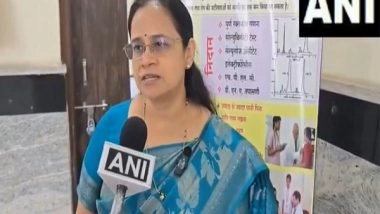
By Shalini Bhardwaj
Chandrapur (Maharashtra) [India], June 22 (ANI): As part of the National Sickle Cell Elimination Mission under the National Health Mission (NHM), the government aims to screen 7 crore people under the age of 40 for sickle cell disease by 2025-26 across 17 states, with a primary focus on tribal populations.
The list of these states includes Maharashtra, Odisha, Chhattisgarh, Jharkhand, Uttar Pradesh, Bihar, Gujarat, Rajasthan, etc.
Speaking to ANI about the National Sickle Cell Elimination Mission 2047 programme, Dr Manisha Madkaikar, Director of ICMR-CRHCM, Nagpur, said, "The National Sickle Cell Elimination Mission has given the guidelines. The first is universal screening -- in areas with a very high prevalence of sickle cell disease, the entire population under the age of 40 is screened. Currently, the plan is to screen nearly seven crore individuals for sickle cell disease."
She also highlighted the importance of newborn screening. "We can test for sickle cell disease as soon as a newborn is born. Newborn screening is important because if you diagnose newborns early, you can give them effective treatment," she explained.
Regarding antenatal screening, she said, "In antenatal screening, the first visit is an ideal time to screen a pregnant woman. If she is found to be a carrier or affected, we can test her partner. If both are carriers for sickle cell disease, we can counsel them about testing the fetus before 20 weeks' gestational age. If the fetus is affected, the couple can consider options regarding sickle cell disease and the decision about pregnancy termination is left solely to the patients and their family."
Commenting on the advancements in testing kits for sickle cell disease, she said there is a growing need for large-scale, reliable tools.
"India has seen a lot of advancement in the development of diagnostic kits. We have developed indigenously made point-of-care tests in the past two to three years. ICMR-NIH and CRHCM have tested around 35 such kits, identifying those suitable for use in screening. These include point-of-care tests, simple molecular diagnostic tools, and solubility tests, all of which are now validated and made available under the programme," she said. (ANI)
(The above story is verified and authored by ANI staff, ANI is South Asia's leading multimedia news agency with over 100 bureaus in India, South Asia and across the globe. ANI brings the latest news on Politics and Current Affairs in India & around the World, Sports, Health, Fitness, Entertainment, & News. The views appearing in the above post do not reflect the opinions of LatestLY)
 Share Now
 Google Trends



 Live Bot