













 Quickly
 Socially
 Trending
 Crypto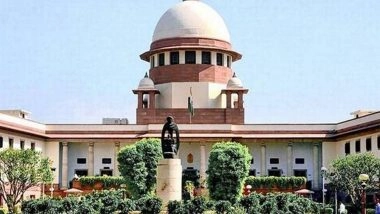
New Delhi [India], February 24 (ANI): The Supreme Court on Tuesday closed its 2021 suo motu (self-initiated) proceedings on pollution in rivers, holding that continued monitoring should be undertaken by the National Green Tribunal (NGT), which was specifically constituted to deal with environmental matters.
The Court directed the Central Pollution Control Board (CPCB) and other authorities to place their compliance and status reports before the NGT, which will now oversee further action and pass necessary directions from time to time.
A bench of Chief Justice of India Surya Kant and Justice Joymalya Bagchi observed that it may not be feasible for the apex court to take up issues concerning all polluted rivers across the country. Emphasising a "manageable approach", the bench noted that the very purpose of constituting the NGT was to deal with such environmental disputes and ensure compliance with statutory obligations. It further remarked that multiple parallel proceedings could create uncertainty and lack of uniformity, and that instead of continuing suo motu monitoring, the matter ought to be handled by the specialised tribunal, whose orders remain subject to judicial review by the Supreme Court.
"We may note that the NGT has been established inter alia to perform judicial and quasi-judicial duties. Ample powers have been allocated to the Tribunal to ensure that authorities like the PCB, municipalities and local bodies perform their duties in meticulous compliance with environmental laws. The September 21, 2020 and February 20, 2021 orders of the NGT essentially commanded the CPCB and other agencies to enforce the law and environmental norms. Much water has flown since then. In the absence of any report, we are not sure about the improved conditions of Yamuna water or other rivers, ponds and lakes, etc," the top court remarked.
Also Read | Sehri Time and Iftar Time Today, February 25: Timings for 7th Roza of Ramzan 2026 in Mumbai, Delhi and More.
The court also said that the NGT is "not absolved" of its responsiblity by merely passing orders, and that an"ongoing process" is necessary to ensure compliance by various agencies, with appropriate authorities and the Government giving effect to environmental protection laws.
"At the same time, the Commission is not absolved of its responsibility by merely passing orders. This has to be an ongoing process and statutory authorities, governments and private entities must give effect to environmental laws. It is imperative upon the NGT to monitor the subject and ensure that necessary directions are passed from time to time and that status reports are obtained in furtherance of compliance. Having said that, we are equally cognisant of the fact that multiple proceedings create uncertainty and confusion in the nature of uniformity. It seems to us that instead of suo motu proceedings, this Court ought to have directed the NGT to continue monitoring. The Tribunal's SLPs or WPs challenging the orders of the NGT are always subject to judicial review by this Court. Therefore, in light of the above, it is high time that these suo motu proceedings shall be closed and these matters shall be reopened at the NGT", the Court added.
Closing the proceedings, the Court directed the CPCB and other concerned agencies to file their compliance and status reports before the NGT. As mentioned the in the order passed by the bench the Court has remarked that by mere passing of directions/orders by authorities, such as the pollution control board or Commission is not sufficient and that authorities are not absolved of their responsibility by doing just that. Seeking compliance on the effective implementation of these orders are required by the authorities, the Court noted.
The Court also clarified that all orders passed by it from time to time in the suo motu case would remain available for consideration, and that the NGT would be free to pass appropriate orders to ensure conformity with environmental laws.
The suo motu case had been initiated on January 31, 2021, in proceedings arising out of Delhi Jal Board v. Haryana and Others, initially concerning rising pollution levels in the Yamuna river. The Court had expanded the scope to examine pollution in rivers across the country, while observing that the Yamuna would be addressed first. Governments of Uttarakhand, Himachal Pradesh, Haryana, Delhi and Uttar Pradesh, along with the Union of India through the Ministry of Environment, Housing and Urban Affairs, and the CPCB, were impleaded as parties, the Court noted.
In its earlier orders, the Court had highlighted that the right to live in hygienic conditions with human dignity in a clean environment is deeply embedded in Article 21 of the Constitution. It had reiterated that access to clean water is a basic necessity for survival and that the right to life can be meaningfully realised only by ensuring the availability of unpolluted water sources.
Referring to the legislative scheme under the Water (Prevention and Control of Pollution) Act, 1974, the Court had noted that the CPCB and State Pollution Control Boards are statutorily obligated to ensure that untreated sewage and effluents are not discharged into rivers, ponds and lakes and had acknowledged the need for functional sewage and common effluent treatment plants.
The bench also took note of the NGT's orders dated September 21, 2020 and February 20, 2021, which had directed enforcement of environmental norms. Observing that much water has flown since then and in the absence of updated reports on improvements in river quality, the Court concluded that continuous, specialised monitoring by the NGT would better serve the objective of environmental protection. (ANI)
(The above story is verified and authored by ANI staff, ANI is South Asia's leading multimedia news agency with over 100 bureaus in India, South Asia and across the globe. ANI brings the latest news on Politics and Current Affairs in India & around the World, Sports, Health, Fitness, Entertainment, & News. The views appearing in the above post do not reflect the opinions of LatestLY)
 Share Now
 Google Trends



 Live Bot