













 Quickly
 Socially
 Trending
 Crypto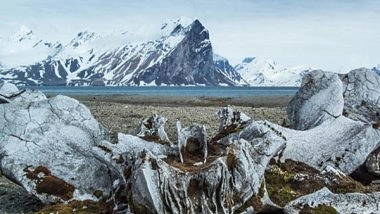
Moscow [Russia], July 30 (ANI): Russian scientists have made a remarkable discovery of ancient whale skeletons on Wilczek Island, part of the Franz Josef Land archipelago in the Arctic region.
This finding was made by researchers from the Arctic and Antarctic Research Institute (AARI) while studying how permafrost and glaciers are changing due to climate shifts. As the glacier on the island retreats, it has revealed new terrain that was previously covered by ice.
According to TV BRICS, "Russian scientists discover ancient whale remains beneath a retreating glacier. This newly revealed area contains numerous well-preserved whale skeletons, some partially thawing at the glacier's edge."
The Ministry of Natural Resources and Environment of the Russian Federation reported that the glacial dome of the island has split into two distinct parts within the last two decades. This rapid shift has exposed several square kilometres of marine terrace that had remained hidden under ice for centuries.
Nikita Demidov, a researcher at AARI, explained that satellite imagery and field measurements helped identify this rapid glacial retreat. The whale remains found in this newly exposed area are exceptionally well-preserved, particularly those near the glacier.
This preservation is attributed to long-term freezing in permafrost conditions, which helped protect the bones from decay.
The density and condition of the skeletons suggest a sudden environmental shift, likely a rapid rise in sea level that occurred in the High Arctic several thousand years ago. Such findings provide crucial data about the ancient climate and ecological conditions of the region.
These insights will help scientists better understand the palaeoecology of Eurasia's northernmost areas and how past climate events influenced marine life. This discovery not only highlights the impact of modern climate change but also opens a window into the Arctic's deep environmental history. (ANI)
(The above story is verified and authored by ANI staff, ANI is South Asia's leading multimedia news agency with over 100 bureaus in India, South Asia and across the globe. ANI brings the latest news on Politics and Current Affairs in India & around the World, Sports, Health, Fitness, Entertainment, & News. The views appearing in the above post do not reflect the opinions of LatestLY)
 Share Now
 Google Trends



 Live Bot