
World News | Earthquake of Magnitude 3.4 Strikes Bhutan
Get latest articles and stories on World at LatestLY. The earthquake occurred at a shallow depth of 6km, making it susceptible to aftershocks.

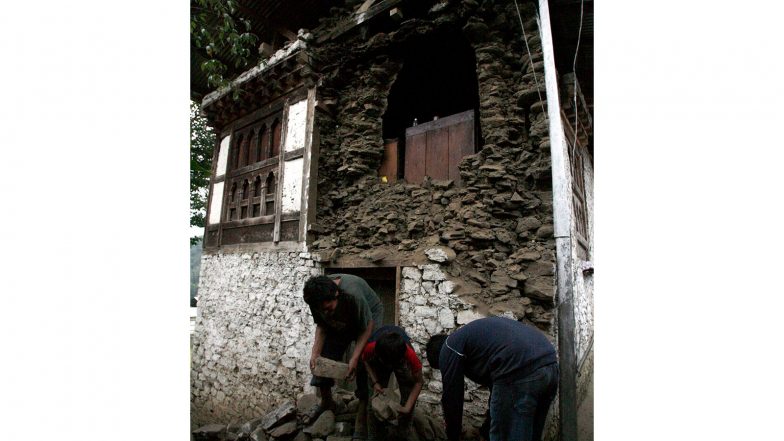
Thimpu [Bhutan], February 25 (ANI): An earthquake of magnitude 3.4 struck Bhutan on Wednesday, a statement by the National Center for Seismology (NCS) said.
The earthquake occurred at a shallow depth of 6km, making it susceptible to aftershocks.
In a post on X, the NCS said, "EQ of M: 3.4, On: 25/02/2026 20:24:39 IST, Lat: 27.72 N, Long: 90.07 E, Depth: 6 Km, Location: Bhutan."
https://x.com/NCS_Earthquake/status/2026675270565204191?s=20
Shallow earthquakes are generally more dangerous than deep earthquakes. This is because the seismic waves from shallow earthquakes have a shorter distance to travel to the surface, resulting in stronger ground shaking and potentially more damage to structures and greater casualties.
Earthquakes can occur anywhere between the Earth's surface and about 700 kilometres below the surface. For scientific purposes, this earthquake depth range of 0 - 700 km is divided into three zones: shallow, intermediate, and deep, as per USGS data.
Shallow earthquakes are between 0 and 70 km deep; intermediate earthquakes, 70 - 300 km deep; and deep earthquakes, 300 - 700 km deep. In general, the term "deep-focus earthquakes" is applied to earthquakes deeper than 70 km, the USGS states.
Bhutan, like the rest of the world, has not been spared by the fury of natural hazards and is susceptible to many kinds of them. Geo-physically, Bhutan is located in the young Himalayan Mountains and considered to be one of the most seismically active zones in the world, the Asian Disaster Reduction Centre stated.
As per the Indian Seismic Code, Bhutan falls within seismic zones IV and V, which are the most active zones. Considering the location and as proven by the past earthquakes, earthquakes are one of the most imminent hazards in Bhutan. As a result of global warming, Glacier Lake Outburst Flood (GLOF) poses another risk to the people of Bhutan. Due to climate change, the seasonal strong winds have become one of the hazards in Bhutan, causing significant damage to the rural homes in Bhutan.
The 2011 and 2013 windstorms caused huge damage to rural homes in Bhutan. Other hazards, such as landslides, flash floods, and forest/structural fires, also sweep across the country, causing significant losses to properties and lives, the Asian Disaster Reduction Centre stated. (ANI)
(The above story is verified and authored by ANI staff, ANI is South Asia's leading multimedia news agency with over 100 bureaus in India, South Asia and across the globe. ANI brings the latest news on Politics and Current Affairs in India & around the World, Sports, Health, Fitness, Entertainment, & News. The views appearing in the above post do not reflect the opinions of LatestLY)