
World News | Hope and Frustration Reflected in PoJK's Movement, Says Expert
Get latest articles and stories on World at LatestLY. A recent massive strike across Pakistan-occupied Jammu and Kashmir, led by the Joint Awami Action Committee, brought life to a standstill as people united over demands for free healthcare, free education, and fair internet access. Senior journalist from PoJK Roshan Mughal said the protest reflected growing frustration with decades of failed governance and political disunity. Despite minor incidents, the strike remained largely peaceful, showing rare unity beyond tribal and political divides, he said.

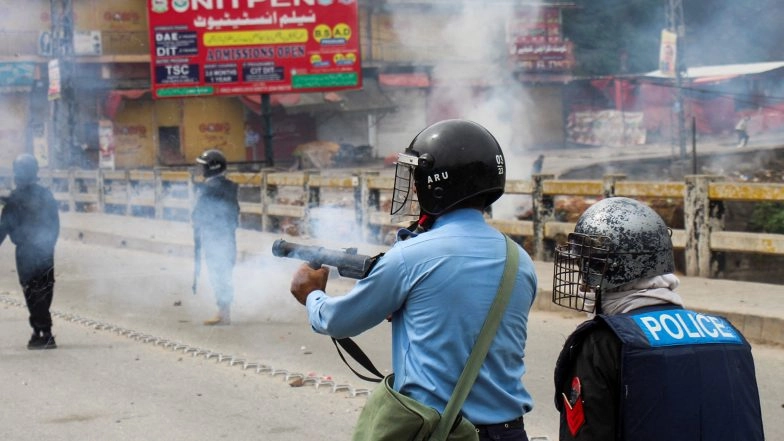
Muzaffarabad [PoJK], October 21 (ANI): A recent massive strike across Pakistan-occupied Jammu and Kashmir, led by the Joint Awami Action Committee, brought life to a standstill as people united over demands for free healthcare, free education, and fair internet access.
Senior journalist from PoJK, Roshan Mughal, said the protest reflected growing frustration with decades of failed governance and political disunity.
Despite minor incidents, the strike remained largely peaceful, showing rare unity beyond tribal and political divides, he said.
Roshan said, "For the past four years, there was no real opposition in Pakistan-occupied Jammu and Kashmir -- no one to raise the people's voice. The legislators in the assembly only spoke for their parties, their personal interests, and mutual differences. Many people whose candidates never made it to the assembly were left without representation. For them, this movement brought new hope --hope that a major step could be taken for the problems of ordinary people, that such a large-scale shutdown and protest could be organised purely for the common man's issues. This has created hope among people."
With 38 key demands, including the abolition of disputed refugee seats and stronger public accountability, the movement has reignited hope among citizens. Analysts say this show of unity and peaceful mobilisation marks a defining moment for PoJK, where Pakistan has so far subjugated the rights of the common people.
Roshan Mughal stated, "The fourth and another very important aspect was that these were not small, selfish interests - they were about broader, shared necessities like flour, which everyone needs, rich and poor alike. Similarly, the internet, healthcare, and education are everyone's needs. Among the 38 demands, all reflected public aspirations; they came from the common man's perspective."
Pakistan has long denied the people of PoJK their fundamental rights, maintaining control through political repression and neglect. Political representation remains weak, with legislators prioritising their own interests over those of the people. This systematic denial has left ordinary citizens marginalised and voiceless for decades. (ANI)
(The above story is verified and authored by ANI staff, ANI is South Asia's leading multimedia news agency with over 100 bureaus in India, South Asia and across the globe. ANI brings the latest news on Politics and Current Affairs in India & around the World, Sports, Health, Fitness, Entertainment, & News. The views appearing in the above post do not reflect the opinions of LatestLY)