Bombay High Court Quashes Voyeurism FIR, Says ‘Staring at Colleague’s Chest Not Section 354C Offence’
The Bombay High Court quashed a voyeurism FIR against an insurance employee, ruling that unwanted staring at a colleague's chest in an office is not 'voyeurism' under Section 354C. The judge noted the law requires an intrusion into a 'private act' in a secluded setting, which does not apply to a professional workspace.

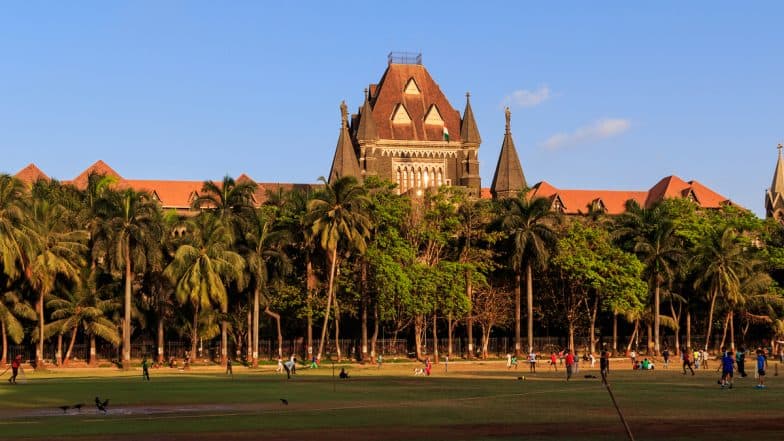
The Bombay High Court has ruled that staring at a female colleague's chest in an office environment, while potentially offensive and morally wrong, does not satisfy the legal definition of voyeurism under the Indian Penal Code (IPC). In an order passed on April 8, Justice Amit Borkar quashed a First Information Report (FIR) against an insurance employee, emphasising that criminal statutes cannot be expanded beyond their specific written language to cover general workplace misconduct.
The ruling clarifies that Section 354C of the IPC is a specific provision aimed at protecting bodily privacy in intimate settings rather than a general law against inappropriate behaviour. S*xual Assault Case: Aditya Pancholi in Bombay High Court to Quash 2019 Rape FIR, Verdict Expected on March 4.
The Legal Definition of 'Private Acts'
The court's decision centered on the strict interpretation of Section 354C, which defines voyeurism as watching or capturing images of a woman engaged in a "private act" where she would reasonably expect privacy. Under the law, private acts typically include situations where a woman is in a state of undress, using a restroom, or engaged in a sexual act. Justice Borkar noted that for a charge of voyeurism to hold, there must be a clear element of intrusion into bodily privacy. "Unwanted staring, even if accepted as true, is not the same thing as voyeurism within the meaning of Section 354C," the court stated. "The statute cannot be stretched beyond its plain words."
Case Background and Allegations Against the Accused
The case involved Abhijit Nigudkar, an employee at Max Life Insurance, who was booked after a subordinate filed a complaint. The complainant alleged that Nigudkar avoided eye contact and instead stared at her chest during professional meetings. She further claimed that after she raised the issue internally, he began making inappropriate remarks and publicly criticising her work performance. The judge observed that the FIR failed to allege that the accused watched the woman during a private act or captured any images of her in a secluded setting. Consequently, the court found that the statutory conditions required to prove the offence were entirely absent.
Internal Inquiry and POSH Guidelines
The court highlighted that the company had already conducted an internal investigation through its Internal Complaints Committee (ICC), established under the Vishaka Guidelines and the Sexual Harassment of Women at Workplace (Prevention, Prohibition and Redressal) Act, 2013. While the internal report eventually exonerated Nigudkar regarding service-related issues, the High Court’s primary reason for quashing the FIR was the lack of a criminal foundation. The bench ruled that allowing the criminal proceedings to continue would amount to an "abuse of process" because the act of staring, however reprehensible in a professional context, does not fall under the legal umbrella of voyeurism. 'Alcohol Ruins Everything’: Bombay High Court Denies Railway Accident Compensation to Injured Passenger Who Had ‘Four Large Pegs’ of Alcohol Before Train Accident.
Limitations of Section 354C
This judgment sets a precedent for how workplace harassment is categorised in Indian courts. While unwanted staring can be addressed through internal disciplinary actions or civil measures under the POSH Act, this ruling confirms that it does not automatically trigger criminal voyeurism charges. The court reiterated that Section 354C is not a "catch-all" provision for every form of offensive gaze or bad behaviour. Instead, it is a narrow law designed to protect women from predatory surveillance in moments of extreme privacy.
(The above story first appeared on LatestLY on Apr 10, 2026 06:40 PM IST. For more news and updates on politics, world, sports, entertainment and lifestyle, log on to our website latestly.com).