Sehri Time and Iftar Time Today, March 9: Timings for 19th Roza of Ramzan 2026 in Mumbai, Delhi and More
On Monday, March 9, Ramadan observances continue across India with varying schedules for Sehri (pre-dawn meal) and Iftar (sunset meal). Kolkata sees the earliest timings (Sehri 4:37 AM, Iftar 5:45 PM), while Mumbai and Ahmedabad have later slots. Timings, sourced via UrduPoint, fluctuate by city based on local sunrise and sunset patterns.

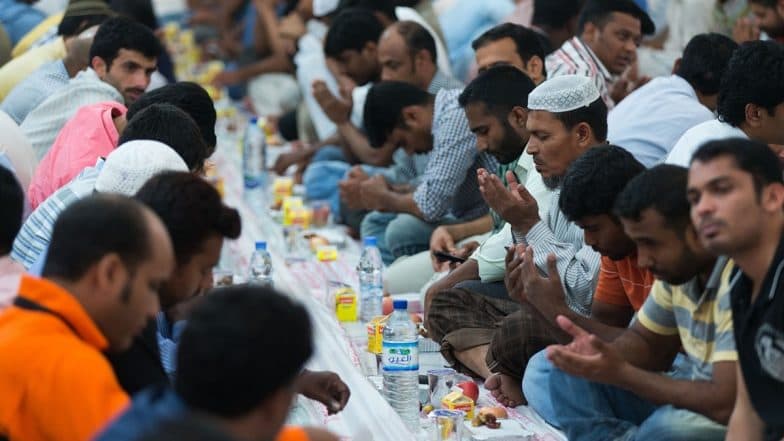
Mumbai, March 8: As the holy month of Ramadan (Ramzan) progresses into its third week, millions of Muslims across India continue to observe the daily fast (Roza), a period of deep spiritual reflection, discipline, and community. The daily routine revolves around two critical meals: Sehri, the pre-dawn meal consumed before the first light of day to sustain the body through the fast, and Iftar, the sunset meal that marks the end of the day's abstinence. The act of fasting from dawn to dusk is one of the Five Pillars of Islam, intended to bring the faithful closer to God and to remind them of the suffering of the less fortunate.
Because the timings for these meals are governed by the position of the sun, the exact minutes for Sehri and Iftar vary significantly depending on a city’s geographical location. Scroll down to know Sehri and Iftar time today, March 9, for Mumbai, Delhi, Lucknow, Chennai, Kolkata, Guwahati, Patna, Hyderabad, Bengaluru, Pune, Noida, Ghaziabad, Bhopal, Ahmedabad, Ranchi, Srinagar and Thiruvananthapuram. Ramzan Calendar 2026: Full 30-Day Sehri and Iftar Timetable for Mumbai, Delhi, Lucknow and More.
City-Wise Timetable for 19th Roza on March 9, 2026
For Monday, March 9, 2026, residents in eastern cities like Kolkata will break their fast nearly an hour earlier than those in western cities like Ahmedabad. Below are the timings for major Indian cities, based on data from UrduPoint and local astronomical observations:
Sehri and Iftar Timings for Today, March 9, 2026 (19th Roza)
| City | Sehri Time (End) | Iftar Time (Start) |
| New Delhi | 05:19 AM | 06:27 PM |
| Mumbai | 05:31 AM | 06:48 PM |
| Kolkata | 04:37 AM | 05:45 PM |
| Chennai | 05:10 AM | 06:20 PM |
| Hyderabad | 05:16 AM | 06:26 PM |
| Bengaluru | 05:20 AM | 06:31 PM |
| Ahmedabad | 05:40 AM | 06:47 PM |
| Lucknow | 05:06 AM | 06:12 PM |
| Patna | 04:49 AM | 05:55 PM |
| Jaipur | 05:27 AM | 06:32 PM |
| Srinagar | 05:18 AM | 06:36 PM |
| Ranchi | 04:52 AM | 05:56 PM |
| Bhopal | 05:22 AM | 06:31 PM |
| Thiruvananthapuram | 05:18 AM | 06:34 PM |
The Significance of the Fasting Schedule
In the Islamic tradition, the fast officially begins at the break of dawn (Fajr) and concludes at the call to prayer at sunset (Maghrib). Adhering to the precise minutes is considered essential for the validity of the fast. Muslims traditionally break their Iftar fast with dates and water, following the practice of the Prophet Muhammad, before engaging in the Maghrib prayer and a larger communal meal. During the final ten days of Ramadan, which are fast approaching, the spiritual intensity increases as believers seek the "Night of Power" (Laylat al-Qadr), the night on which the Quran was first revealed. Ramadan 2026 Guide: Full List of What Breaks Your Fast and What Doesn't.
Regional Variations of Sehri and Iftar Time
Geographical factors cause the "early" sunrises in the East and "late" sunsets in the West. For instance, a devotee in Kolkata will finish their Sehri at 4:37 AM, while an observer in Mumbai has until 5:31 AM. Similarly, Iftar in Srinagar occurs at 6:36 PM, nearly 50 minutes after it has already been observed in Kolkata.
(The above story first appeared on LatestLY on Mar 08, 2026 06:40 PM IST. For more news and updates on politics, world, sports, entertainment and lifestyle, log on to our website latestly.com).