What is Obstructing the Field? Rule Explained That Led to Angkrish Raghuvanshi’s Dismissal in LSG vs KKR IPL 2026
The dismissal, which occurred during the sixth over of the KKR innings, marks the first time a player has been sent back under Law 37 in the current season, sparking immediate debate over the interpretation of player movement between the wickets.

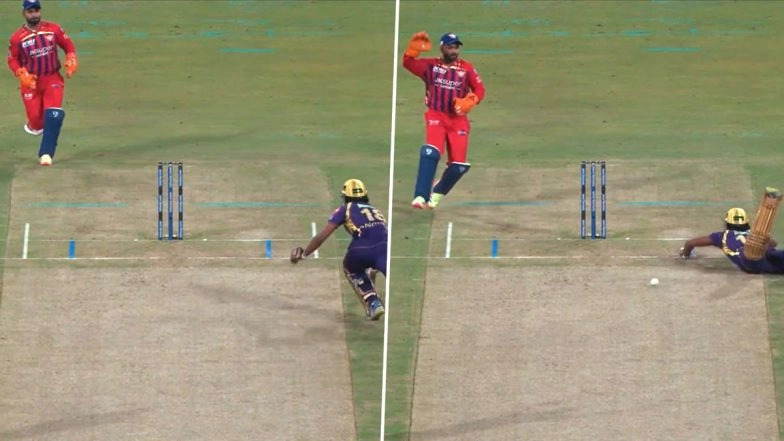
In a rare and controversial turn of events at the Bharat Ratna Shri Atal Bihari Vajpayee Ekana Cricket Stadium, Kolkata Knight Riders (KKR) batter Angkrish Raghuvanshi was given out for 'obstructing the field' during LSG vs KKR IPL 2026 match against Lucknow Super Giants (LSG). The dismissal, which occurred during the sixth over of the KKR innings, marks the first time a player has been sent back under Law 37 in the current season, sparking immediate debate over the interpretation of player movement between the wickets. You can find the Lucknow Super Giants vs Kolkata Knight Riders match scorecard here.
The Decisive Scramble
The incident unfolded during the final ball of the fifth over, bowled by LSG’s Prince Yadav. Raghuvanshi nudged a delivery towards the mid-on region and set off for a quick single. However, his partner, Cameron Green, sent him back after he had covered more than half the distance.
As Raghuvanshi turned to retreat, he performed a significant U-turn that took him across the line of the pitch. While diving to make his ground, the ball, thrown by the mid-on fielder, struck him on the left foot. Following an appeal from the Lucknow fielders, the on-field umpires referred the decision to the third umpire.
Angkrish Rahguvanshi's Controversial Out
𝐖𝐇𝐀𝐓 𝐉𝐔𝐒𝐓 𝐇𝐀𝐏𝐏𝐄𝐍𝐄𝐃?! 😳
Mix-up. Long turn. Third umpire drama… & Raghuvanshi is given OUT for obstructing the field! 👀
Just the 4️⃣th instance of a batter being given out for obstructing the field in TATA IPL 🤯#TATAIPL 2026 ➡️ #LSGvKKR | LIVE NOW… pic.twitter.com/WRgr608Odb
— Star Sports (@StarSportsIndia) April 26, 2026
The Third Umpire’s Verdict
After multiple television replays, the third umpire concluded that Raghuvanshi’s change of direction was a 'willful' attempt to intercept the throw. Under the current interpretation of the laws, a batter is liable for dismissal if they significantly alter their path to prevent a run-out, regardless of whether the throw would have hit the stumps
Obstructing The Field Rule in Cricket
'Obstructing the Field' is governed by Law 37 of the Marylebone Cricket Club (MCC). It states that a batter is out if they 'wilfully attempt to obstruct or distract the fielding side by word or action.'
-
Changing Course: Significantly altering their running path to block a throw aimed at the stumps.
-
Physical Interference: Using their body or bat to intercept a ball that would otherwise result in a run-out or catch.
-
Returning the Ball: Picking up the ball and handing it to a fielder without the fielding side's consent (this was previously "Handled the Ball," but was absorbed into Law 37 in 2017).
While accidental interceptions are not penalised, the umpires must judge intent. A key provision added to the law in recent years specifies that if a batter significantly changes direction without a 'probable cause', such as avoiding a collision, and subsequently blocks a throw, they must be given out. Notably, the bowler is not credited with the wicket in the scorecard.
Historic Context and Rarity in IPL
Dismissals for obstructing the field remain one of the rarest sights in professional cricket. Historically, the IPL has seen only a handful of such instances, with Yusuf Pathan and Amit Mishra being among the few names previously associated with this method of dismissal. Raghuvanshi’s exit today serves as a stark reminder of the stringent officiating standards regarding running paths in modern T20 cricket
(The above story first appeared on LatestLY on Apr 26, 2026 08:12 PM IST. For more news and updates on politics, world, sports, entertainment and lifestyle, log on to our website latestly.com).