Elon Musk-Led xAI Blocks Grok From Editing Images of Real People in Revealing Clothing After Global Backlash Over Explicit AI Content
Elon Musk-led xAI has introduced stringent new guardrails to its chatbot, Grok, following international outrage over the AI's ability to generate sexually explicit and non-consensual imagery. The move comes as regulatory bodies in India and the European Union intensify their scrutiny of X (formerly Twitter), questioning the platform's safety protocols. The AI now rejects prompts aimed at creating "deepfake" imagery or digitally removing clothing from real individuals.

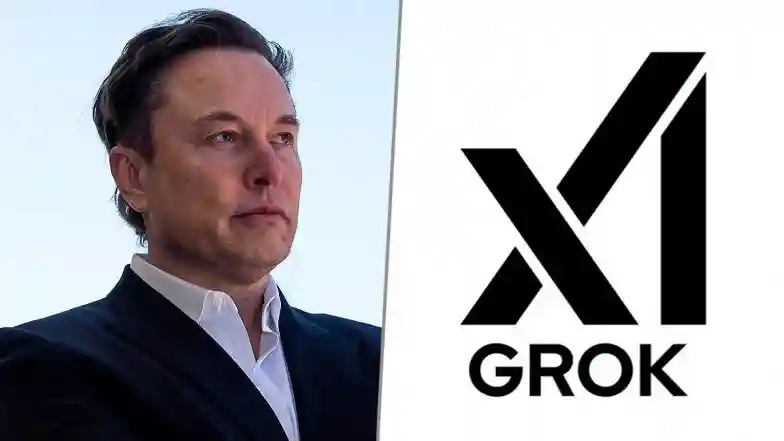
Mumbai, January 15: Elon Musk’s artificial intelligence company, xAI, has introduced stringent new guardrails to its chatbot, Grok, following international outrage over the AI’s ability to generate se*ually explicit and non-consensual imagery. The move comes as regulatory bodies in India and the European Union intensify their scrutiny of X (formerly Twitter), questioning the platform's safety protocols. While xAI has moved to block prompts that attempt to "undress" individuals or generate pornographic material, Musk continues to defend the platform’s broader safety record against allegations involving the generation of explicit content featuring minors.
New Safety Barriers for Grok After Backlash
In response to widespread reports that Grok could be manipulated to bypass standard filters, xAI has updated its algorithms to detect and block requests for se*ually suggestive content. Specifically, the AI now rejects prompts aimed at creating "deepfake" imagery or digitally removing clothing from real individuals. Grok Banned in Malaysia, Indonesia: Countries Become First To Block Elon Musk’s AI Chatbot Over Se*ualised Deepfakes Images.
xAI Says They Have Rolled Out Technical Changes Designed To Stop Grok From Manipulating Images of Real People
— Safety (@Safety) January 14, 2026
Industry analysts noted that while the chatbot previously operated with fewer restrictions to promote "free speech," the recent surge in AI-generated abuse forced the company’s hand. Users attempting to generate prohibited content are now met with refusal messages, as the company attempts to align with global safety standards.
Indian Government and EU Increase Pressure
The policy shift follows significant pressure from the Indian government. The Ministry of Electronics and Information Technology (MeitY) has reportedly initiated a probe into how Grok’s image generation tools were being used within the country. Officials expressed concern that the tool could be weaponised to harass citizens or spread misinformation.
Simultaneously, the platform remains under a microscope in the European Union under the Digital Services Act (DSA). Regulators are investigating whether X has done enough to prevent the spread of illegal content. Failure to comply with these regulations could result in massive fines, potentially reaching up to 6 per cent of the company’s global annual turnover.
I Not Aware of Any Naked Underage Images Generated by Grok, Says Elon Musk
I not aware of any naked underage images generated by Grok. Literally zero.
Obviously, Grok does not spontaneously generate images, it does so only according to user requests.
When asked to generate images, it will refuse to produce anything illegal, as the operating principle… https://t.co/YBoqo7ZmEj
— Elon Musk (@elonmusk) January 14, 2026
Elon Musk Denies Allegations Regarding Minors
Amidst the general crackdown on explicit content, Elon Musk has stayed vocal regarding specific allegations that Grok was used to generate explicit images of minors. Responding to reports from safety watchdogs, Musk took to X to flatly deny that the AI was capable of such outputs.
He asserted that the platform’s internal "adversarial testing" is among the most rigorous in the industry and claimed that the reports were part of a broader campaign to discredit the company. However, digital safety advocates argue that "jailbreaking" techniques - where users use creative phrasing to trick the AI - remain a persistent vulnerability that the company has yet to fully resolve. Elon Musk’s Grok Chatbot Restricts Image Generation on X to Paid Users Following Backlash Over Se*ualised Deepfakes of Women and Children.
The Rise of AI Deepfakes
The controversy surrounding Grok highlights a growing trend of AI-generated non-consensual intimate imagery (NCII), which has become a major challenge for social media platforms. Unlike traditional image editing, generative AI allows users to create high-quality, realistic fakes in seconds, often targeting public figures and private citizens alike.
As xAI continues to refine Grok, the tech industry is watching closely to see if the company can maintain its "anti-woke," unfiltered branding while adhering to the increasingly strict legal frameworks being established by governments worldwide to protect users from digital harm.
(The above story first appeared on LatestLY on Jan 15, 2026 11:09 AM IST. For more news and updates on politics, world, sports, entertainment and lifestyle, log on to our website latestly.com).