Typhoon Basyang Live Tracker Map on Windy: Philippines Braces for Heavy Rainfall As Tropical Cyclone Approaches Land, Check Real-Time Status Here
The state weather bureau, PAGASA, reported on Wednesday, February 4, that Tropical Depression Basyang has maintained its strength and could intensify into a tropical storm before making landfall. Currently moving over the Philippine Sea, the weather disturbance Cyclone Basyang is expected to bring heavy rainfall and strong winds to several parts of the country, particularly the Caraga and Visayas regions.

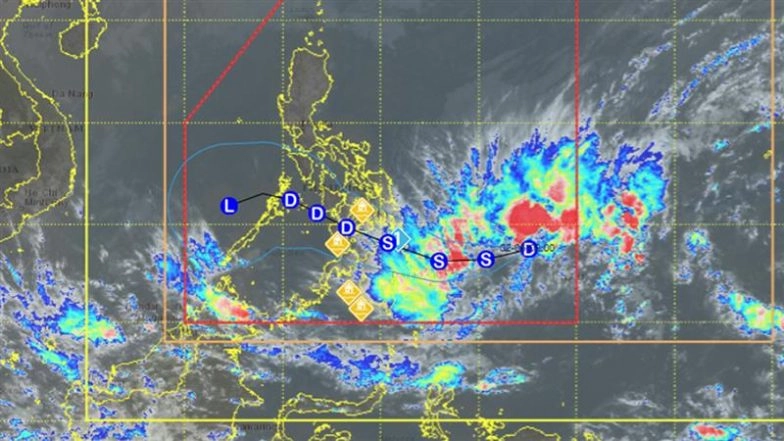
Manila, February 4: The state weather bureau, PAGASA, reported on Wednesday, February 4, that Tropical Depression Basyang has maintained its strength and could intensify into a tropical storm before making landfall. Currently moving over the Philippine Sea, the weather disturbance Cyclone Basyang is expected to bring heavy rainfall and strong winds to several parts of the country, particularly the Caraga and Visayas regions. Forecasters are closely monitoring its trajectory as it moves toward the eastern coast of Mindanao.
As of the latest bulletin, Basyang was located several hundred kilometers east of Hinatuan, Surigao del Sur. While it remains a tropical depression for now, atmospheric conditions remain favorable for intensification. Emergency management agencies have already begun pre-positioning relief goods and alerting local government units (LGUs) in the storm's projected path to prepare for potential flooding and landslides. What Is Bomb Cyclone? All About Powerful Winter Storm Hammering Parts of US With Hurricane-Force Winds and Snowfall; Check List of Areas Under Threat.
Cyclone Basyang Live Tracker Map on Windy:
Windy: Wind map & weather forecast
Projected Intensity and Landfall
PAGASA weather specialists indicate that Basyang is likely to reach tropical storm category, with sustained winds of at least 62 kilometers per hour, just before it hits land. The current forecast track suggests a landfall over the northeastern portion of Mindanao or the southern tip of Leyte by Thursday or early Friday.
Once the storm makes landfall, it is expected to traverse the Visayas archipelago. During this period, interaction with the rugged terrain may slightly weaken the system, but the primary concern remains the high volume of rainfall, which could trigger flash floods in low-lying areas. Philippines Boat Capsize: 13 Dead, Over 100 Missing After Inter-Island Ferry Carrying 300 Passengers and Crew Sinks in Basilan Province.
Impact on Maritime and Air Travel
Due to the approaching storm, the Philippine Coast Guard (PCG) has begun implementing "no-sail" policies in areas expected to be placed under Tropical Cyclone Wind Signal (TCWS) No. 1 or No. 2. Small seacraft have been advised to remain in port, and larger vessels have been cautioned against moderate to rough seas in the eastern seaboard.
Airlines are also monitoring the situation for potential flight cancellations at regional airports, including Butuan, Siargao, and Tacloban. Travelers are encouraged to check for updates from their respective carriers before heading to the airport.
The Office of Civil Defense (OCD) has placed regional disaster risk reduction and management councils on blue alert. Residents living in mountain slopes and near riverbanks are urged to follow evacuation orders from local authorities, as the ground in many of these areas is already saturated from previous monsoon rains.
"We are advising the public to stay vigilant and stay tuned to official government weather updates," a PAGASA official stated. "Even if the winds are not at typhoon strength, the rain associated with Basyang can still pose a significant threat to life and property."
While the Philippines typically sees the majority of its tropical cyclones during the second half of the year, February storms are not uncommon. Known locally as "early season" storms, these systems often follow a southern track, impacting Mindanao and the Visayas, areas that are traditionally less accustomed to frequent direct hits compared to Northern Luzon.
(The above story first appeared on LatestLY on Feb 04, 2026 03:31 PM IST. For more news and updates on politics, world, sports, entertainment and lifestyle, log on to our website latestly.com).