Strategies for Staying Sober in a Job That Encourages Social Drinking
While the three-martini lunch seems improbable today, workplaces still can be boozy places

Picture this: It’s lunchtime in the 1960s, and you’re out with co-workers enjoying not one, not two, but three cocktails with your meal.
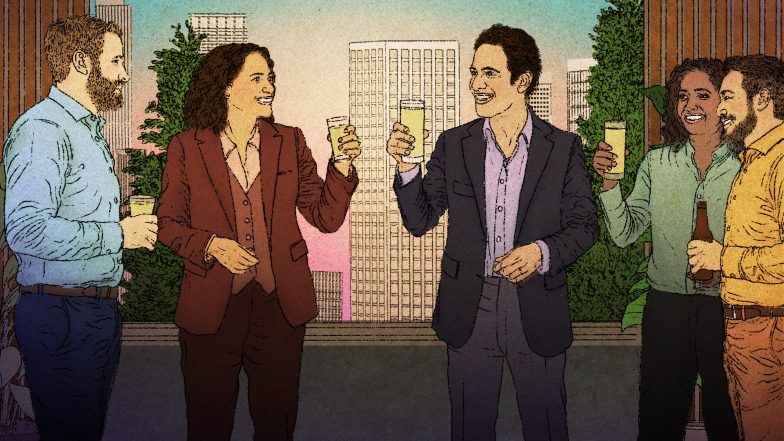
While the three-martini lunch seems improbable today, workplaces still can be boozy places. After-work happy hours, corporate parties and client meetings at fancy bars are still expected in many areas of American corporate culture.
Talking about sobriety with managers and colleagues therefore can be daunting for people in recovery from alcohol addiction. Professionals in some industries fear being judged for needing help or missing out on career advancement opportunities if social drinking is encouraged as part of a job.
Also Read | War Child UK's ‘Help(2)’ Benefit Album Arrives with Arctic Monkeys, Olivia Rodrigo and Pulp.
Treatment professionals and individuals who have navigated careers while abstaining from alcohol say such anxieties are natural but must not get in the way of uncomfortable conversations or other actions that promote a successful recovery.
“If you’re sober and in recovery, nothing’s worth risking putting your sobriety at risk,” said Lisa Smith, a former lawyer who struggled with drug and alcohol addiction as she worked at a prestigious law firm in New York.
Co-workers care less about what’s in your cup than you think
Also Read | Republicans Try Again on Homeland Security Funding, Citing Iran War.
Learning not to overexplain yourself and setting boundaries at work is key, according to Smith.
“We say in recovery a lot that ‘No’ is a complete sentence,” Smith said.
Times have changed since Smith joined the workforce. Younger generations with access to mocktails and non-alcoholic beer have helped normalize not drinking and enter workplaces versed in the topics of mental health and substance use disorders, she said.
When she started refusing alcoholic beverages, Smith realized that most of her co-workers were not as concerned as she had imagined they would be. She also realized that there were more people around her that didn't drink than she had previously noticed, whether for religious or other reasons.
The people who did badger her to drink were often heavy drinkers themselves and “were looking for a comrade to drink with, to sort of make them feel better about their own drinking,” she said.
In the early years of her recovery, she skipped events that she knew would be uncomfortable or left early, but she made sure to follow up with people she wanted to connect with over coffee the next day.
Smith now has her own advisory firm where she shares her experiences with organizations and law firms, and helps them foster more recovery friendly workplaces.
“We hear from younger lawyers who understand that it is not healthy and don’t like the way they feel on alcohol, just don’t choose to drink for any reason,” she said.
Drinking is also widespread and often glorified in the entertainment industry, according to Ermanno DiFebo, a production designer in Los Angeles who said he struggled with alcohol addiction for many years before getting sober.
The way alcohol was marketed was that “if you are good, you can handle it. If you cannot handle it, you are weak,” DiFebo said. “The treatment facilities are for people that are weak.”
When he first quit, he came up with excuses for why he wasn’t drinking, like having a medical appointment the next day or having to wake up early. If he felt the environment was friendly, he would simply say, “I partied too much and now I’m not partying anymore.”
Now, he encourages people to think about alcohol addiction like a food allergy – if you were allergic to gluten, you wouldn’t keep eating it.
“Alcohol makes you sick and manifests itself in compulsion to continue beyond reasoning,” he said.
Employers benefit from more recovery-friendly workplaces
It’s also beneficial to employers to promote work cultures that are welcoming to those in recovery, said Heidi Wallace, vice president of recovery services at the Betty Ford Center in Rancho Mirage, California.
“Individuals in that recovery process that are working a program, they’re actually the most productive workforce,” Wallace said. “They’ve done so much work to get to this place, and their program actually has been sitting in a space of gratitude and a place of being of service.”
There’s research that shows people actively in recovery programs are not calling out sick and are more likely to step up if management needs volunteers for a task, Wallace said.
One way to facilitate that is for companies to create spaces where employees can participate in virtual recovery meetings during the workday or even host or attend a meeting on-site, Wallace said.
DiFebo recalled attending on-set recovery meetings at Warner Brothers and Universal Studios while working on movies.
“I realized that there were a lot of people in recovery around all the drinkers. I just didn’t see them before,” he said.
Smith said she strives to show employers that it’s possible to host fun, team-building events that don’t center alcohol.
“There was always this assumption people made that when planning events that alcohol equals fun, right?” Smith said.
But hiking and wellness events have grown in popularity, and so have non-alcoholic beverage options. Even events like wine tastings can still happen with non-alcoholic wine options, Smith said.
When throwing a party, it can be as simple as making sure that mocktail options are easily available to grab from a server bringing trays of drinks around, instead of making people have to take the extra step of ordering them separately from the bar.
“It shouldn’t be incumbent upon the person who chooses not to drink on any given night to make themselves feel comfortable in that setting,” Smith said.
(The above story first appeared on LatestLY on Mar 05, 2026 11:05 AM IST. For more news and updates on politics, world, sports, entertainment and lifestyle, log on to our website latestly.com).