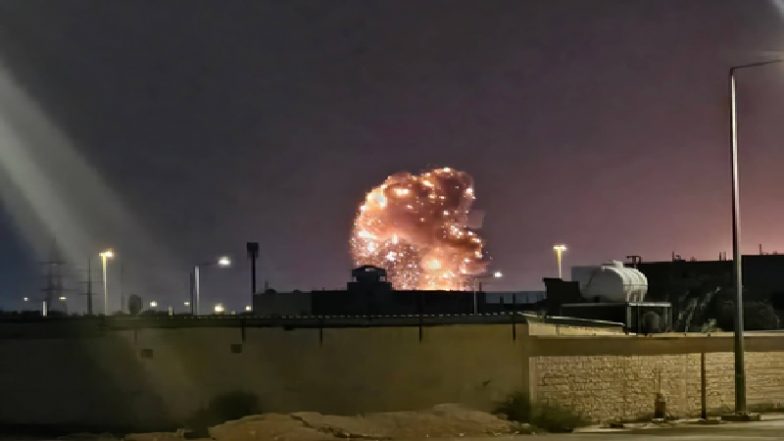
Iran’s Navy Chief Alireza Tangsiri Says Vessels Seeking To Sail Through Strait of Hormuz Needs Approval or Could Be Targeted
The commander of Iran’s Islamic Revolution Guards Corps (IRGC) Naval Force Alireza Tangsiri has issued a stern warning to international shipping, stating that any vessel seeking to transit the Strait of Hormuz must now obtain formal approval from Iran or risk being targeted.

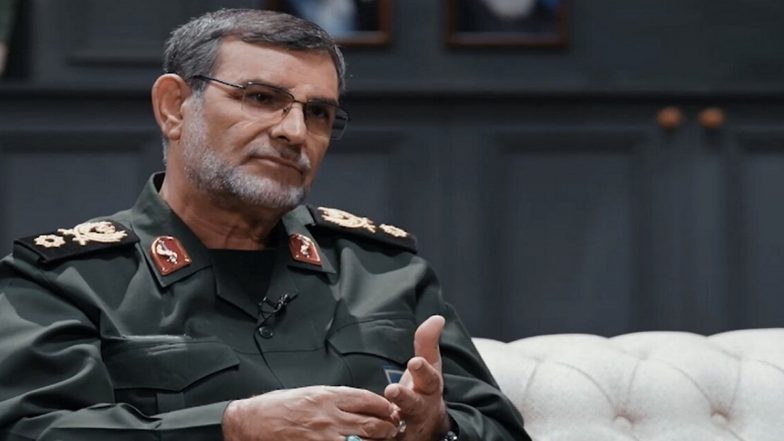
Tehran, March 12: The commander of Iran's Islamic Revolution Guards Corps (IRGC) Naval Force has said that vessel seeking to sail through the Strait of Hormuz must obtain Iran's approval; otherwise, it could become a target of Iranian attacks. Rear Admiral Alireza Tangsiri said that two ships that had ignored Iran's warnings were targeted in the Strait on Wednesday.
"Were the ships assured of safe passage through the Strait of Hormuz? This should be asked of the crews of the vessels Express Rome and Mayuree Naree, who today, trusting in empty promises, ignored the warnings and intended to cross the Strait, but were caught. Any vessel intending to pass must obtain permission from Iran," the Iranian general said in a post on X. Iran Targets Busiest International Airport As Top UN Body Demands Halt to Attacks on Gulf Neighbors.
According to Iranian state media, Iran has intensified its restrictions on the passage of ships through the Strait of Hormuz amid ongoing US-Israeli strikes. Iran says vessels not serving the interests of the United States and Israel can sail through safely.
More than 20 million barrels of crude oil pass daily through the narrow channel separating the Iranian coast from Oman. That volume represents roughly a fifth of global oil consumption and nearly a quarter of all seaborne oil trade. A significant share of the world's liquefied natural gas also moves through the same passage. When that flow falters even briefly, the consequences cascade across financial markets, supply chains and household budgets around the world. Middle East Conflict: Gulf Nations Call for UNSC Condemnation of Iran; Say They Intercepted 954 Missiles, 2,500 Drones and 17 Planes.
Meanwhile, in a move to counter the fallout of restricted fuel supplies, the United States Department of Energy announced its plan to offload 172 million barrels from the strategic petroleum reserve "beginning next week," following significant volatility in oil prices triggered by the ongoing conflict in the Middle East.
In a post to X, the department indicated that the distribution process would "take approximately 120 days to deliver based on planned discharge rates." Global oil prices have climbed steadily since 28 February, the date US and Israeli forces initiated air strikes against Iran. The strikes, which resulted in the death of Iran's former supreme leader, have since submerged the region into a deep state of war. Iranian retaliatory measures, involving drones and missiles, have effectively paralysed shipping through the strait.
This has left global leaders struggling to mitigate the economic consequences Earlier, the International Energy Agency (IEA) had announced the release of 400 million barrels of oil from the emergency reserves of its 32 member countries to address supply disruptions amid the conflict. The emergency stocks will be released to the market based on the national circumstances of each member country and will be supplemented by additional emergency measures by some governments. IEA member countries collectively hold more than 1.2 billion barrels in emergency reserves, along with around 600 million barrels of industry stocks maintained under government obligations.
(The above story is verified and authored by ANI staff, ANI is South Asia's leading multimedia news agency with over 100 bureaus in India, South Asia and across the globe. ANI brings the latest news on Politics and Current Affairs in India & around the World, Sports, Health, Fitness, Entertainment, & News. The views appearing in the above post do not reflect the opinions of LatestLY)