New Flight Rules: DGCA Bars In-Flight Power Bank Use Amid Fire Fears, Check Details
The DGCA directive to bar in-flight power bank use follows a series of recent safety scares, including a fire involving a passenger's power bank on a domestic IndiGo flight while the aircraft was taxiing. Under the new guidelines, airlines are mandated to make in-flight announcements informing passengers of these restrictions. Flyers are also instructed to immediately notify cabin crew if any electronic device emits unusual heat, smoke, or odors.

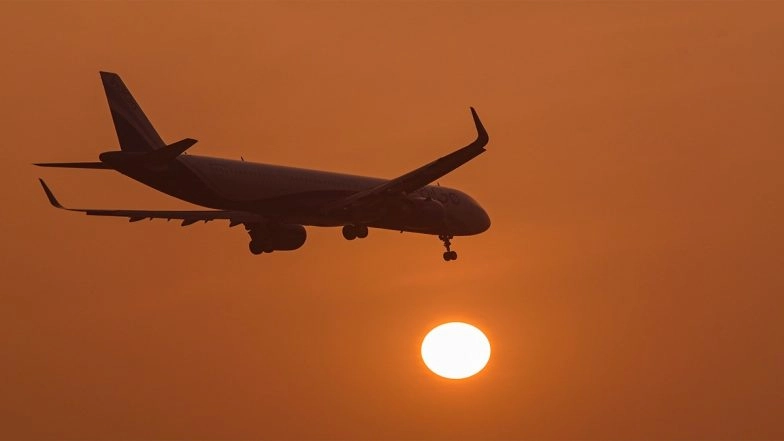
Mumbai, January 4: In a significant move to enhance aviation safety, India’s Directorate General of Civil Aviation (DGCA) has introduced stringent new rules regarding the use of power banks and lithium-ion batteries during flights. Effective immediately, the aviation regulator has barred passengers from using power banks to charge electronic devices mid-flight.
Furthermore, the practice of recharging the power banks themselves using in-seat power outlets is now strictly prohibited, as the regulator seeks to minimise the risk of "thermal runaway", a dangerous condition where batteries overheat and catch fire. DGCA Orders Airlines To Add More Flights Ahead of Festive Season, Reviews Trends To Curb Fare Surge.
DGCA Issues Power Banks Rules
The DGCA directive follows a series of recent safety scares, including a fire involving a passenger's power bank on a domestic IndiGo flight while the aircraft was taxiing. Under the new guidelines, airlines are mandated to make in-flight announcements informing passengers of these restrictions. Flyers are also instructed to immediately notify cabin crew if any electronic device emits unusual heat, smoke, or odors.
Ban on Overhead Storage and In-Flight Use
The new DGCA circular emphasises that power banks and spare lithium batteries must no longer be stored in overhead bins. Because overhead compartments are often obscured from direct view, a battery fire there could go undetected longer than one in an accessible location. ‘Aim To See HAL Choppers Flying Globally’: Civil Aviation Minister Ram Mohan Naidu Flags Off Inaugural Flight of Dhruv NG Helicopter in Bengaluru (See Pics and Videos).
Instead, these devices must now be kept in carry-on bags placed under the seat in front of the passenger or in the seat-back pocket, where they can be easily monitored by the traveler and the crew.
Additionally, the rules state that power banks are strictly restricted to hand luggage and are entirely banned from checked-in baggage. This is due to the inherent difficulty of extinguishing a fire in the aircraft’s unmonitored cargo hold, which could lead to catastrophic consequences for the flight.
The "One Handbag" Policy and Gate Checks
Aviation experts have warned that the new safety protocols necessitate a stricter implementation of the "one handbag per passenger" rule. A common issue arises when overhead bins become full, and ground staff take handbags from passengers at the boarding gate to be placed in the cargo hold. If these bags contain power banks, they inadvertently violate safety norms that prohibit lithium batteries in the belly of the aircraft.
The DGCA's decision aligns India with global aviation leaders like Emirates and Singapore Airlines, which implemented similar bans on in-flight power bank usage last year. Technical experts point out that while modern smartphones often have internal safeguards, many basic or older power banks lack overcharge protection or heat sensors, making them prone to exploding if they experience an internal short circuit or manufacturing defect.
Current regulations in India continue to limit the capacity of power banks to 100 watt-hours (Wh) for standard carriage. Devices between 100 Wh and 160 Wh require prior approval from the airline, while anything exceeding 160 Wh remains completely prohibited on commercial passenger aircraft.
(The above story first appeared on LatestLY on Jan 04, 2026 10:48 AM IST. For more news and updates on politics, world, sports, entertainment and lifestyle, log on to our website latestly.com).