What Is Romeo-Juliet Clause? Supreme Court Pushes POCSO Reform for Teen Relationships
In a significant move aimed at preventing the misuse of child protection laws, the Supreme Court of India has urged the Union government to consider adding a “Romeo-Juliet” clause to the Protection of Children from Sexual Offences (POCSO) Act. The recommendation was made by a bench of Justices Sanjay Karol and N. Kotiswar Singh on January 9.

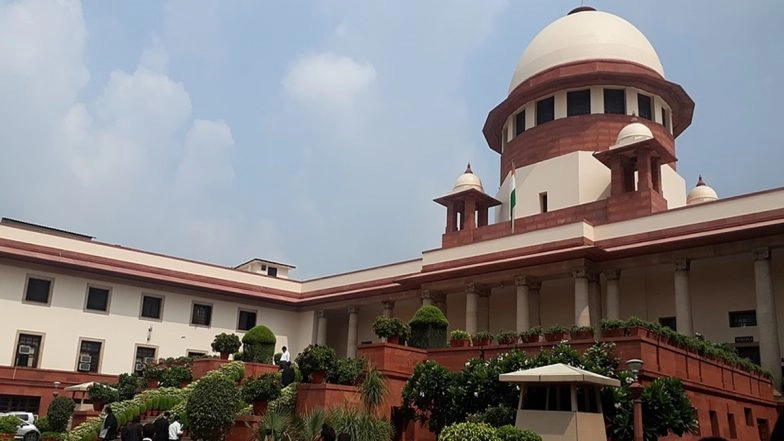
New Delhi, January 11: In a significant move aimed at preventing the misuse of child protection laws, the Supreme Court of India has urged the Union government to consider adding a “Romeo-Juliet” clause to the Protection of Children from Sexual Offences (POCSO) Act. The recommendation was made by a bench of Justices Sanjay Karol and N. Kotiswar Singh on January 9, 2026.
The court observed that the stringent provisions of POCSO, though enacted to protect children from sexual abuse, are increasingly being invoked against young men involved in consensual relationships with teenage girls. Such cases, the bench noted, often arise due to parental or societal opposition, turning a protective law into a punitive tool against adolescent romance. POCSO Act Not Meant To Criminalise Consensual Romantic Relationships Between Adolescents, Says Allahabad High Court While Granting Bail to 18-Year-Old Boy Booked for Rape.
What Is the Romeo-Juliet Clause?
A Romeo-Juliet clause is a legal exception found in several countries that protects consensual relationships between adolescents who are close in age. Under this principle, criminal liability for statutory rape is reduced or removed when:
• Both individuals are minors or young adolescents
• The age difference is small, usually between two and five years
• The relationship is consensual and non-exploitative
The Supreme Court suggested that introducing such a clause in India would help distinguish genuine teenage relationships from cases involving coercion, abuse, or exploitation, while keeping the core objective of POCSO intact. POCSO FIR Cannot Be Quashed Just Because Accused Married Victim and Child Is Born: Bombay High Court.
Court Flags ‘Weaponisation’ of POCSO
The observations came during a hearing where the bench flagged a troubling pattern of families “weaponising” POCSO to settle personal scores. The judges warned that this practice has led to young men spending years in jail despite the absence of exploitation or criminal intent.
The court stressed that treating consensual adolescent relationships on par with sexual assault undermines both justice and personal liberty.
No ‘Mini-Trials’ at Bail Stage
In the same judgment, the apex court set aside an earlier order of the Allahabad High Court that allowed medical age-determination tests at the bail stage. The Supreme Court clarified that bail courts must not conduct “mini-trials” or decide disputed facts like age conclusively. Documentary evidence, such as school records, must take priority, with medical tests used only as a last resort.
Push for Legislative Reform
Calling the POCSO Act a “solemn articulation of justice,” the court warned that its misapplication risks inverting its very purpose. A copy of the judgment has been forwarded to the Law Ministry, with a clear signal for legislative review.
The bench also suggested exploring penalties for filing false or vindictive POCSO cases, ensuring the law remains a shield for victims, not a weapon against teenage autonomy.
(The above story first appeared on LatestLY on Jan 11, 2026 03:52 PM IST. For more news and updates on politics, world, sports, entertainment and lifestyle, log on to our website latestly.com).