Hamas Ready to Hand Over Gaza Governance to US-backed Palestinian Committee: Report
Hamas announced on Wednesday, January 28, its full readiness to transfer the administrative governance of the Gaza Strip to a newly formed Palestinian technocratic committee. Hamas spokesperson Hazem Qassem confirmed that "protocols are prepared and files are complete" for an immediate handover across all sectors to the National Committee for the Administration of Gaza (NCAG).

Mumbai, January 28: Hamas announced on Wednesday, January 28, its full readiness to transfer the administrative governance of the Gaza Strip to a newly formed Palestinian technocratic committee. Hamas spokesperson Hazem Qassem confirmed that "protocols are prepared and files are complete" for an immediate handover across all sectors to the National Committee for the Administration of Gaza (NCAG). The move is framed as a key step in the second phase of a US-brokered ceasefire plan aimed at stabilizing the enclave after more than two years of conflict.
While the group expressed a willingness to step down from formal governance, it is reportedly seeking to integrate its 10,000-strong police force into the new administration. This demand is expected to face significant opposition from Israel, which maintains a policy of total exclusion for any Hamas-affiliated security personnel. Despite the transition, the NCAG, led by Dr. Ali Shaath, will likely remain dependent on tens of thousands of existing civil servants who have operated under Hamas’s authority for nearly two decades. Board of Peace on Gaza Unveiled by Donald Trump in Davos: What It Is and List of Members.
The Rafah Crossing Standoff
A central condition for the handover remains the full reopening of the Rafah border crossing with Egypt. Hamas has demanded that the crossing be opened "in both directions" without any Israeli restrictions or "curbs." While Israel has agreed to a "limited reopening" for pedestrian traffic following the recovery of its final deceased hostage earlier this week, it insists on a rigorous inspection mechanism. Hamas, however, argues that full freedom of movement is an inherent right for Gaza’s reconstruction and humanitarian recovery. Donald Trump Invites India to Join US-Led Gaza ‘Board of Peace’: Report.
Governance Under the NCAG
The 15-member National Committee for the Administration of Gaza (NCAG) is a technocratic body designed to manage day-to-day affairs under international and U.S. oversight. Its immediate priorities include:
- Humanitarian Aid: Clearing rubble and restoring essential services like water and electricity.
- Economic Relief: Exempting Gazans and local businesses from various fees and taxes to stimulate the economy.
- Security: Establishing a unified civil defense and police force, though the composition remains a major sticking point in negotiations.
The transition occurs amidst broader discussions regarding the disarmament of militant groups in Gaza. U.S. officials have suggested that Hamas fighters who decommission their weapons could be granted amnesty as part of the "mother of all deals" envisioned by the Trump administration. Hamas has signaled it is open to "neutralizing arms" for a long-term truce, but insists that any final disarmament must be part of a concrete political process leading to an independent Palestinian state.
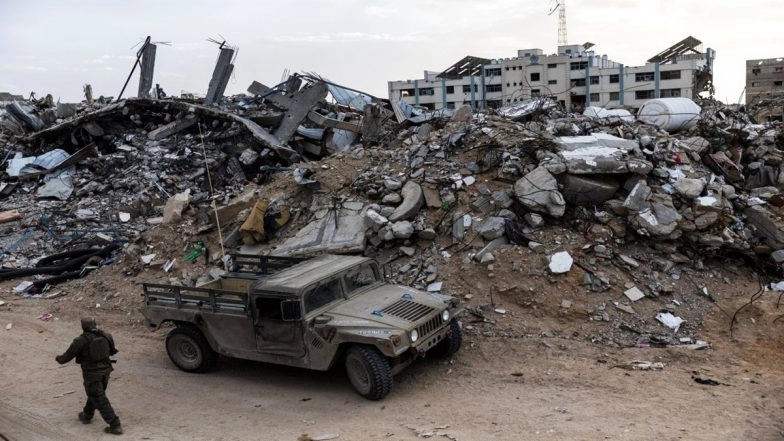
Since the conflict began in October 2023, the Gaza Strip has faced unprecedented destruction. The current ceasefire deal, brokered in late 2025, aims to move the territory from active combat to a transitional phase governed by non-partisan professionals. However, with Israel’s leadership emphasizing "demilitarization over reconstruction" and Hamas seeking to maintain influence through its civil service, the effectiveness of the new technocratic committee remains a critical test for regional peace.
(The above story first appeared on LatestLY on Jan 28, 2026 10:23 PM IST. For more news and updates on politics, world, sports, entertainment and lifestyle, log on to our website latestly.com).