How Much Oil Does Venezuela Have? Here’s Why Donald Trump’s Focus on the Latin American Country Raises Questions About Its Reserves
With the U.S. overseeing a transition in Venezuela after the capture of Nicolás Maduro, the spotlight is on the nation’s 303 billion barrels of oil—the largest reserves globally. Despite holding nearly 20% of the world’s crude, production has stalled at under 1 million barrels per day. The Trump administration’s plan to revitalize this "broken" infrastructure could reshape global energy markets.

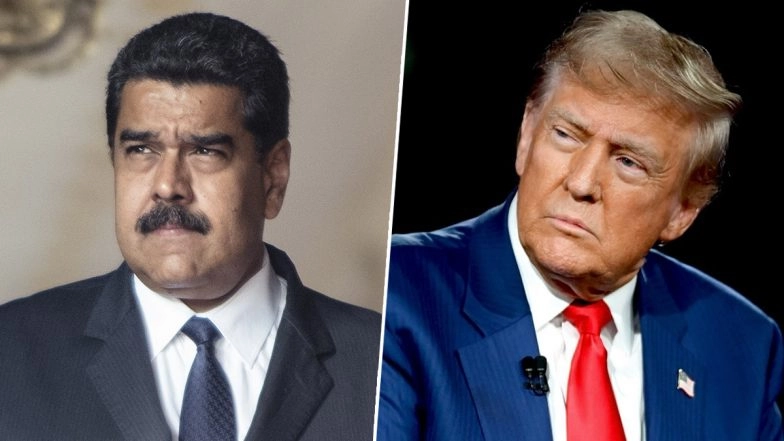
Washington, January 4: In the wake of the recent capture of Nicolás Maduro by U.S. forces, global attention has pivoted toward the primary driver of the region's geopolitical tension: Venezuela’s massive, underutilized oil wealth. With the United States moving to oversee a transition in the South American nation, the future of the world’s largest proven crude reserves hangs in the balance. President Donald Trump, following the military operation, announced that the U.S. would take an active role in "fixing" the country’s energy sector. He emphasized that American energy giants would be invited to revitalize an industry that has suffered from decades of decay and disinvestment.
The 303 Billion Barrel Asset
Venezuela holds the undisputed title of having the world’s largest proven oil reserves. According to current OPEC data, the nation sits on approximately 303 billion barrels of crude—roughly 17% to 19% of the global total. This figure places Venezuela ahead of Saudi Arabia (267 billion barrels) and nearly doubles the reserves of Iran (209 billion barrels). The majority of this wealth is concentrated in the Orinoco Belt, a 55,000-square-kilometer region in the east. However, much of this is "extra-heavy" crude, which requires specialized technology and significant capital to refine, making the involvement of foreign expertise a critical factor for any recovery. US Oil Companies to Spend Billions of Dollars in Venezuela: Trump After Maduro's Capture.
From Powerhouse to Parity
Despite its geological wealth, Venezuela’s actual output has reached historic lows. In the late 1990s, the country was a production powerhouse, pumping over 3.2 million barrels per day (bpd). By 2024 and early 2025, production had plummeted to roughly 850,000–950,000 bpd.
Industry analysts attribute this decline to several factors:
-
Mismanagement: Years of political patronage and lack of maintenance within state-owned PDVSA.
-
Sanctions: Heavy U.S. restrictions that limited the country's ability to export to Western markets.
-
Infrastructure Decay: Experts estimate it would take at least $100 billion in investment and a decade of work to return production to 4 million bpd.
The "Monroe" Strategy and Global Markets
The U.S. intervention and the subsequent blockade of "shadow tankers" are expected to shift global trade dynamics. While India and other major importers previously reduced their reliance on Venezuelan crude to just 0.3% of their total imports to avoid secondary sanctions, a U.S.-led stabilization could reintegrate this oil into the global supply. While immediate price spikes were muted due to the current global surplus, the long-term potential for Venezuela to double or triple its output could exert downward pressure on prices, potentially challenging the market influence of other major producers like Russia and Saudi Arabia. Donald Trump Says US Oil Giants to Invest Billions, Revive Venezuela’s Energy Sector After Nicolas Maduro’s Ouster (Watch Video).
Expert Analysis on the Intervention
Geopolitical experts and regional analysts remain divided on the long-term implications of the U.S. operation. Many international law scholars warn that the intervention sets a contentious precedent regarding national sovereignty, potentially alienating other Latin American partners who view the "Monroe Doctrine" rhetoric with historical skepticism. However, energy economists argue that the move was an inevitable consequence of a "failed state" sitting on vital global resources. They suggest that while the initial military phase was successful, the real challenge lies in the "nation-building" phase; experts believe that without a transparent, inclusive transition to local governance, the U.S. risks a prolonged insurgency that could sabotage the very oil infrastructure it intends to protect.
(The above story first appeared on LatestLY on Jan 04, 2026 08:25 PM IST. For more news and updates on politics, world, sports, entertainment and lifestyle, log on to our website latestly.com).