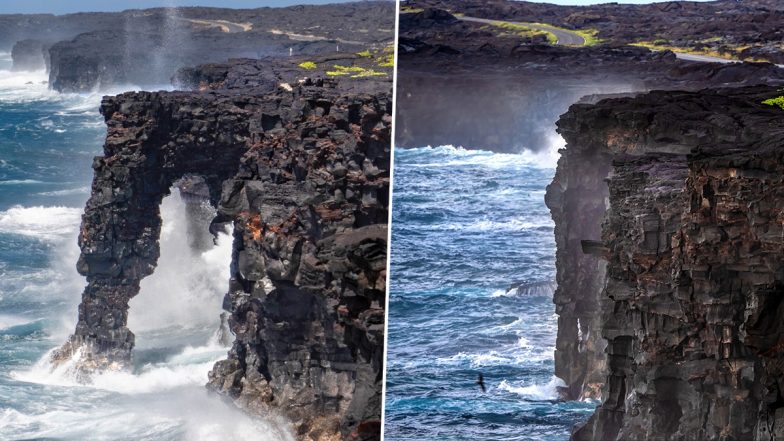
Iceland’s Reynisfjara Black Sand Beach Disappears After Dramatic Coastal Collapse; Here’s What Triggered It
Reynisfjara, one of Iceland’s most famous natural attractions, is undergoing a dramatic transformation after severe winter erosion and a major cliff collapse beneath Reynisfjall mountain. The changes have prompted partial closures and raised fresh safety concerns at the globally popular tourist destination.

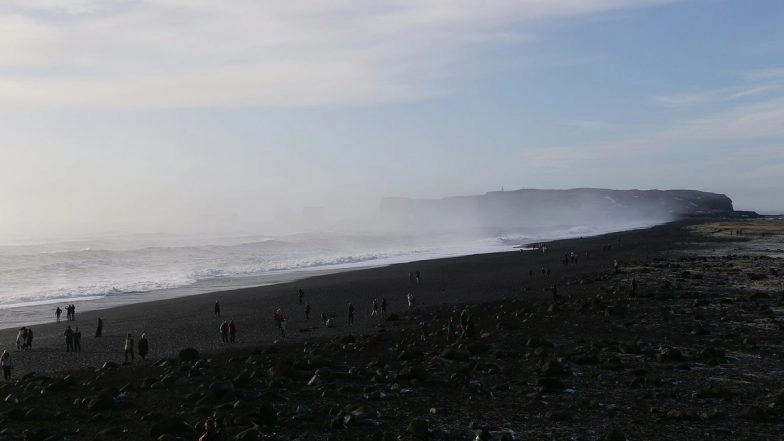
New Delhi, February 14: Reynisfjara, one of Iceland’s most famous natural attractions, is undergoing a dramatic transformation after severe winter erosion and a major cliff collapse beneath Reynisfjall mountain. The changes have prompted partial closures and raised fresh safety concerns at the globally popular tourist destination.
Severe Erosion and Cliff Collapse Reshape the Coastline
The erosion became evident in early 2026 after a series of powerful storms battered Iceland’s southern coastline. A significant landslide beneath Reynisfjall blocked access to parts of the beach, while large sections of volcanic black sand were washed away into the North Atlantic. Iceland or Greenland?’ Donald Trump Mocked After Repeatedly Mixing Up Countries During WEF Speech (Watch Videos).
What was once a wide and walkable shoreline has narrowed considerably in several areas. The beach’s iconic basalt columns now sit much closer to the surf, with some appearing almost submerged during high tide. Long-time residents say this is the most dramatic coastal change they have witnessed in decades.
Unusual Wind Patterns Accelerate Sand Loss
According to coastal engineers from the Icelandic Road Administration, persistent easterly winds throughout winter reversed the natural sand flow. Southern Iceland typically experiences southwesterly winds that replenish the beach by pushing sand eastward. Mosquitoes Found in Iceland for the First Time as Warming Climate Transforms the Arctic.
However, this winter’s dominant easterly winds carried sand westward instead. With Reynisfjall mountain acting as a barrier, fresh sediment has not been able to replenish the eroded shoreline, accelerating the beach’s transformation.
Rising Safety Risks for Tourists
Reynisfjara is already known for its dangerous “sneaker waves”, sudden, powerful surges that can sweep visitors into the freezing ocean. The newly narrowed shoreline leaves less room for escape, increasing risks for tourists.
Large boulders and debris from the landslide now scatter parts of the beach, further complicating access to the famous basalt caves that attract photographers and travelers from around the world.
What Lies Ahead for Reynisfjara?
Experts say the coastline remains in flux. While a return to typical southwesterly wind patterns could eventually restore some sand, the structural cliff damage is permanent. Authorities continue to monitor the area closely and urge visitors to follow all safety advisories.
As Iceland’s landscape evolves, Reynisfjara stands as a powerful reminder of the dynamic and fragile nature of coastal environments shaped by climate, wind, and sea.
(The above story first appeared on LatestLY on Feb 14, 2026 09:02 AM IST. For more news and updates on politics, world, sports, entertainment and lifestyle, log on to our website latestly.com).